Blue Light Toxicity and Its Effects on the Body: A Modern Health Concern
Introduction
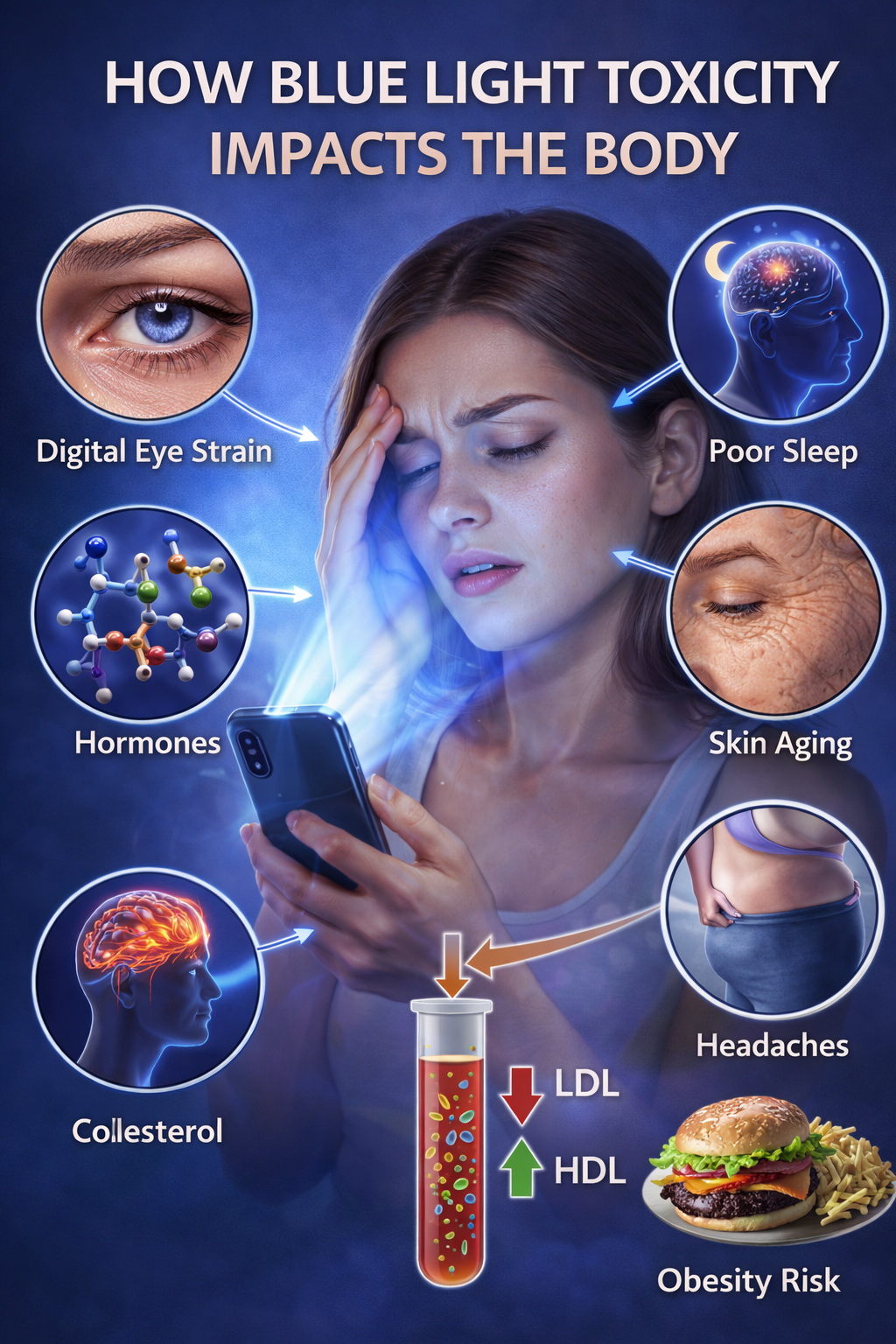
Blue light exposure is no longer limited to sunlight. In modern life, we are surrounded by artificial blue light from phones, computers, tablets, televisions, and LED lighting. Many people intuitively sense that constant screen exposure affects their sleep, energy, and focus — yet few understand how deeply blue light can influence hormonal balance, neurological health, inflammation, and circadian rhythm.
From a clinician’s perspective, blue light is not inherently harmful. It plays an essential role in regulating wakefulness and alertness during daylight hours. The problem arises when exposure becomes chronic, excessive, and poorly timed.
At Sheen Vein (Aesthetics & Functional Medicine), we help patients across Clayton, Chesterfield, Arnold, and Farmington, Missouri understand how modern light environments interact with human physiology — and why symptoms often improve when circadian health is restored.
What Is Blue Light?
Blue light is a high-energy, short-wavelength light within the visible spectrum. Natural blue light from the sun helps:
- Regulate circadian rhythm
- Promote alertness
- Suppress melatonin during daylight hours
- Support mood and cognitive function
Artificial blue light differs primarily in timing, intensity, and duration.
The Circadian Rhythm Connection
The circadian rhythm is the body’s internal 24-hour clock. It governs:
- Sleep-wake cycles
- Hormone secretion
- Metabolism
- Immune regulation
- Cellular repair
Blue light strongly influences the circadian system by signaling the brain that it is daytime.
When blue light exposure occurs late in the evening or at night, it confuses the brain, delaying the body’s transition into restorative nighttime physiology.
Blue Light and Melatonin Suppression
Melatonin is not just a sleep hormone — it is a powerful antioxidant and immune regulator.
Even low levels of evening blue light can:
- Suppress melatonin release
- Delay sleep onset
- Reduce sleep quality
- Shorten deep sleep phases
Chronic melatonin suppression has downstream effects on hormone balance, inflammation, and cellular repair.
Hormonal Disruption Beyond Sleep
Disrupted circadian rhythm affects multiple hormone systems:
- Cortisol rhythms become flattened
- Insulin sensitivity declines
- Sex hormone signaling becomes dysregulated
- Growth hormone release is reduced
This helps explain why chronic screen exposure is associated with fatigue, weight gain, mood changes, and reduced resilience to stress.
Blue Light and the Brain
Blue light directly affects the nervous system. Excessive exposure may contribute to:
- Cognitive fatigue
- Headaches
- Difficulty concentrating
- Increased anxiety
- Reduced emotional regulation
The brain relies on predictable light-dark cycles to regulate neurotransmitter balance. Disruption increases neurological stress.
Eye Health and Retinal Stress
The retina is particularly sensitive to blue light because of its high metabolic activity.
Chronic exposure may:
- Increase oxidative stress in retinal cells
- Contribute to digital eye strain
- Worsen dry eye symptoms
- Accelerate retinal aging in susceptible individuals
While research is ongoing, cumulative exposure appears more relevant than short-term use.
Blue Light, Inflammation, and Oxidative Stress
Excessive blue light exposure increases oxidative stress, which:
- Damages mitochondria
- Activates inflammatory pathways
- Impairs cellular repair mechanisms
This inflammatory response does not remain confined to the eyes — it can influence whole-body physiology.
Sleep Deprivation as a Secondary Injury
Much of blue light’s harm occurs indirectly through sleep disruption.
Poor sleep contributes to:
- Increased systemic inflammation
- Impaired immune function
- Hormonal imbalance
- Reduced pain tolerance
- Accelerated aging processes
Patients often underestimate how much sleep quality influences overall health.
Blue Light and Metabolic Health
Circadian disruption affects glucose regulation. Studies associate irregular light exposure with:
- Insulin resistance
- Increased appetite signaling
- Altered leptin and ghrelin balance
- Weight gain over time
This connection helps explain why late-night screen use correlates with metabolic dysfunction.
Children, Adolescents, and Blue Light
Developing nervous systems are particularly sensitive to circadian disruption.
Excessive screen exposure in younger individuals has been linked to:
- Sleep disturbances
- Attention difficulties
- Mood changes
- Academic performance issues
Early circadian disruption may have long-term consequences.
A Functional Medicine Perspective
A functional medicine approach to blue light exposure focuses on:
- Restoring circadian alignment
- Protecting melatonin production
- Supporting mitochondrial health
- Reducing inflammatory burden
- Optimizing sleep quality
Rather than eliminating technology, the goal is strategic exposure aligned with human biology.
Environmental Awareness Matters
Modern environments were not designed with circadian health in mind. Awareness allows individuals to make small changes that produce meaningful benefits over time.
Many patients notice improvements in:
- Energy levels
- Mood stability
- Sleep quality
- Hormonal balance
- Pain perception
when light exposure is addressed.
Care Across Missouri Communities
Patients in Clayton, Chesterfield, Arnold, and Farmington increasingly recognize that modern lifestyle factors influence health as much as genetics. Addressing blue light exposure is a practical, accessible step toward better long-term wellness.
Internal Links
- Functional Medicine Services
- Sleep Optimization
- Hormone Health
- Inflammation and Chronic Disease
Final Thoughts
Blue light is not inherently dangerous — it is context-dependent. When exposure aligns with natural circadian rhythms, it supports health. When misaligned, it quietly disrupts sleep, hormones, and inflammation.
Understanding blue light’s effects empowers individuals to work with their biology rather than against it — a foundational principle of functional medicine.