How Chronic Venous Insufficiency Impacts Microcirculation: The Hidden Effects of Venous Valve Failure in St. Louis
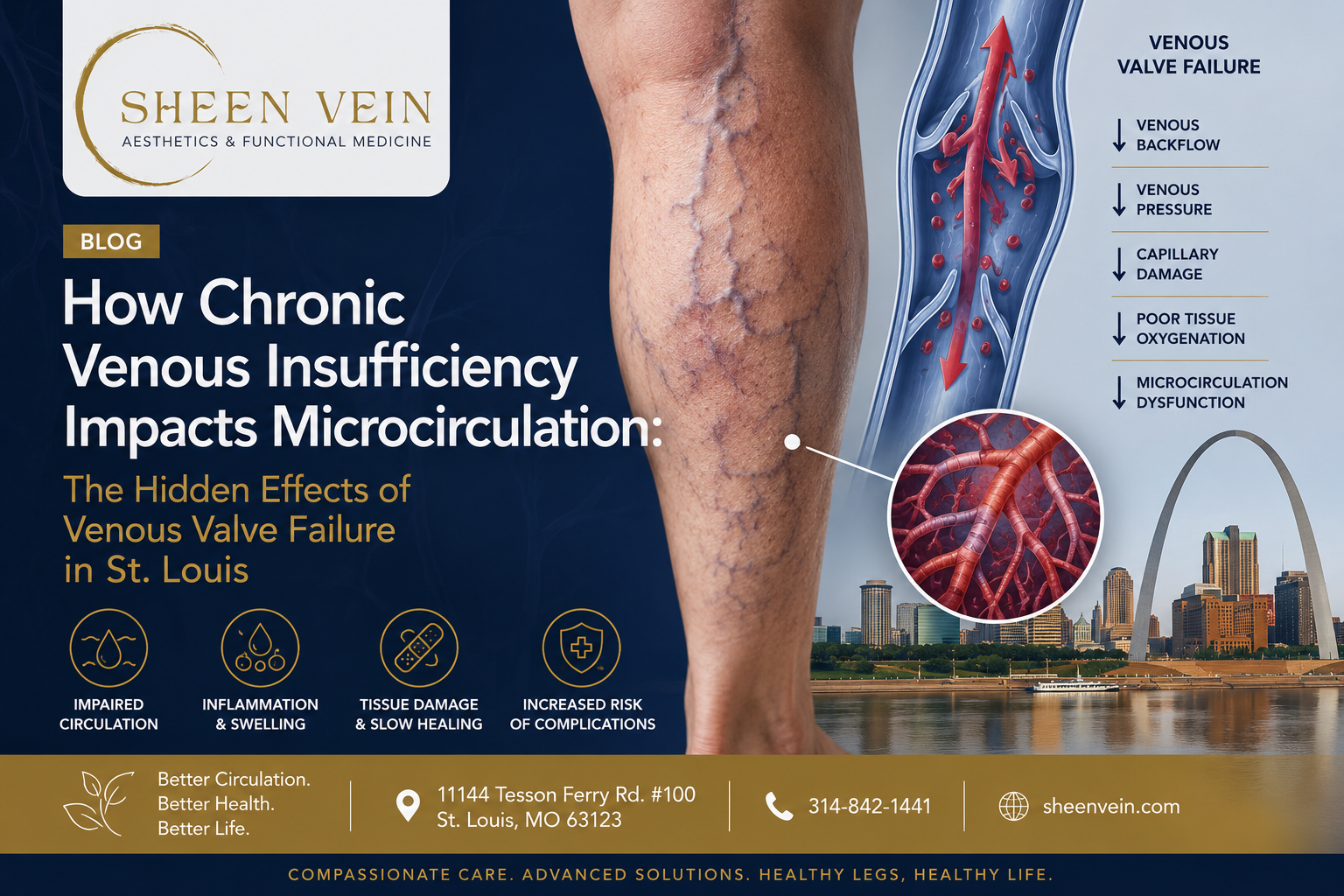
Chronic Venous Insufficiency Is More Than Just Varicose Veins
When most people think about chronic venous insufficiency (CVI), they think about varicose veins, leg swelling, or cosmetic concerns. However, beneath the surface, a much more complex process is occurring. The failure of venous valves can significantly disrupt the microcirculation of the skin and surrounding tissues, contributing to symptoms, skin damage, and even chronic wounds.
At Sheen Vein Aesthetics and Functional Medicine in St. Louis, Missouri, we believe patients should understand that chronic venous insufficiency is not simply a problem of larger veins. It is a disease that affects circulation all the way down to the smallest blood vessels in the body.
Understanding Venous Valve Function
Healthy veins contain one-way valves that help move blood upward toward the heart against gravity. Every time the calf muscles contract during walking, these valves open and close to prevent blood from flowing backward.
When these valves become damaged or incompetent, blood begins to reflux, or flow in the wrong direction.
This condition is known as chronic venous insufficiency.
The result is increased venous pressure, also called venous hypertension.
Society for Vascular Surgery:
https://vascular.org/patients-and-referring-physicians/conditions/chronic-venous-insufficiency
What Is Microcirculation?
Microcirculation refers to the smallest blood vessels in the body, including:
- Capillaries
- Venules
- Arterioles
These tiny vessels are responsible for delivering oxygen and nutrients to tissues while removing carbon dioxide and metabolic waste.
Healthy microcirculation is essential for maintaining skin health, wound healing, and tissue function.
When venous hypertension develops, the effects extend far beyond the larger veins.
How Venous Valve Failure Affects Microcirculation
When blood pools in the legs because of faulty vein valves, pressure increases throughout the venous system.
This elevated pressure is transmitted into the smaller veins and eventually reaches the capillary beds within the skin.
Over time, several changes occur:
Capillary Distention
The tiny capillaries become stretched and congested due to elevated pressure.
Fluid Leakage
Increased pressure forces fluid out of the blood vessels and into surrounding tissues, leading to swelling and edema.
Inflammatory Changes
White blood cells and inflammatory mediators become activated within the affected tissues.
Reduced Oxygen Delivery
As congestion worsens, oxygen and nutrient exchange become less efficient.
Tissue Damage
The combination of inflammation, fluid accumulation, and impaired oxygen delivery contributes to progressive skin injury.
National Library of Medicine:
https://www.ncbi.nlm.nih.gov/books/NBK567802/
The Skin Changes Associated With Microcirculatory Dysfunction
Patients often notice symptoms long before severe complications develop.
Common signs include:
- Leg heaviness
- Aching pain
- Burning sensations
- Itching
- Swelling
- Restless legs
- Night cramps
- Skin discoloration
- Thickened skin
As microcirculatory damage progresses, patients may develop:
- Venous eczema
- Lipodermatosclerosis
- Hyperpigmentation
- Atrophie blanche
- Venous stasis ulcers
Johns Hopkins Medicine:
https://www.hopkinsmedicine.org/health/conditions-and-diseases/chronic-venous-insufficiency
Why Treating Reflux Matters
Many patients wonder why treatment of refluxing veins is important if they can tolerate the symptoms.
The answer lies in the long-term effects of venous hypertension on the microcirculation.
Without treatment, elevated pressure continues to damage the skin and underlying tissues. Even when symptoms seem mild, progressive microvascular injury may continue beneath the surface.
Modern vein treatments are designed to eliminate reflux, reduce venous pressure, and restore healthier circulation patterns.
Treatment options may include:
- Endovenous laser ablation (EVLT)
- Ultrasound-guided foam sclerotherapy
- Varithena® treatment
- Compression therapy
- Treatment of incompetent perforator veins
European Society for Vascular Surgery Guidelines:
https://www.ejves.com/article/S1078-5884(22)00160-6/fulltext
The Goal: Protecting the Microcirculation
One of the primary goals of vein treatment is not simply improving appearance. It is reducing venous hypertension and protecting the microcirculation that keeps skin and tissues healthy.
By restoring more normal blood flow, treatment may help:
- Reduce swelling
- Improve oxygen delivery
- Decrease inflammation
- Improve skin health
- Lower ulcer risk
- Enhance quality of life
Vein Treatment in St. Louis, Missouri
At Sheen Vein Aesthetics and Functional Medicine, we specialize in diagnosing and treating chronic venous insufficiency using advanced ultrasound-guided techniques. We proudly serve patients throughout St. Louis, Sunset Hills, Kirkwood, Chesterfield, Arnold, Fenton, Columbia, Illinois, and surrounding communities.
Learn more about our vein treatment services:
https://www.sheenveinandcosmetics.com/
The visible varicose vein is often only the tip of the iceberg. The true impact of chronic venous insufficiency occurs within the microcirculation, where elevated venous pressure can affect tissue health, skin integrity, and wound healing. Understanding and treating venous valve dysfunction is one of the most important steps in protecting long-term leg health.