Why Some Women Develop Facial Hair Growth: A Medical Perspective on Hirsutism
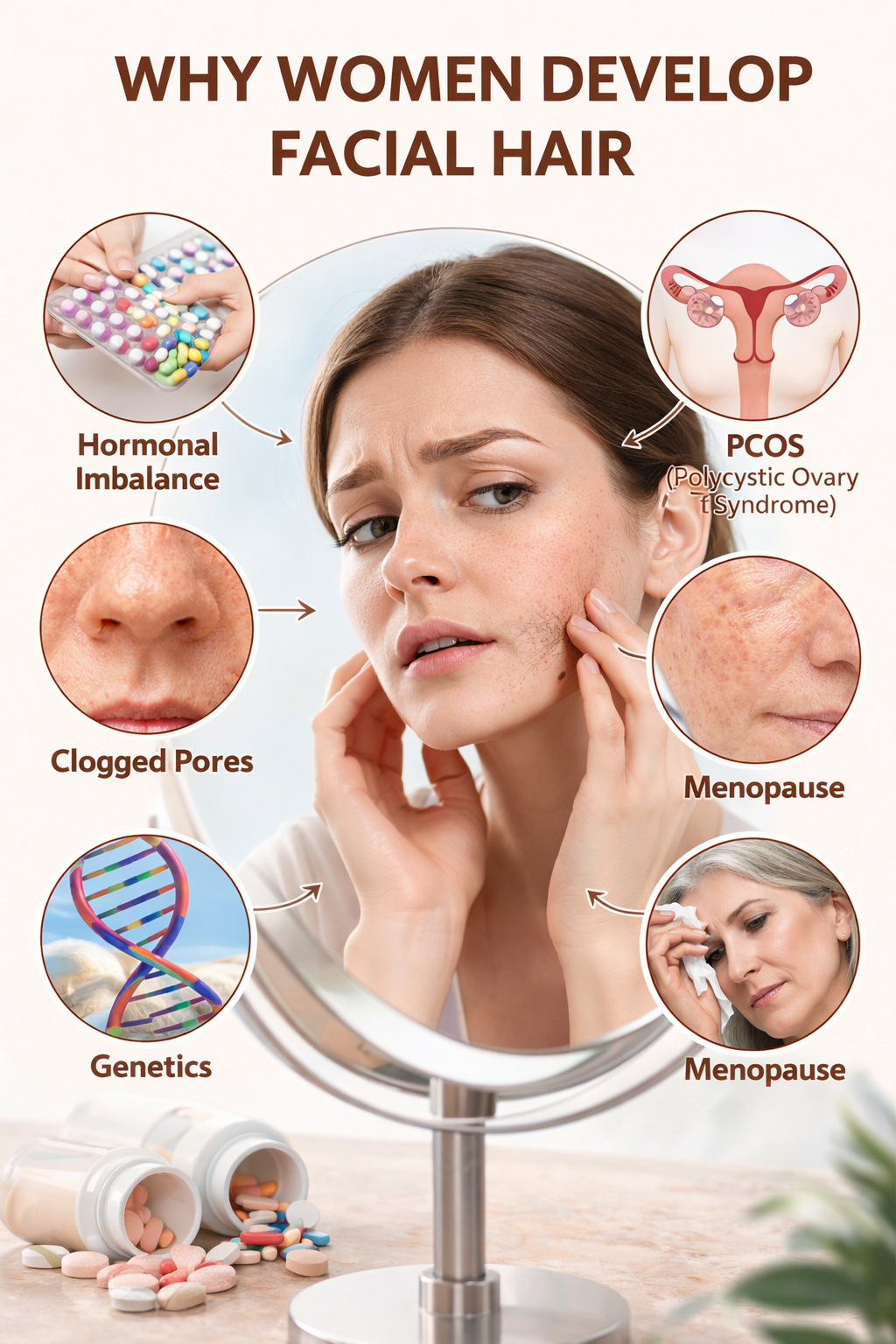
Introduction
Facial hair growth in women is far more common than many realize, yet it remains one of the most emotionally charged concerns patients bring into the exam room. Women often arrive apologetic, embarrassed, or convinced something is “wrong” with them. From a clinician’s standpoint, facial hair growth is rarely a cosmetic issue alone — it is frequently a physiologic signal worth understanding.
At Sheen Vein (Aesthetics & Functional Medicine), we approach female facial hair growth with sensitivity and medical curiosity. The goal is not simply to remove hair, but to understand why it’s appearing in the first place.
What Is Female Facial Hair Growth?
Medically, excessive or unwanted facial hair growth in women is referred to as hirsutism. It typically appears in androgen-sensitive areas such as:
- Upper lip
- Chin
- Jawline
- Neck
- Sideburn area
The hair is often coarse, dark, and terminal — different from the fine vellus hair naturally present on the face.
The Role of Androgens
Androgens are hormones commonly thought of as “male hormones,” but they are essential and normal in women as well. Testosterone and related androgens support bone health, libido, muscle mass, and cognitive function.
Facial hair growth occurs when:
- Androgen levels are elevated or
- Hair follicles become more sensitive to normal androgen levels
Importantly, many women with facial hair growth have normal blood hormone levels.
Androgen Sensitivity vs. Androgen Excess
This distinction is critical and often misunderstood.
Androgen Excess
Occurs when circulating androgen levels are elevated due to:
- Polycystic ovary syndrome (PCOS)
- Adrenal overproduction
- Certain medications
- Ovarian or adrenal pathology (rare)
Androgen Sensitivity
Occurs when hair follicles respond more strongly to normal hormone levels. This can be genetically determined or influenced by metabolic and inflammatory factors.
Most women with facial hair growth fall into the sensitivity category rather than true excess.
Insulin Resistance: A Major Driver
Insulin resistance plays a powerful and underrecognized role in female facial hair growth.
When insulin levels remain chronically elevated:
- Ovaries may increase androgen production
- Sex hormone–binding globulin (SHBG) decreases
- Free androgens increase at the tissue level
This explains why facial hair growth often accompanies:
- Weight gain
- Irregular cycles
- Acne
- Difficulty losing weight
Even women without diabetes may experience this effect.
The Connection to PCOS
PCOS is one of the most common causes of facial hair growth, but it is not the only cause.
In PCOS:
- Ovarian androgen production is increased
- Ovulation is often irregular
- Insulin resistance is common
- Hair follicles are more androgen-sensitive
However, many women with facial hair growth do not meet full PCOS criteria, which can lead to confusion and delayed care.
Stress and Cortisol Dysregulation
Chronic stress alters hormone signaling throughout the body. Elevated cortisol can:
- Worsen insulin resistance
- Shift androgen metabolism
- Reduce progesterone balance
- Amplify follicular androgen sensitivity
Women often notice worsening facial hair growth during periods of prolonged emotional or physical stress.
Perimenopause and Menopause
Facial hair growth frequently appears or worsens during midlife, even when estrogen levels decline.
Why?
- Estrogen drops faster than androgens
- The relative androgen effect increases
- SHBG levels decline
- Hair follicles become more responsive to androgens
This is why women may experience both scalp hair thinning and facial hair growth simultaneously.
Genetic Predisposition
Genetics strongly influence:
- Hair follicle density
- Follicle sensitivity
- Hair shaft thickness
- Distribution patterns
Family history often provides clues, even when hormone levels appear normal.
Why Blood Tests Don’t Always Tell the Whole Story
Patients are frequently told, “Your labs are normal.” While blood tests are important, they do not measure tissue-level hormone activity.
Hair follicles respond to:
- Local enzyme activity
- Receptor sensitivity
- Inflammatory signals
This explains why symptoms can exist despite reassuring lab results.
The Emotional and Psychological Impact
Facial hair growth can significantly affect:
- Self-esteem
- Social confidence
- Intimate relationships
- Daily routines
Many women spend years managing symptoms privately before seeking medical guidance. Acknowledging this emotional burden is essential to compassionate care.
A Clinician’s Approach to Evaluation
A thoughtful evaluation considers:
- Hormonal patterns
- Menstrual history
- Metabolic markers
- Stress load
- Medication use
- Family history
The goal is to identify modifiable contributors, not simply label the condition.
Treatment Is Not One-Size-Fits-All
Hair removal alone does not address the underlying drivers. Sustainable improvement often requires addressing:
- Insulin signaling
- Hormonal balance
- Inflammatory load
- Stress physiology
A combined internal and external strategy yields the best long-term outcomes.
Internal Links
- Functional Medicine Services
- Hormone Optimization
- Women’s Health Care
- Aesthetic Skin Treatments
Final Thoughts
Female facial hair growth is not a failure of femininity or hygiene — it is a biologic response shaped by hormones, metabolism, and genetics. When approached with understanding and medical insight, it becomes a manageable and explainable condition, rather than a source of shame or frustration.