What Causes Female Hair Thinning? A Medical Perspective
Introduction
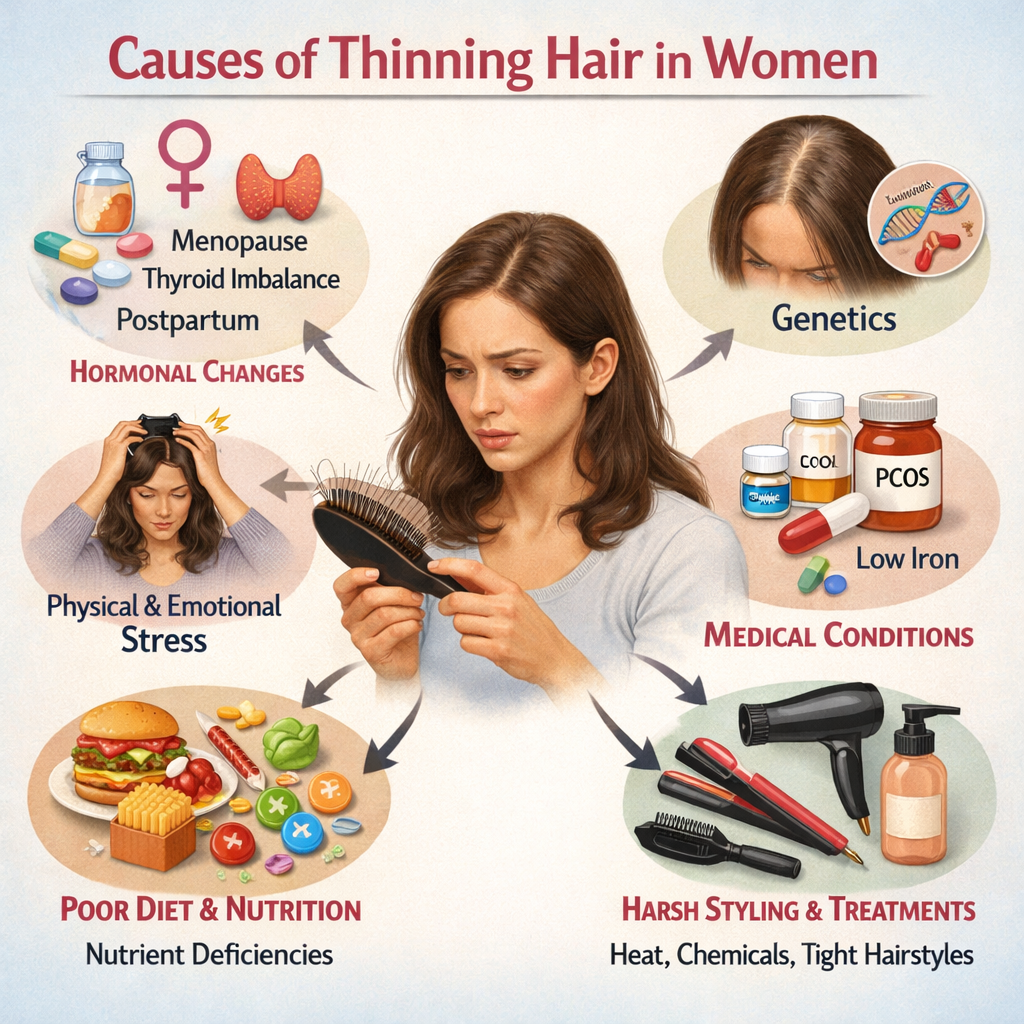
Female hair thinning is far more common than most women realize. Yet many feel dismissed when they seek answers. From a clinical standpoint, hair thinning is often a signal, not a standalone diagnosis.
Hormonal Influences
Hormones play a central role. Common contributors include:
- Perimenopause and menopause
- Estrogen decline
- Relative androgen sensitivity
- Thyroid dysfunction
Even subtle imbalances can disrupt the hair growth cycle.
Nutrient Deficiencies
Hair follicles are metabolically active. Low iron, protein deficiency, zinc imbalance, or inadequate B vitamins may impair growth. Many women with “normal” labs still functionally struggle at the follicle level.
Stress and Inflammation
Chronic stress raises cortisol, alters immune signaling, and shifts nutrients away from hair growth. Inflammatory states can prematurely push follicles into the shedding phase.
Medical Conditions
Autoimmune disorders, insulin resistance, and chronic inflammatory conditions are frequently overlooked contributors to hair thinning.
Why a Root-Cause Approach Matters
Hair thinning is rarely caused by just one factor. Addressing only the surface issue often leads to frustration. A clinician-guided evaluation helps identify why shedding is happening.
Internal Links
- Functional Medicine Services
- Hormone Health
- Hair Restoration Options