How Gut Dysbiosis Impacts Your Immune System: The Gut-Immune Connection Explained
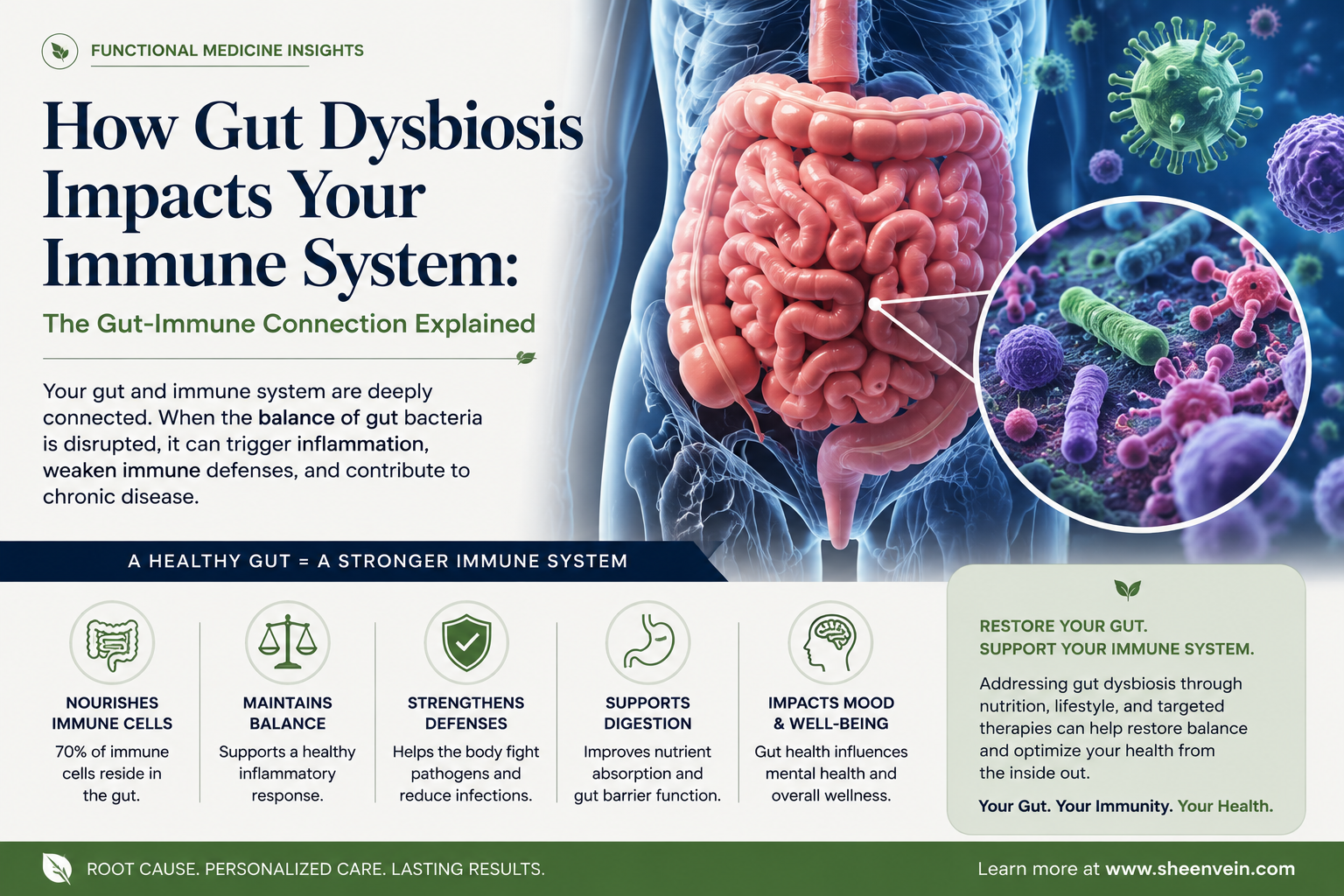
If you seem to catch every virus going around, struggle with chronic inflammation, food sensitivities, autoimmune flares, skin irritation, or unexplained fatigue, your immune system may be signaling that something deeper is going on. One often-overlooked contributor is gut dysbiosis. At Sheen Vein, Aesthetics & Functional Medicine, serving the greater St. Louis area, we frequently help patients uncover gut imbalances that may be quietly affecting immune health.
Many people think of the gut simply as a digestive organ, but it is far more than that. The gastrointestinal tract plays a central role in immune regulation, inflammatory balance, and protection against pathogens. In fact, a substantial portion of the body’s immune activity is closely tied to the gut environment.
According to Cleveland Clinic’s overview of gut health, the health of the gut microbiome has significant implications for overall immune function and systemic health.
1. Your Gut Is One of Your Immune System’s Front Lines
The digestive tract is constantly exposed to food particles, bacteria, toxins, environmental triggers, and potential pathogens. To manage this, the body relies on a sophisticated immune network embedded throughout the intestinal lining.
A healthy gut microbiome helps:
- Train immune cells
- Support appropriate immune tolerance
- Prevent overreaction to harmless substances
- Help defend against harmful microbes
- Maintain intestinal barrier integrity
When the microbiome is balanced, immune responses tend to be more coordinated. When dysbiosis develops, this communication can become disrupted.
2. Gut Dysbiosis Can Increase Inflammatory Signaling
Gut dysbiosis occurs when beneficial microbes decline, harmful organisms overgrow, or microbial diversity becomes disrupted. This imbalance can promote inflammatory signaling throughout the body.
Potential triggers include:
- Antibiotic overuse
- Chronic stress
- High sugar diets
- Poor sleep
- Alcohol excess
- Chronic infections
- Digestive dysfunction
- Repeated acid suppression medication use
When harmful microbial patterns dominate, inflammatory compounds may increase, contributing to symptoms far beyond digestion.
Patients may experience:
- Joint discomfort
- Brain fog
- Fatigue
- Skin inflammation
- Generalized achiness
- Immune reactivity
3. A Disrupted Gut Barrier May Trigger Immune Overactivation
The intestinal lining acts as a protective barrier, selectively allowing nutrients into the bloodstream while helping keep problematic substances contained.
When dysbiosis contributes to barrier dysfunction—sometimes described as increased intestinal permeability—immune activation may increase unnecessarily.
This may allow exposure to:
- Undigested food particles
- Bacterial byproducts
- Inflammatory compounds
- Environmental triggers
The result may be heightened immune stimulation and increased inflammatory burden.
Harvard Health’s discussion on the gut microbiome highlights how gut microbial balance can influence systemic health well beyond digestion.
4. Food Sensitivities and Histamine Reactivity May Worsen
When gut immune regulation becomes impaired, some patients notice increasing sensitivity to foods that were previously well tolerated.
Possible symptoms include:
- Bloating
- Flushing
- Itching
- Sinus congestion
- Skin irritation
- Headaches
- Post-meal fatigue
Not every food reaction is an allergy. In some cases, dysbiosis-driven immune activation or altered histamine handling may contribute to symptom patterns.
5. Autoimmune Conditions May Be Influenced by Gut Health
Autoimmune diseases are complex and multifactorial, but gut health may play an important role in immune regulation.
A dysregulated microbiome may influence:
- Immune tolerance
- Inflammatory signaling
- Barrier function
- Molecular mimicry mechanisms
- Chronic immune activation
Patients with autoimmune tendencies often benefit from evaluating potential gut contributors as part of a broader health assessment.
6. Frequent Illness May Reflect Microbiome Imbalance
A healthy microbiome helps support immune defense against unwanted organisms.
When dysbiosis is present, patients may report:
- Recurrent sinus infections
- Frequent colds
- Poor recovery after illness
- Recurrent digestive infections
- Increased susceptibility to stress-related illness
According to NIH National Center for Complementary and Integrative Health on probiotics and microbiome health, microbial balance plays an important role in immune function.
7. Skin and Immune Health Are Connected
The gut-skin-immune connection is real.
When inflammatory signaling rises, some patients notice worsening:
- Acne
- Rosacea
- Eczema
- Psoriasis flares
- Unexplained rashes
While skin symptoms are multifactorial, gut-mediated immune dysregulation may be one contributing factor.
Functional Medicine Perspective: Looking for Root Causes
At our St. Louis functional medicine clinic, we do not simply ask what symptom you have—we ask why your immune system may be under stress.
Depending on symptoms, evaluation may include:
- Comprehensive stool analysis
- Dysbiosis assessment
- H. pylori testing
- Food sensitivity review
- Inflammatory markers
- Nutrient evaluation
- Digestive function assessment
Learn more about our functional medicine services at Sheen Vein, Aesthetics & Functional Medicine.
Your immune system does not function in isolation. If gut dysbiosis is contributing to immune imbalance, addressing the underlying environment may be an important part of restoring better health.