Hormone Imbalances and Cancer Risk: How Hormonal Health May Influence Long-Term Disease Risk
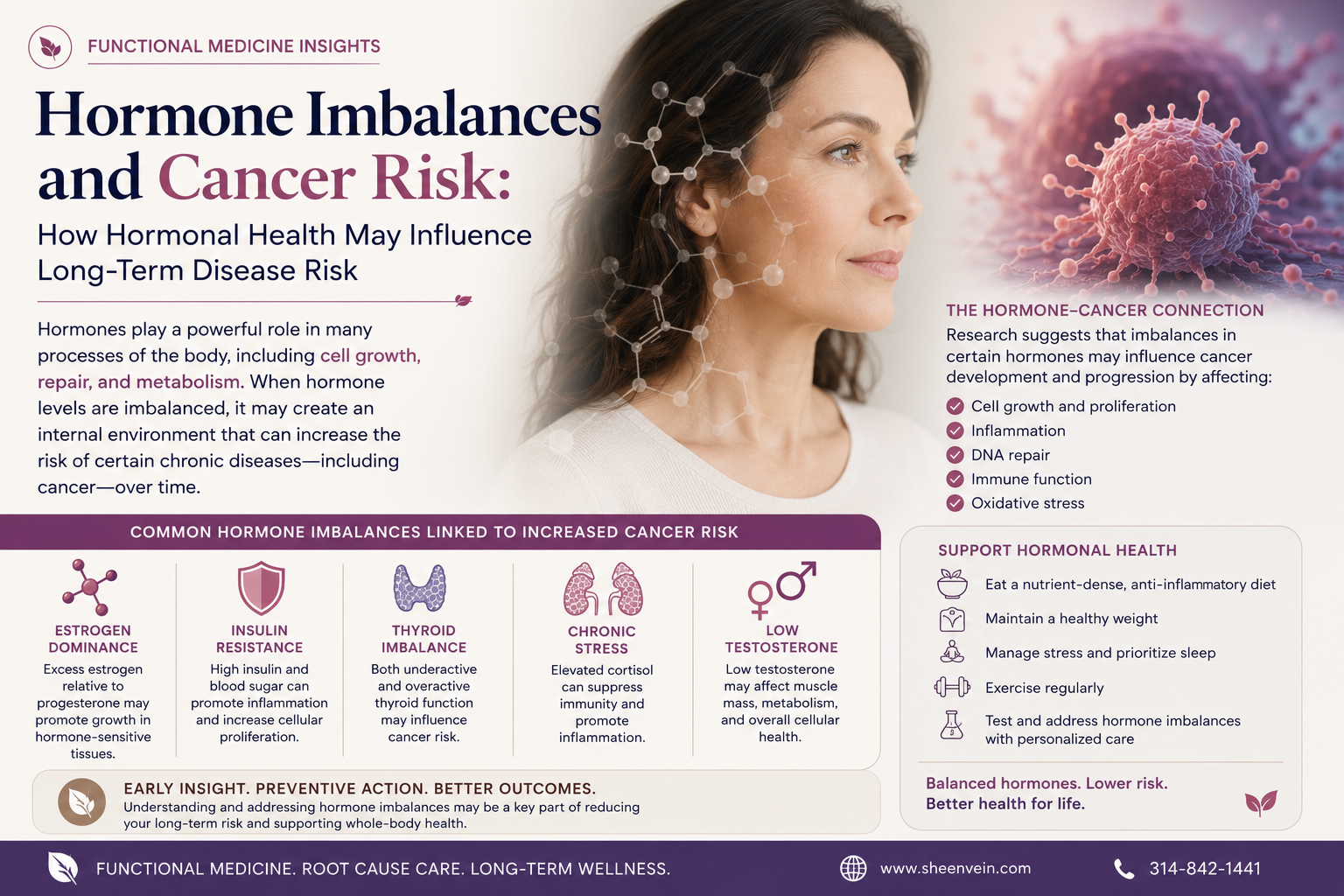
Hormones help regulate some of the body’s most essential functions—from metabolism and energy production to reproduction, mood, sleep, and cellular signaling. But when hormones become chronically imbalanced, the effects may extend beyond fatigue, weight gain, mood changes, or low libido. In some cases, persistent hormonal disruption may influence long-term cancer risk. At Sheen Vein, Aesthetics & Functional Medicine, serving the greater St. Louis area, we help patients better understand how hormone health fits into the bigger picture of preventive wellness.
It’s important to be precise here: hormone imbalances do not automatically cause cancer. Cancer is multifactorial and influenced by genetics, age, environment, lifestyle, inflammation, and other biologic factors. However, certain hormone patterns may contribute to environments that support abnormal cell growth in susceptible tissues.
According to National Cancer Institute’s overview of hormones and cancer, some hormones can influence the growth of hormone-sensitive cancers.
1. Estrogen Imbalance and Hormone-Sensitive Cancers
Estrogen plays an essential role in bone health, cardiovascular health, reproductive function, and brain signaling. However, prolonged exposure to certain estrogen patterns may influence risk in some tissues.
Areas of concern may include:
- Breast tissue
- Endometrial tissue
- Ovarian tissue (complex/multifactorial relationship)
Factors that may contribute to higher estrogen exposure include:
- Obesity
- Insulin resistance
- Chronic alcohol use
- Certain hormone therapies
- Poor estrogen metabolism
- Reduced progesterone balance in some women
Persistent estrogen stimulation—especially without appropriate balancing influences—may contribute to abnormal cellular proliferation in hormone-responsive tissues.
American Cancer Society’s breast cancer risk overview discusses how lifetime estrogen exposure can affect breast cancer risk.
2. Testosterone, DHT, and Prostate Health
Hormones also play important roles in male health. Testosterone and its metabolite DHT influence muscle mass, libido, mood, bone health, and metabolic function.
The relationship between testosterone and prostate cancer is nuanced and often misunderstood. Historically, there was concern that testosterone directly “caused” prostate cancer, but modern research suggests the relationship is more complex.
That said, hormone balance and prostate health remain clinically relevant, particularly when evaluating:
- Prostate enlargement
- PSA trends
- Androgen metabolism
- Individual cancer risk factors
The key issue is thoughtful monitoring—not simplistic assumptions.
3. Insulin Resistance and Growth Signaling
Insulin is technically a hormone—and one of the most overlooked in long-term disease discussions.
Chronically elevated insulin levels associated with insulin resistance may influence:
- Cellular growth signaling
- Inflammation
- Oxidative stress
- Weight gain
- Metabolic dysfunction
Persistently elevated insulin and insulin-like growth factor (IGF-1) pathways have been studied in relation to several cancer risks, including colorectal, breast, and endometrial cancers.
MD Anderson Cancer Center on obesity, insulin, and cancer risk explains how metabolic dysfunction may contribute to cancer-promoting environments.
4. Chronic Cortisol Dysregulation and Immune Surveillance
Cortisol helps regulate stress responses, inflammation, metabolism, and immune activity. Short-term cortisol is protective. Chronic dysregulation is different.
Persistently abnormal stress hormone patterns may contribute to:
- Immune dysfunction
- Chronic inflammation
- Poor sleep
- Blood sugar instability
- Impaired recovery
Because the immune system plays an important role in recognizing abnormal cells, chronic physiologic stress may influence overall health resilience.
This does not mean stress directly causes cancer—but chronic inflammatory and metabolic stress may be relevant contributors.
5. Thyroid Hormones and Cellular Regulation
Thyroid hormones regulate metabolic rate, energy production, temperature regulation, and cellular activity throughout the body.
Significant thyroid imbalance can affect:
- Metabolic efficiency
- Oxidative stress
- Hormonal interplay
- Tissue signaling
While thyroid dysfunction does not automatically create cancer risk, abnormal endocrine signaling deserves thoughtful evaluation as part of comprehensive health care.
6. Hormone Metabolism Matters, Not Just Hormone Levels
A “normal” hormone level does not always tell the whole story.
Hormone metabolism, detoxification, receptor sensitivity, and downstream signaling all matter.
Examples include:
- Estrogen metabolite balance
- SHBG changes
- Testosterone-to-estradiol relationships
- DHT conversion patterns
- Cortisol rhythm abnormalities
- Insulin dynamics
Functional medicine often looks beyond simple reference ranges to broader physiologic patterns.
Functional Medicine Perspective: Risk Reduction Through Better Hormonal Health
At our St. Louis functional medicine clinic, our goal is not fear-based medicine—it’s better understanding.
Depending on symptoms and risk factors, evaluation may include:
- Hormone testing
- Thyroid assessment
- Insulin resistance evaluation
- Inflammatory markers
- Metabolic risk review
- Lifestyle and nutrition assessment
Learn more about our functional medicine services at Sheen Vein, Aesthetics & Functional Medicine.
Hormonal health is about far more than energy, libido, or mood. In some individuals, optimizing hormone balance may be part of a smarter long-term preventive health strategy.