How Your Body Generates Energy (And Why Insulin Resistance Matters) – St. Louis
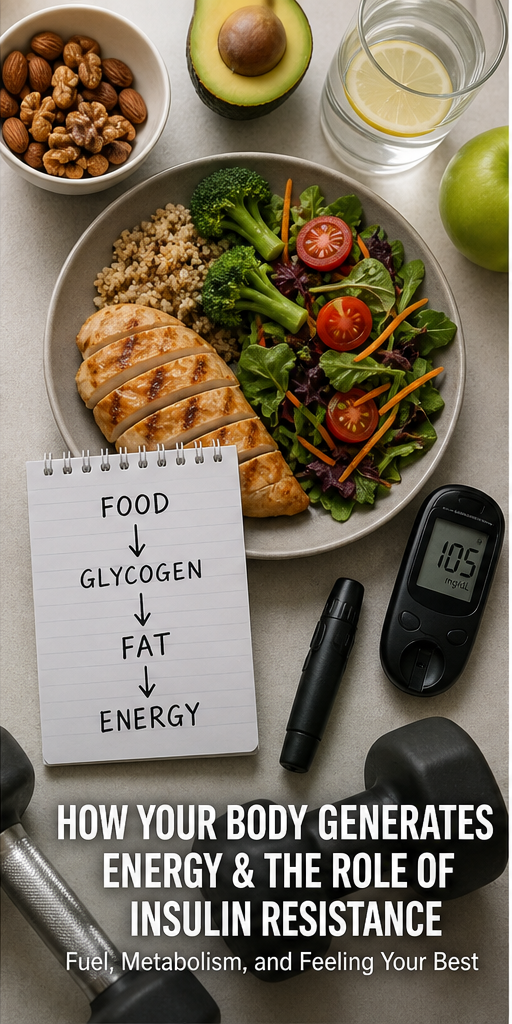
Many patients come in saying, “I’m exhausted no matter what I eat.” In many cases, the issue isn’t just diet—it’s how your body processes energy.
Your body primarily uses three fuel sources:
- Glucose (from carbohydrates)
- Glycogen (stored glucose in liver/muscle)
- Fat (long-term energy storage)
After you eat, carbohydrates are broken down into glucose. Insulin helps shuttle that glucose into cells for energy. When functioning properly, this system is incredibly efficient.
But in insulin resistance, cells stop responding to insulin effectively. As a result:
- Glucose stays elevated in the bloodstream
- Cells are “starved” for energy
- The body shifts toward fat storage instead of fat burning
The Harvard Medical School explains that insulin resistance is a key driver of fatigue, weight gain, and metabolic disease.
👉 https://www.health.harvard.edu/diseases-and-conditions/insulin-resistance
Similarly, the National Institute of Diabetes and Digestive and Kidney Diseases highlights how disrupted glucose metabolism impacts overall health.
👉 https://www.niddk.nih.gov/health-information/diabetes/overview/what-is-diabetes
At Sheen Vein Aesthetics and Functional Medicine, we assess metabolic health at a deeper level—looking at insulin, mitochondrial function, inflammation, and hormone balance.
🔗 https://sheenvein.com/misc/functional-integrative-medicine
If you feel tired 2–3 hours after eating, struggle with weight, or have brain fog, insulin resistance may be playing a role.