Why Memory Loss Happens: A Functional Medicine Perspective on Brain Health
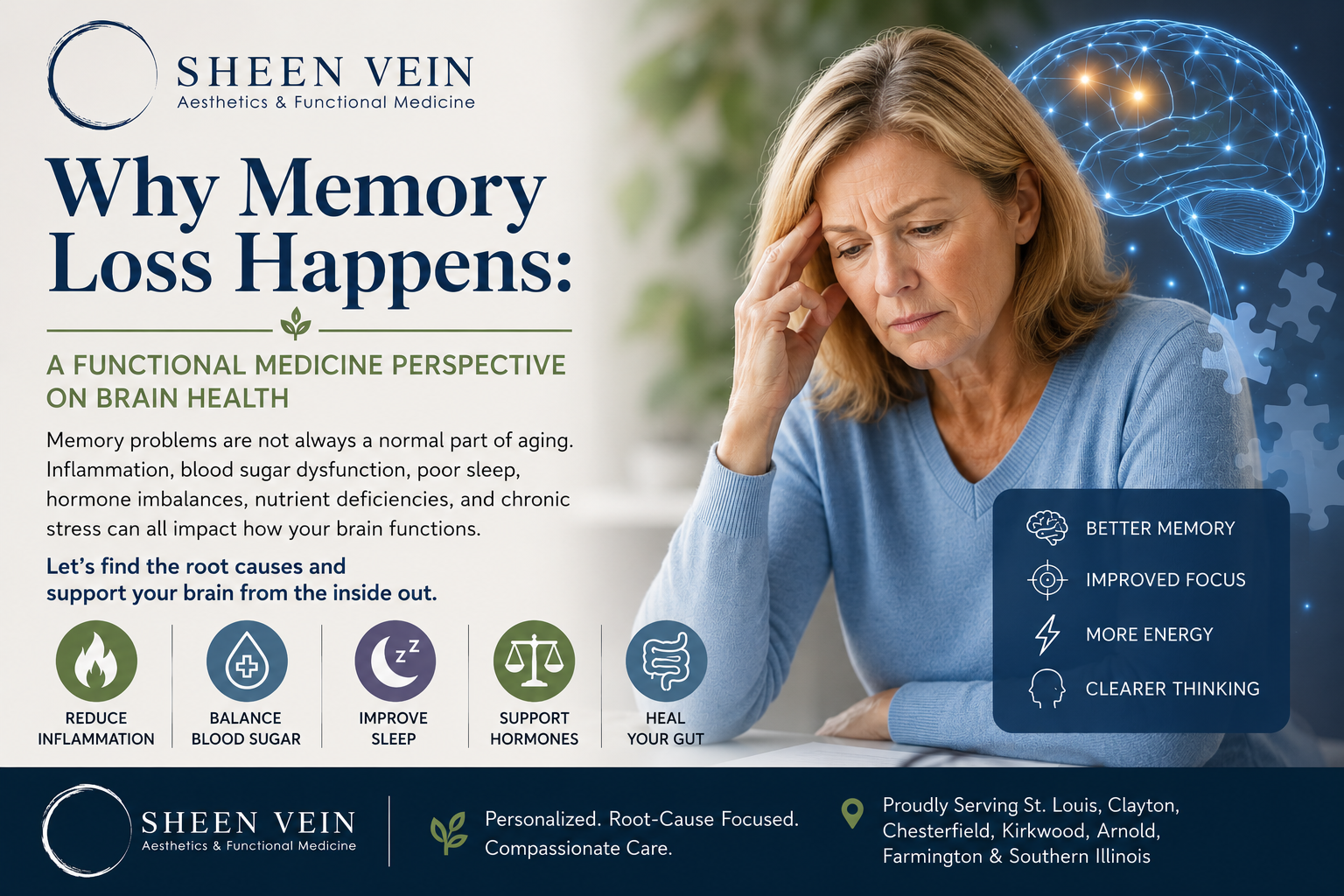
Forgetfulness can happen occasionally to everyone, but when memory problems begin interfering with daily life, concentration, productivity, or relationships, it may signal something deeper. At Sheen Vein Aesthetics and Functional Medicine, we work with patients throughout St. Louis, Clayton, Chesterfield, Kirkwood, Arnold, Farmington, and Southern Illinois who struggle with brain fog, poor concentration, and memory concerns that are often dismissed as “just aging.”
From a functional medicine perspective, memory loss is not always simply a normal part of getting older. The brain is heavily influenced by inflammation, blood flow, hormones, blood sugar regulation, sleep quality, nutrient status, and mitochondrial health. When these systems become dysfunctional, cognitive performance can decline.
What Causes Memory Loss?
Memory involves a complex network of neurons, neurotransmitters, oxygen delivery, and energy production inside the brain. When the brain does not receive adequate nutrients, oxygen, or metabolic support, symptoms such as forgetfulness, brain fog, slowed thinking, and difficulty concentrating may occur.
The Mayo Clinic overview on mild cognitive impairment explains that cognitive decline may be linked to medical conditions, lifestyle factors, vascular disease, and neurodegeneration.
Common Functional Medicine Causes of Memory Problems
1. Chronic Inflammation
Inflammation is increasingly recognized as a major contributor to cognitive decline. Chronic inflammatory states may damage blood vessels, impair communication between brain cells, and increase oxidative stress within the nervous system.
According to Harvard Health on inflammation and the brain, ongoing inflammation may influence memory, mood, and overall brain function.
2. Insulin Resistance and Blood Sugar Dysfunction
The brain requires large amounts of energy to function properly. Insulin resistance can impair how the brain uses glucose, potentially contributing to fatigue, brain fog, and memory difficulties. Some researchers even refer to Alzheimer’s disease as “type 3 diabetes” because of the relationship between insulin dysfunction and cognitive decline.
The National Institute on Aging discusses diabetes and brain health and how metabolic dysfunction may affect cognition.
3. Poor Sleep and Sleep Apnea
During deep sleep, the brain performs critical repair and detoxification processes. Conditions like sleep apnea may reduce oxygen delivery to the brain and impair restorative sleep cycles, leading to memory problems, fatigue, headaches, and poor focus.
The Cleveland Clinic overview of sleep apnea explains how untreated sleep disorders can impact brain health and cognitive performance.
4. Nutrient Deficiencies
Deficiencies in vitamin B12, omega-3 fatty acids, magnesium, vitamin D, and other nutrients may negatively affect nerve signaling and neurotransmitter production. Poor gut health or chronic digestive problems can also interfere with nutrient absorption.
The National Institutes of Health fact sheet on vitamin B12 explains the important role B12 plays in neurological function.
5. Hormonal Imbalances and Stress
Hormones such as thyroid hormone, estrogen, testosterone, and cortisol influence memory, focus, and mood. Chronic stress may also elevate cortisol levels, which can negatively affect the hippocampus — the part of the brain heavily involved in memory formation.
The American Psychological Association explains stress and memory and how chronic stress impacts cognitive function.
A Functional Medicine Approach to Brain Health
At Sheen Vein Aesthetics and Functional Medicine, we take a comprehensive approach to evaluating memory concerns and brain fog. Rather than only focusing on symptoms, functional medicine aims to identify potential root contributors such as inflammation, metabolic dysfunction, sleep disorders, hormonal imbalance, vascular health, gut dysfunction, and nutritional deficiencies.
Depending on the individual, evaluations may include advanced laboratory testing, hormone analysis, inflammatory markers, metabolic screening, nutritional assessments, and lifestyle review.
Our goal is to help patients throughout the St. Louis region better understand the possible causes of cognitive symptoms while supporting overall brain health, energy production, and wellness.
If you are experiencing memory problems, difficulty concentrating, or persistent brain fog, it may be time to look deeper into the underlying causes.
Learn more about our functional medicine services here:
Functional Medicine at Sheen Vein Aesthetics and Functional Medicine