Probiotics Are Not All the Same: Why the Right Gut Support Depends on the Right Strain
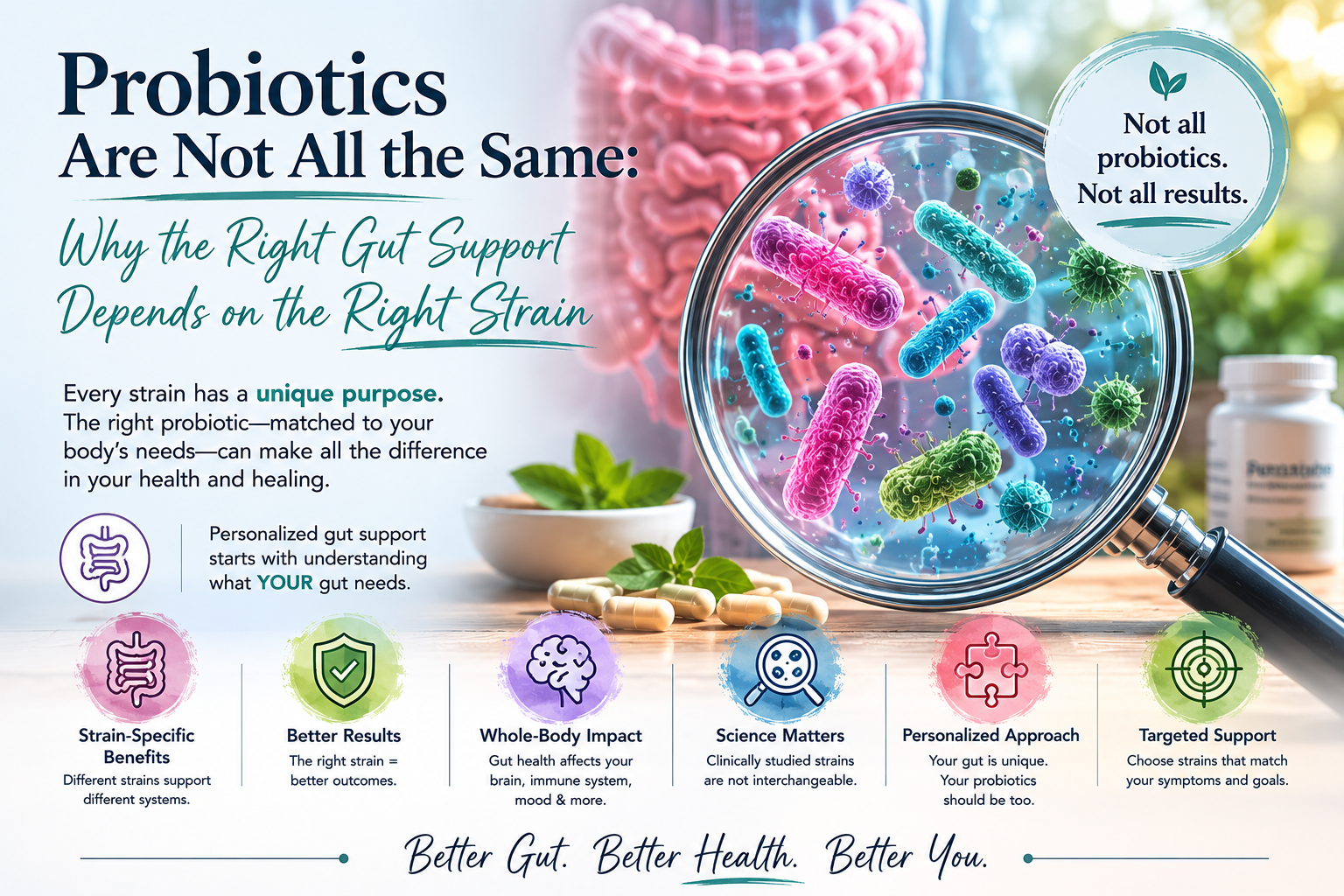
Walk down the supplement aisle or search online for gut health support, and you’ll find hundreds of probiotic products all claiming to improve digestion, immunity, bloating, and overall wellness. But here’s the reality: probiotics are not all the same. At Sheen Vein, Aesthetics & Functional Medicine, serving the greater St. Louis area, we frequently help patients understand that choosing the wrong probiotic may be ineffective—or in some cases, may even worsen symptoms.
The term “probiotic” simply refers to live microorganisms that may provide health benefits when taken in adequate amounts. But just like medications in the same category can work differently, probiotic strains have unique actions, target different problems, and may affect individuals in very different ways.
According to Cleveland Clinic’s overview of probiotics, not all probiotic species provide the same benefits, and effectiveness often depends on the specific strain being used.
1. Different Strains Do Different Jobs
Many people assume probiotics are interchangeable. They’re not.
For example:
- Some strains support bowel regularity
- Some may help after antibiotic use
- Some are better studied for IBS symptoms
- Some help maintain vaginal microbiome balance
- Some support immune regulation
- Some produce beneficial short-chain fatty acids
- Some may help crowd out harmful organisms
A product containing Lactobacillus rhamnosus will behave differently than one containing Bifidobacterium infantis or Saccharomyces boulardii.
This is why saying “I tried a probiotic and it didn’t help” is a bit like saying “I tried a medication once, so all medications must not work.”
2. Some Probiotics Can Worsen Symptoms
This surprises many patients.
If someone has SIBO (small intestinal bacterial overgrowth), histamine sensitivity, significant bloating, methane overgrowth, or certain dysbiosis patterns, the wrong probiotic may increase symptoms.
Possible reactions may include:
- Increased bloating
- Gas
- Abdominal discomfort
- Brain fog
- Histamine-like symptoms
- Feeling worse after meals
Certain strains may produce histamine, while others may be better tolerated in sensitive individuals.
NIH National Center for Complementary and Integrative Health on probiotics emphasizes that probiotic effects depend heavily on strain selection and the individual using them.
3. Colony Count Alone Doesn’t Tell the Whole Story
Many supplement labels advertise massive numbers like 50 billion or 100 billion CFUs (colony-forming units), suggesting “more must be better.”
Not necessarily.
A lower-dose probiotic with well-researched strains may outperform a high-dose generic blend. Quality, survivability, strain specificity, formulation, and clinical relevance matter far more than a marketing number.
Factors that matter include:
- Exact strain identity
- Dose used in research
- Shelf stability
- Delivery method
- Survivability through stomach acid
- Product quality control
4. Soil-Based, Yeast-Based, and Traditional Probiotics Are Different
Not all probiotics are bacterial.
Common categories include:
Lactobacillus / Bifidobacterium strains
Traditional probiotics often used for digestive and immune support.
Saccharomyces boulardii
A beneficial yeast often considered when antibiotic-associated issues or certain infectious patterns are present.
Soil-based organisms
Spore-forming organisms designed to survive harsh GI conditions differently than traditional strains.
Each category behaves differently and may be more appropriate in different clinical scenarios.
5. The Gut Problem Matters
The “best probiotic” depends on what you’re actually treating.
Examples:
- IBS with diarrhea may need a different approach than constipation
- Post-antibiotic gut disruption differs from chronic dysbiosis
- H. pylori-associated irritation differs from fungal overgrowth
- Histamine intolerance requires different considerations
- SIBO may require caution with certain products
This is where personalized medicine becomes important.
6. Probiotics Are Only One Piece of Gut Health
Even the perfect probiotic cannot overcome poor gut conditions.
If someone has:
- Ongoing high sugar intake
- Chronic stress
- Low stomach acid
- Poor sleep
- Recurrent antibiotic exposure
- H. pylori
- Dysbiosis
- Inflammation
- Food sensitivities
Then simply adding a probiotic may not fix the underlying issue.
Gut health often requires addressing the environment—not just adding bacteria.
Functional Medicine Perspective: Personalized Gut Support
At our St. Louis functional medicine clinic, we often evaluate the broader gut ecosystem rather than recommending generic supplements.
Depending on symptoms, this may include:
- Comprehensive stool analysis
- SIBO evaluation
- H. pylori testing
- Food sensitivity review
- Inflammatory markers
- Digestive function assessment
Learn more about our functional medicine services at Sheen Vein, Aesthetics & Functional Medicine.
When it comes to probiotics, more is not always better—and different is not always appropriate. The right probiotic depends on the right person, the right gut environment, and the right clinical context.