Sleep Problems and Hormone Imbalances: The Hidden Connection Affecting Your Health in St. Louis
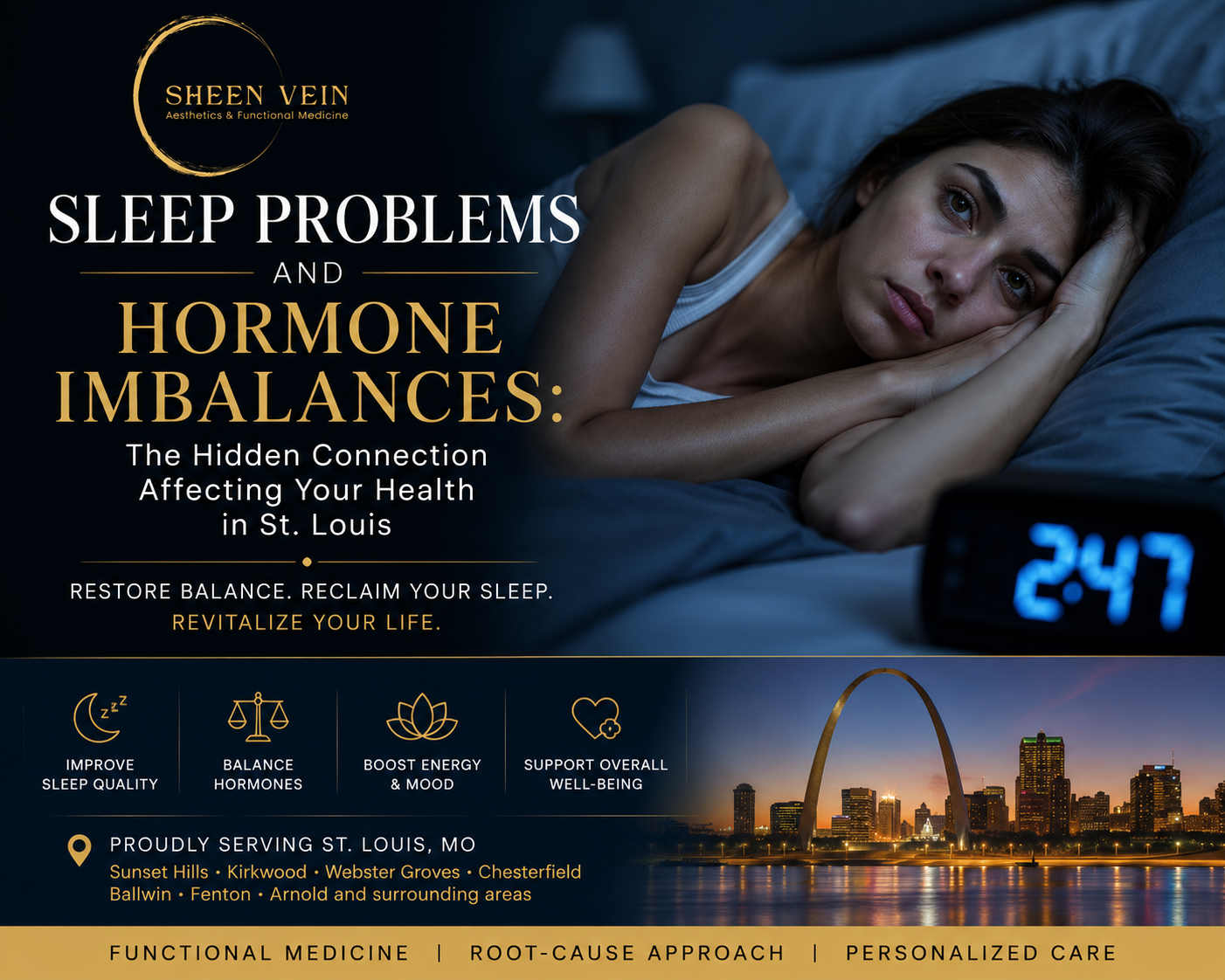
Sleep Problems and Hormone Imbalances: Understanding the Two-Way Connection
Why Hormones May Be the Missing Piece Behind Your Sleep Struggles
If you have trouble falling asleep, wake up multiple times during the night, or never feel rested in the morning, hormones may be playing a larger role than you realize. While stress, poor sleep habits, and sleep apnea are common causes of sleep disturbances, hormonal imbalances can significantly affect sleep quality and overall health.
At Sheen Vein Aesthetics and Functional Medicine in St. Louis, Missouri, we frequently evaluate patients experiencing fatigue, insomnia, brain fog, weight gain, and low energy. In many cases, underlying hormone imbalances contribute to both poor sleep and daytime symptoms.
The Relationship Between Sleep and Hormones
Sleep and hormones work together in a continuous feedback loop. Hormones influence sleep quality, while sleep directly affects hormone production and regulation.
When either system becomes disrupted, the other often follows.
According to the National Institutes of Health, sleep plays a critical role in regulating metabolism, immune function, stress response, and hormone production.
Learn more:
https://www.nhlbi.nih.gov/health/sleep
Cortisol: The Stress Hormone
One of the most common hormonal contributors to poor sleep is cortisol.
Cortisol naturally follows a daily rhythm. Levels should be highest in the morning to help you wake up and gradually decline throughout the day. Chronic stress, however, can disrupt this rhythm.
When cortisol remains elevated at night, symptoms may include:
- Difficulty falling asleep
- Frequent nighttime awakenings
- Racing thoughts
- Increased anxiety
- Morning fatigue despite adequate sleep
Research has shown that chronic stress and elevated cortisol can negatively impact sleep quality and overall health.
American Psychological Association:
https://www.apa.org/topics/stress
Thyroid Hormones and Sleep
Both hypothyroidism and hyperthyroidism can interfere with sleep.
Hypothyroidism may contribute to:
- Excessive daytime fatigue
- Increased sleepiness
- Brain fog
- Depression
Hyperthyroidism may cause:
- Insomnia
- Anxiety
- Restlessness
- Night sweats
- Increased heart rate
American Thyroid Association:
https://www.thyroid.org/thyroid-and-sleep/
Estrogen and Progesterone
Hormonal fluctuations during perimenopause and menopause are among the most common causes of sleep disturbances in women.
Declining estrogen levels can contribute to:
- Hot flashes
- Night sweats
- Mood changes
- Frequent awakenings
Progesterone is often considered a naturally calming hormone. Lower progesterone levels may increase anxiety and make it more difficult to maintain restorative sleep.
The North American Menopause Society discusses how hormonal changes during menopause can significantly impact sleep quality.
https://menopause.org/patient-education/menopause-topics/sleep-problems
Testosterone and Sleep
Low testosterone can affect both men and women.
Symptoms may include:
- Fatigue
- Reduced motivation
- Poor recovery
- Mood changes
- Sleep disturbances
Research also suggests that poor sleep itself may lower testosterone production, creating a cycle that becomes difficult to break.
Endocrine Society:
https://www.endocrine.org/patient-engagement/endocrine-library/hormones-and-sleep
Insulin Resistance and Blood Sugar Dysregulation
Many patients are surprised to learn that blood sugar imbalances can significantly affect sleep.
Blood sugar fluctuations during the night may contribute to:
- Nighttime awakenings
- Night sweats
- Increased heart rate
- Morning headaches
- Poor sleep quality
Insulin resistance is also associated with chronic inflammation, weight gain, and metabolic dysfunction, all of which may negatively affect sleep.
CDC Prediabetes Information:
https://www.cdc.gov/diabetes/basics/prediabetes.html
A Functional Medicine Perspective
At Sheen Vein Aesthetics and Functional Medicine, we recognize that sleep problems are often symptoms rather than the root cause.
A comprehensive evaluation may include assessment of:
- Cortisol patterns
- Thyroid function
- Estrogen and progesterone balance
- Testosterone levels
- Insulin resistance
- Nutritional deficiencies
- Inflammation
- Sleep apnea risk
Rather than simply masking symptoms, functional medicine seeks to identify and address the underlying factors contributing to poor sleep.
Sleep and Hormone Optimization in St. Louis, Missouri
If you live in St. Louis, Sunset Hills, Chesterfield, Kirkwood, Fenton, Arnold, Columbia, Illinois, or surrounding communities and struggle with fatigue, insomnia, hormone imbalances, or poor sleep quality, a comprehensive functional medicine evaluation may help uncover why you are not getting restorative sleep.
Learn more about our functional medicine services:
https://www.sheenveinandcosmetics.com/
Quality sleep is one of the foundations of good health. By identifying and correcting hormone imbalances, many patients experience improvements in energy, mental clarity, mood, metabolism, and overall well-being.