How an Appendectomy Impacts Gut Health for Life
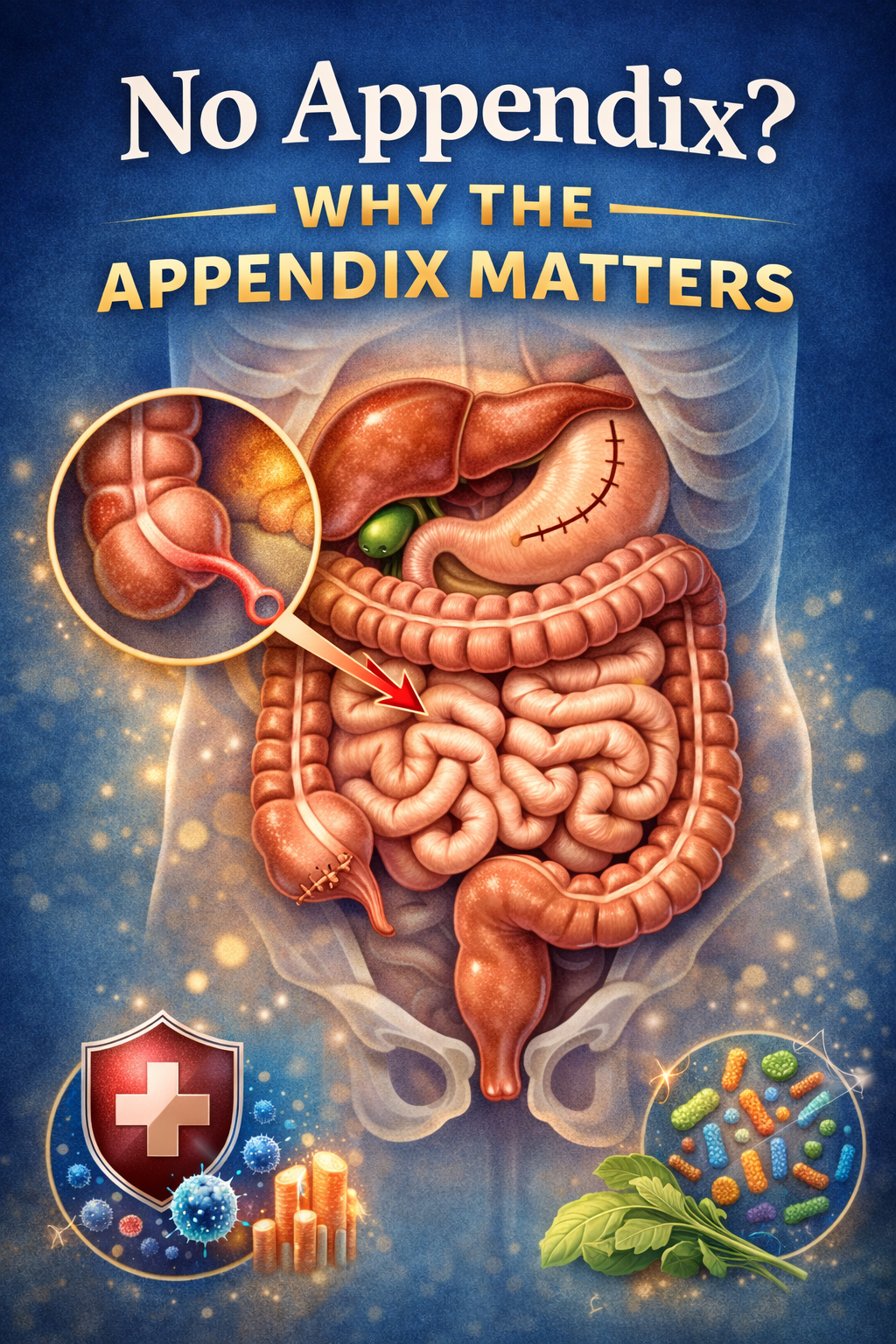
What the Appendix Actually Does
Science now recognizes the appendix as:
1. A Microbiome Storage Chamber
It stores healthy bacteria that can repopulate the gut after:
- Food poisoning
- Diarrhea
- Antibiotic use
- Gastrointestinal infections
2. An Immune Training Organ
It exposes the body to small, non-harmful antigens to strengthen long-term immunity.
3. A Gut Stability Organ
It helps maintain microbial diversity, especially after illness.
What Happens After Appendix Removal?
1. Lower Microbiome Diversity
Because the appendix can no longer reseed the gut.
2. Higher Risk of Gut Infections
Research shows increased risk of:
- C. diff
- Gastroenteritis
- Foodborne illness
3. Higher Long-Term Risk of IBD
Crohn’s and ulcerative colitis risk appears increased in people without an appendix.
4. Slower Recovery After Antibiotics
Without the appendix, the gut has a weaker backup system.
5. Higher Rates of Dysbiosis
Patients often describe:
- Bloating
- Food sensitivities
- Irregular stools
- Fatigue
- Brain fog
See our related pages on Chronic Fatigue and Brain Fog.
Why Some Patients Don’t Notice Until Years Later
Gut imbalance after appendectomy can develop slowly.
Many patients don’t connect their long-term gut symptoms to the surgery they had at age 10, 15, or 25.
By the time they reach their 40s or 50s, they are often dealing with:
- IBS-like symptoms
- Food reactions
- Fatigue
- Histamine sensitivity
- Skin issues
- Chronic inflammation
Surgery is not the problem—your body simply lost a tool it relied on.
This is why functional medicine is uniquely suited to help.