What Causes Broken Capillaries on the Face and How Can You Treat Them?
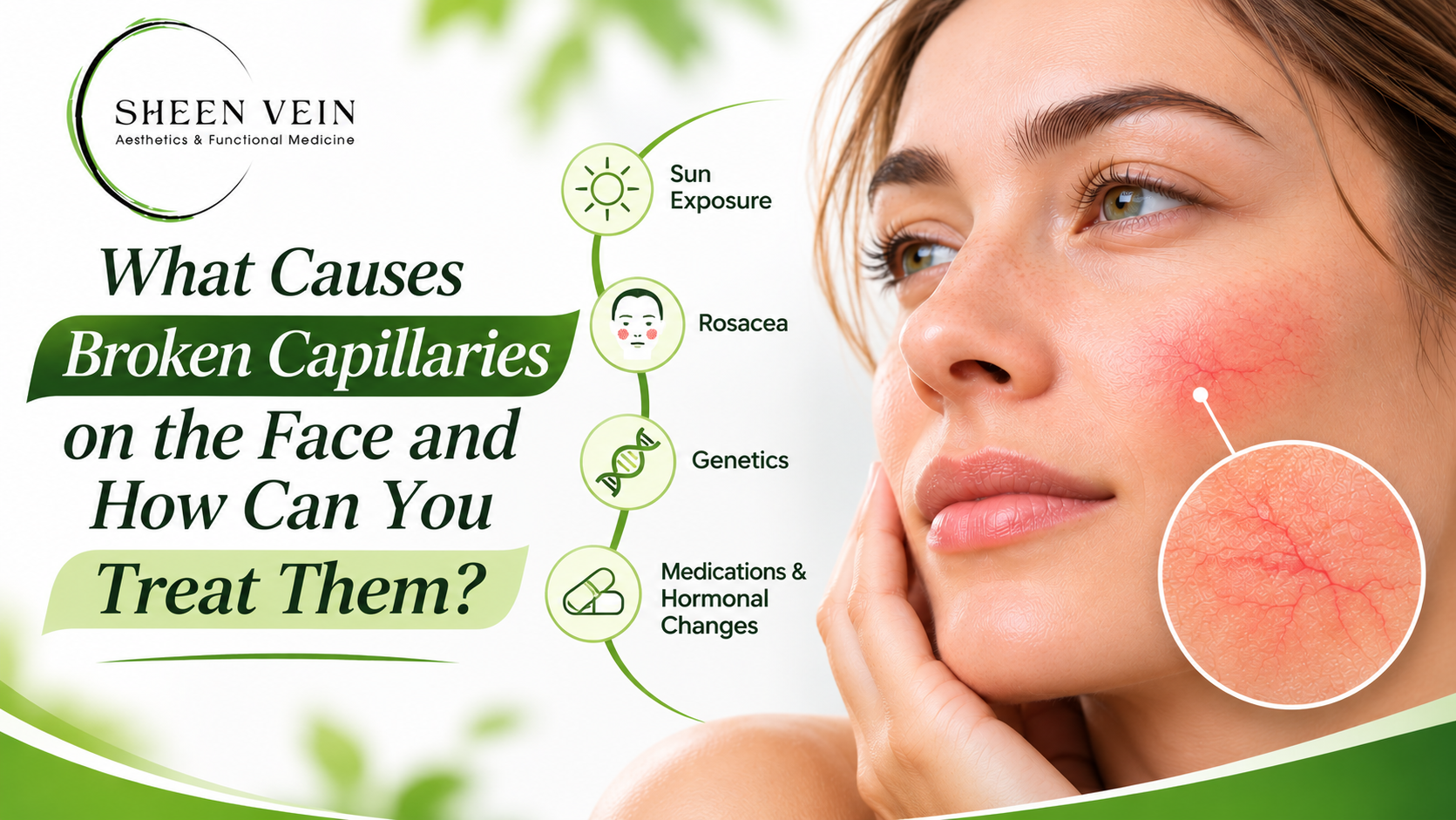
You lean closer to the bathroom mirror and notice fine red or purple lines across your cheeks or around your nose. Most people call these broken capillaries on the face, but the vessels are usually not ruptured. They are small, permanently widened blood vessels near the skin’s surface, called telangiectasias. Sun damage, rosacea, genetics, and other factors can all contribute. Gentle skincare and sunscreen can help protect your skin, while professional vascular treatments may reduce the appearance of these visible vessels.
What Are Broken Capillaries on the Face?
“Broken capillaries” is a common term rather than a formal medical diagnosis. Dermatologists generally describe these lines as telangiectasias: superficial vessels that have dilated and stay visible. They look like thin red, pink, or purple threads, sometimes branching like a spider web. They appear most often on the cheeks, the sides of the nose, and the chin. On darker skin tones, these vessels may be less noticeable and harder to identify.
Not every red mark on the face is the same thing, and the difference affects treatment.
- Flushing is temporary redness from a surge of blood flow, and it fades.
- Diffuse redness is a persistent, blotchy or uniform blush, often over the central face.
- Telangiectasias are individual visible vessels that remain even when the skin is calm. People sometimes call them facial spider veins.
- Petechiae or purpura are pinpoint or larger purple spots caused by actual bleeding under the skin. They are a different problem and call for a different evaluation.
Rosacea can involve flushing, persistent redness, and telangiectasias together, which is why these concerns so often overlap.
What Causes Broken Capillaries on the Face?
Several factors can contribute. Some are well-established causes, others are associated factors, and some are triggers that worsen redness without necessarily causing permanent vessel changes.
Sun exposure and aging
Years of ultraviolet exposure damage the collagen that supports small vessels, and thinning skin makes them more visible. Facial telangiectasias may have a hereditary component and can become more noticeable with sun exposure and environmental factors such as wind and cold. The cheeks and nose are commonly affected because they are frequently exposed.
Rosacea
Rosacea is a chronic condition that can cause flushing, lasting redness, bumps, and enlarged visible vessels on the face. Telangiectasias may appear before or after a rosacea diagnosis, so visible vessels alone do not confirm it. A qualified healthcare professional can determine whether rosacea is contributing to your symptoms.
Genetics
If your parents or siblings have visible facial vessels, you are more likely to develop them too. Genetic differences may help explain why some people develop visible facial vessels while others with similar sun exposure do not.
Skin Injury, Medications, and Hormonal Changes
Prolonged or inappropriate use of potent topical corticosteroids on the face can thin the skin and make blood vessels more noticeable. These medications should be used only as directed by a qualified healthcare professional. Hormonal changes may play a role in some people, and dermatology sources note that visible vessels can occasionally reflect elevated estrogen levels, certain medications such as calcium channel blockers, or, rarely, a systemic condition. Aggressive scrubbing or repeated skin trauma is often blamed, but the evidence is weaker than it is for sun and rosacea.
Heat, alcohol, spicy food, and stress commonly trigger flushing and can make existing redness more noticeable. A single glass of wine or a hot shower does not automatically create a permanent vessel, though repeated flushing may contribute to people with rosacea.
Are Broken Capillaries on the Face Permanent?
Established telangiectasias generally do not fade on their own. Redness from flushing or a flare comes and goes, and a bruise from a bump heals in days or weeks. Blood vessels that remain visible even when your skin is calm may represent persistent telangiectasias.
Skincare alone is unlikely to remove it. Products can calm irritation, support the skin barrier, and in some cases mask color, but topical products generally cannot reliably eliminate an established vessel. Be cautious about any product promising to “heal” broken capillaries.
How Can You Treat Broken Capillaries on the Face?
Professional treatments can reduce how visible these vessels are. Which one fits depends on the size and depth of the vessels, your skin tone, and the underlying cause.
Vascular lasers
Vascular lasers emit wavelengths absorbed by hemoglobin in the blood. The absorbed energy heats the targeted blood vessel, allowing the body to gradually clear the treated vessel. Different wavelengths suit different problems. A 595 nm pulsed dye laser is commonly used for facial redness and superficial vessels. A 532 nm KTP laser may target fine, visible vessels, while a 1064 nm Nd:YAG laser can reach deeper vessels. Alexandrite lasers are sometimes used for resistant vessels or darker skin types. Not every laser works equally well on every vessel or skin tone, which is why devices and settings matter as much as the technology itself.
Intense pulsed light
IPL uses broad-spectrum light rather than a single laser wavelength, so it is technically not a laser. IPL may improve diffuse facial redness and superficial blood vessels in selected patients. Depending on the device and settings, it may also address certain pigmentation concerns. It may not suit every patient or skin type, and darker skin generally calls for greater caution.
Why sclerotherapy is different on the face
Sclerotherapy, which closes vessels with an injected solution, is a mainstay for leg spider veins. Sclerotherapy is commonly used for leg spider veins, but treating facial vessels involves different anatomical risks and requires careful clinical consideration. It is not a routine substitute for laser treatment on the face.
What to expect
Some patients may need multiple treatment sessions spaced several weeks apart. Results depend on vessel size, location, skin type, and the technology used. Common side effects include temporary redness, swelling, and bruising, particularly with pulsed dye lasers. Pigment changes and other complications are possible, so treatment choice should account for your skin tone, medical history, and medications. Treated vessels can improve, but new ones can form over time, and some people return periodically for maintenance.
Treating vessels is also separate from treating rosacea. Lasers and light address visible vessels and redness, while rosacea itself is typically managed with prescription therapies and trigger management.
Can You Prevent Broken Capillaries on the Face?
You cannot prevent every visible facial blood vessel, especially when genetics or rosacea are involved, but certain skincare habits may help reduce irritation and minimize additional damage.
- Wear broad-spectrum sunscreen every day, and add a hat or shade in strong sun.
- Cleanse gently with lukewarm water and skip harsh scrubs and aggressive tools.
- Avoid picking or squeezing blemishes.
- Treat rosacea if you have it, rather than waiting for vessels to multiply.
- Do not use topical steroids on your face without clinical direction.
- Notice your own flushing triggers, such as heat, alcohol, or certain foods, and adjust where practical.
When Should You See a Professional?
A cosmetic consultation makes sense if visible vessels bother you and you want to understand your options. A medical evaluation is more important if the change is sudden, widespread, or unexplained. You should also seek medical evaluation if you experience unexplained bruising or bleeding, spots that do not fade when pressed, frequent nosebleeds, or visible blood vessels on the lips or inside the mouth. Persistent redness with bumps or eye irritation also deserves assessment, because it may point to rosacea. An accurate diagnosis comes first, because the right treatment depends on what is actually causing the redness.
Frequently Asked Questions
Can broken capillaries on the face heal on their own?
A bruise or temporary flush will fade. Established telangiectasias generally persist unless they are treated.
Can skincare products remove broken facial capillaries?
Not reliably. Sunscreen, gentle cleansing, and barrier support protect your skin and may reduce irritation, but they do not eliminate established vessels.
Does rosacea cause broken capillaries on the face?
Rosacea can include visible vessels along with flushing and persistent redness. But many people have facial telangiectasias without rosacea, so a clinician should evaluate the whole picture.
Is laser treatment effective for facial broken capillaries?
Vascular lasers are widely used and can noticeably improve the appearance of facial vessels in many patients. Results depend on vessel type, skin tone, and the device used, and complete clearance is not guaranteed.
Can broken capillaries return after treatment?
Vessels that have been treated successfully often stay improved, but new ones can develop, especially with ongoing sun exposure or rosacea. Maintenance and sun protection help.
Next Steps for Persistent Facial Redness
Visible facial blood vessels are common and often harmless, and professional treatments may help reduce their appearance. The cause shapes the plan, whether it is sun damage, rosacea, genetics, or something else, and so do vessel type and skin tone.
If you are in St. Louis and want to understand what is behind your facial redness or visible vessels, the team at Sheen Vein Aesthetics and Functional Medicine can talk through your options, including facial vein removal and rosacea care. Schedule a consultation to discuss what may be appropriate for your skin.