Chronic Sinusitis and Gut Health: Could an Unhealthy Gut Be Contributing to Recurrent Sinus Infections?
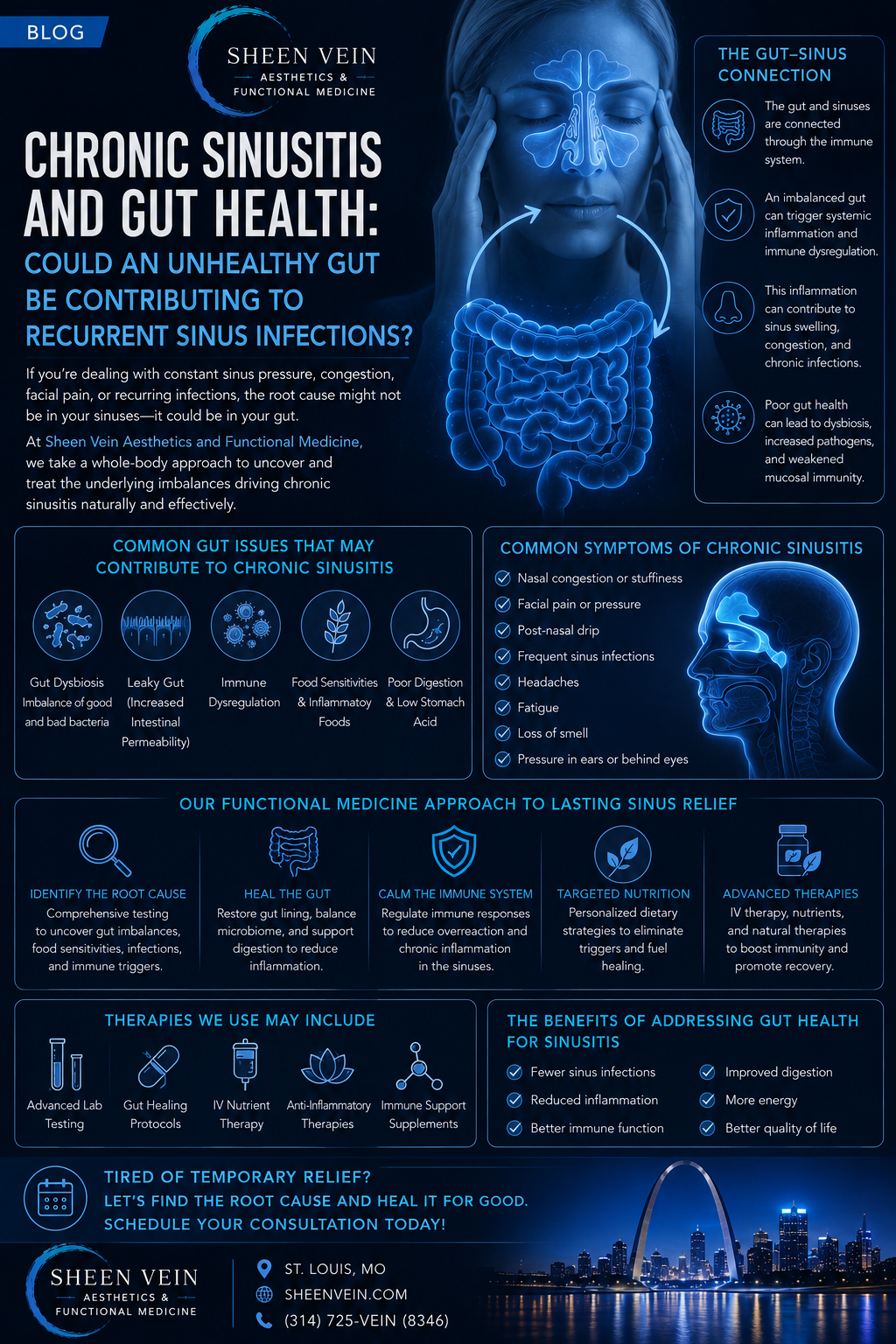
If you've struggled with chronic sinus congestion, facial pressure, postnasal drip, or repeated sinus infections, you know how frustrating these symptoms can be. Many people are prescribed multiple rounds of antibiotics, nasal sprays, antihistamines, or even surgery, only to have their symptoms return weeks or months later.
While structural problems such as a deviated septum, nasal polyps, or allergies certainly play an important role, researchers are increasingly recognizing that immune function and the gut microbiome may also influence chronic sinus inflammation.
Your digestive tract is home to trillions of microorganisms that help regulate the immune system. Because nearly 70–80% of the body's immune cells are associated with the gastrointestinal tract, disturbances in gut health may influence immune balance throughout the body—including the respiratory tract.
This communication between the gut, immune system, and respiratory tract is sometimes called the gut-lung axis. Although research is still evolving, growing evidence suggests that maintaining a healthy gut microbiome may support immune resilience and help the body respond appropriately to respiratory infections and inflammation.
At Sheen Vein & Aesthetics in St. Louis, our functional medicine approach seeks to identify potential contributors to chronic inflammation, including nutrition, digestive health, lifestyle factors, and metabolic wellness, while working alongside evidence-based medical care.
What Is Chronic Sinusitis?
Chronic sinusitis, also called chronic rhinosinusitis (CRS), occurs when inflammation of the sinuses lasts for 12 weeks or longer, even with treatment.
Unlike an acute sinus infection, chronic sinusitis often involves persistent inflammation rather than an active bacterial infection alone.
Common symptoms include:
- Nasal congestion
- Facial pressure
- Thick nasal drainage
- Postnasal drip
- Reduced sense of smell
- Headaches
- Chronic cough
- Ear pressure
- Fatigue
- Bad breath
Symptoms often fluctuate, with periods of improvement followed by worsening.
Why Does Chronic Sinusitis Develop?
There is rarely one single cause.
Several factors may contribute, including:
- Allergies
- Asthma
- Nasal polyps
- Deviated septum
- Environmental irritants
- Viral infections
- Biofilms
- Impaired mucociliary clearance
- Immune dysfunction
- Smoking
- Gastroesophageal reflux
- Chronic inflammation
For many patients, multiple factors work together.
The Immune System and Chronic Sinusitis
Your immune system constantly monitors bacteria, viruses, fungi, and environmental allergens entering through the nose.
Normally it responds appropriately while avoiding excessive inflammation.
In chronic sinusitis this balance appears disrupted.
Instead of resolving inflammation efficiently, the immune response may become persistent, leading to ongoing swelling, mucus production, and impaired drainage.
This is one reason many patients continue to experience symptoms even after repeated antibiotic treatment.
Your Gut Houses Most of Your Immune System
One of the most fascinating discoveries in modern medicine is how closely the immune system and digestive tract work together.
Approximately 70–80% of immune tissue resides within the gastrointestinal tract.
The gut must constantly decide whether to:
- Ignore harmless food proteins
- Tolerate beneficial bacteria
- Respond aggressively to dangerous pathogens
Maintaining this balance requires continuous communication between gut bacteria and immune cells.
What Is the Gut Microbiome?
The gut microbiome consists of trillions of microorganisms living primarily within the large intestine.
These organisms help:
- Digest dietary fiber
- Produce vitamins
- Create short-chain fatty acids
- Support immune regulation
- Protect against harmful bacteria
- Maintain the intestinal barrier
- Communicate with distant organs
A diverse microbiome is generally associated with healthier immune function.
Dysbiosis: When the Gut Microbiome Becomes Unbalanced
An imbalance in the gut microbiome is called dysbiosis.
Possible causes include:
- Frequent antibiotics
- Highly processed diets
- Chronic stress
- Poor sleep
- Infections
- Inflammatory bowel disease
- Smoking
- Excess alcohol
Dysbiosis may alter immune signaling and increase systemic inflammation.
Researchers continue to investigate whether this contributes to chronic respiratory diseases, including chronic sinusitis.
The Gut-Lung Axis
Although the gut and lungs seem unrelated, they constantly communicate through immune signaling.
Beneficial gut bacteria produce metabolites called short-chain fatty acids, including butyrate.
These compounds help:
- Regulate immune cells
- Reduce excessive inflammation
- Strengthen immune tolerance
- Support healthy barrier function
Alterations in the gut microbiome may influence immune responses in distant organs, including the respiratory tract.
This interaction is known as the gut-lung axis.
Antibiotics: Helpful but Sometimes a Double-Edged Sword
Antibiotics save lives and are often necessary for bacterial infections.
However, repeated antibiotic use can also reduce beneficial bacteria within the gut.
Potential consequences include:
- Reduced microbial diversity
- Overgrowth of opportunistic organisms
- Increased risk of digestive symptoms
- Altered immune regulation
This does not mean antibiotics should be avoided when medically necessary. Rather, it highlights the importance of using them appropriately and supporting overall gut health during recovery.
Can Poor Gut Health Cause Chronic Sinusitis?
Current research does not show that poor gut health directly causes chronic sinusitis.
However, studies suggest gut dysbiosis may influence immune regulation, inflammatory responses, and susceptibility to recurrent respiratory infections in some individuals.
Gut health should therefore be viewed as one potential contributing factor, not the sole explanation.
Conditions That May Affect Both the Gut and Sinuses
Several conditions can involve both digestive and sinus symptoms.
These include:
Food Allergies
Certain food allergies can trigger inflammation affecting multiple body systems.
Celiac Disease
Some individuals with untreated celiac disease report recurrent sinus symptoms alongside gastrointestinal complaints.
Inflammatory Bowel Disease
Crohn's disease and ulcerative colitis involve immune dysregulation that may also affect tissues outside the digestive tract.
Primary Immune Deficiencies
Some patients with recurrent sinus infections actually have underlying immune deficiencies such as:
- IgA deficiency
- Common variable immunodeficiency (CVID)
- Specific antibody deficiency
These conditions require medical evaluation and should not be overlooked.
Signs Your Immune System May Need Evaluation
Consider discussing further evaluation with your healthcare provider if you experience:
- Four or more sinus infections yearly
- Frequent pneumonia
- Recurrent ear infections
- Persistent fungal infections
- Poor wound healing
- Chronic diarrhea
- Multiple antibiotic courses annually
- Family history of immune deficiency
Sometimes recurrent sinus infections are the first sign of an underlying immune disorder.
Nutrition and Immune Health
A healthy immune system depends upon adequate nutrition.
Key nutrients include:
- Vitamin D
- Zinc
- Vitamin A
- Vitamin C
- Selenium
- Iron
- Protein
Deficiencies may impair normal immune responses and increase susceptibility to infections.
Fiber Feeds Your Microbiome
Beneficial gut bacteria rely on dietary fiber.
High-fiber foods include:
- Vegetables
- Fruits
- Beans
- Lentils
- Oats
- Whole grains
- Nuts
- Seeds
When bacteria ferment fiber, they produce short-chain fatty acids that help regulate inflammation and support intestinal health.
Fermented Foods
Foods containing live cultures may help support microbial diversity.
Examples include:
- Yogurt with live cultures
- Kefir
- Sauerkraut
- Kimchi
- Miso
- Tempeh
Not everyone tolerates fermented foods equally, so recommendations should be individualized.
Can Probiotics Help?
Certain probiotic strains have shown promise for supporting immune function and reducing the duration of some upper respiratory infections.
However:
- Not all probiotics are the same.
- Different strains perform different functions.
- Evidence for chronic sinusitis specifically remains limited.
- Probiotics should complement—not replace—appropriate medical treatment.
Sleep and Immunity
Poor sleep affects nearly every aspect of immune function.
Insufficient sleep may:
- Increase inflammation
- Reduce antibody responses
- Alter immune cell activity
- Increase susceptibility to infection
Most adults benefit from seven to nine hours of quality sleep nightly.
Chronic Stress and Immune Function
Long-term stress increases cortisol production and may influence:
- Gut bacteria
- Intestinal permeability
- Immune regulation
- Inflammatory signaling
Managing stress through exercise, mindfulness, counseling, or relaxation techniques may support both digestive and immune health.
Exercise Supports Healthy Immunity
Regular moderate exercise has been shown to:
- Improve circulation
- Reduce inflammation
- Support microbial diversity
- Improve metabolic health
- Enhance immune surveillance
Excessive overtraining, however, may temporarily suppress immune function.
Balance is key.
When Should You See a Specialist?
Seek evaluation if you experience:
- Symptoms lasting longer than 12 weeks
- Recurrent sinus infections
- Nasal polyps
- Persistent facial pain
- Loss of smell
- Repeated antibiotic use
- Digestive symptoms accompanying sinus problems
- Frequent infections elsewhere in the body
A comprehensive evaluation may involve your primary care physician, allergist, ENT specialist, immunologist, or gastroenterologist, depending on your symptoms.
Frequently Asked Questions
Can poor gut health directly cause chronic sinusitis?
Current research does not support a direct cause-and-effect relationship. However, gut dysbiosis may influence immune regulation and systemic inflammation, potentially affecting susceptibility to recurrent sinus problems in some individuals.
Should everyone with chronic sinusitis take probiotics?
Not necessarily. Certain probiotic strains may support immune health, but benefits vary by individual and by strain. Probiotics should be selected based on your health history and used as part of a broader treatment plan.
Can antibiotics affect gut health?
Yes. Antibiotics can temporarily reduce beneficial bacteria while treating harmful organisms. When antibiotics are medically necessary, maintaining a nutrient-rich diet and discussing gut-supportive strategies with your healthcare provider may be beneficial.
What lifestyle habits support both gut and immune health?
A diet rich in fiber, regular physical activity, adequate sleep, stress management, avoiding tobacco, limiting ultra-processed foods, and maintaining a healthy weight all support overall immune function and gut health.
When should I be tested for an immune deficiency?
If you experience unusually frequent or severe infections, recurrent sinus infections requiring multiple antibiotic courses, pneumonia, chronic ear infections, or have a family history of immune disorders, your healthcare provider may recommend an evaluation for an underlying immune deficiency.
Why Choose Sheen Vein & Aesthetics for Functional Medicine in St. Louis?
At Sheen Vein & Aesthetics, we recognize that chronic sinusitis often has multiple contributing factors. While structural abnormalities, allergies, and infections remain important considerations, we also evaluate lifestyle, nutrition, metabolic health, digestive wellness, and other factors that may influence immune function and chronic inflammation.
Our functional medicine approach is designed to complement—not replace—the care provided by your primary care physician, ENT specialist, allergist, or immunologist. We emphasize personalized nutrition, gut health optimization, sleep, stress management, and evidence-based lifestyle interventions that support overall wellness.
Every patient receives an individualized evaluation because no two people experience chronic sinusitis in exactly the same way. By looking beyond symptoms and considering the whole person, our goal is to help patients build a stronger foundation for long-term health.
Schedule Your Functional Medicine Consultation Today
If you've been dealing with chronic sinus congestion, recurrent sinus infections, digestive concerns, or persistent inflammation, a comprehensive evaluation may help identify contributing factors that deserve attention.
At Sheen Vein & Aesthetics, we're committed to helping patients throughout the St. Louis area optimize their health through personalized, evidence-informed functional medicine strategies that work alongside conventional medical care.