Do Varicose Veins Hurt and What Can You Do About the Pain?
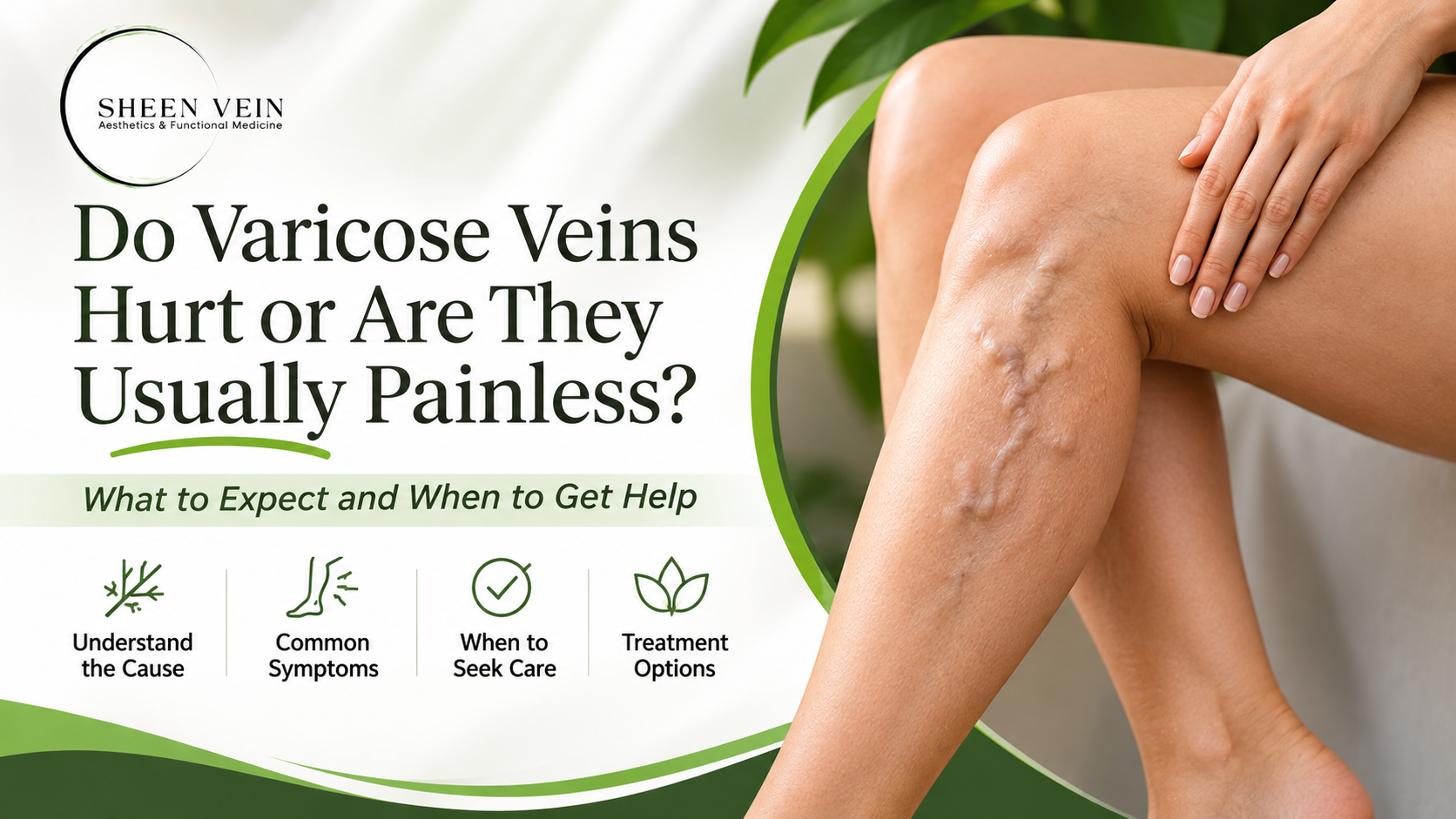
Varicose veins can hurt, but they do not always. Some people have twisted, bulging veins and feel nothing. Others have aching, throbbing, or heavy legs that interfere with work, exercise, and sleep. How a vein looks says little about how it feels. This guide explains what vein pain tends to feel like, why it often builds as the day goes on, which self-care steps are reasonable, and which symptoms need prompt or emergency care. It also covers how a vein specialist works out whether your veins are really the source of the discomfort.
Do Varicose Veins Hurt or Are They Usually Painless?
Both are common. Mayo Clinic notes that varicose veins might not cause pain, and that when they do, the typical complaint is an achy or heavy feeling in the legs.
Size is a poor predictor. A large, rope-like vein can be completely painless, while a smaller one, or a refluxing vein you cannot see, can ache by evening. Spider veins, the thin red or blue lines near the skin, are usually painless, although some people notice itching or burning.
Leg pain also has many causes unrelated to veins, including arthritis, muscle strain, nerve problems, and poor arterial circulation. Aching legs alone do not prove that varicose veins are responsible.
What Does Varicose Vein Pain Feel Like?
Varicose vein discomfort often develops gradually and may feel like aching, throbbing, or heaviness. Sudden or severe leg pain is less typical and should be medically evaluated. People describe:
- A dull ache or a tired, heavy feeling in the calves or thighs
- Throbbing, especially after standing or sitting for long periods
- Burning or itching around a visible vein
- Tenderness over a vein
- Cramping, sometimes at night
- Swelling around the ankles that is worse in the evening
None of these symptoms is unique to vein disease. A clinician has to sort out what is actually behind them.
Why Do Varicose Veins Become Painful?
Leg veins contain one-way valves that help blood travel upward toward the heart. When valves weaken or fail, blood can flow backward, a problem called venous reflux. Blood then pools in the vein, pressure rises, and the vein wall stretches. That added pressure can produce aching and heaviness, and it can push fluid into surrounding tissue, which causes swelling.
Why one person with varicose veins has pain while another has none is not fully explained. For a deeper look at the mechanics, see our article on why varicose veins and spider veins cause pain.
Why Does Varicose Vein Pain Get Worse After Standing?
Gravity works against the veins in your legs. When you stand or sit still for long periods, your calf muscles are less active, making it harder for blood to return toward the heart. This can increase pressure in the leg veins and worsen symptoms.
Symptoms often start mild in the morning and become more noticeable by evening. Some people also feel worse in warm weather.
Movement usually helps. Walking activates the calf muscle pump, and raising the legs above heart level for a while lets gravity assist blood flow. Swelling from other causes can change with position too, so improvement with elevation does not confirm a vein problem.
How Can You Relieve Varicose Vein Pain at Home?
Mayo Clinic lists exercise, raising the legs, and compression stockings as standard self-care. These steps can ease symptoms. They do not repair faulty valves or remove existing varicose veins.
- Keep moving. Walk daily, and break up long periods of sitting or standing with short walks or calf raises.
- Elevate your legs. Rest them above heart level for short periods, especially in the evening.
- Ask before using compression. Compression stockings help many people, but they are not right for everyone. People with peripheral arterial disease, reduced sensation from diabetes or nerve disorders, or significant skin problems should consult a healthcare professional before using compression stockings. Compression may be unsafe in some cases of severe arterial disease.
- Be careful with massage. Avoid massaging a vein that becomes hard, red, warm, swollen, or tender. These changes may indicate superficial vein thrombosis and should be evaluated by a healthcare professional.
- Consider weight and footwear. Extra body weight adds pressure to leg veins, and supportive shoes can make long days easier.
Ask a clinician or pharmacist before taking over-the-counter pain relievers, particularly if you take other medications or have kidney, stomach, or heart conditions.
When Should You Worry About Painful Varicose Veins?
Call 911 or go to the nearest emergency department for:
- Chest pain, sudden shortness of breath, coughing up blood, or fainting. These can signal a clot that has traveled to the lungs.
- Heavy bleeding from a varicose vein or bleeding that does not stop with firm, continuous direct pressure requires emergency care. Lie down, elevate the affected leg, and apply firm, continuous pressure directly over the bleeding site with a clean cloth. Call 911 if the bleeding is severe or cannot be controlled.
Seek same-day medical evaluation for:
- New swelling in one leg, especially when accompanied by pain, tenderness, warmth, or skin discoloration. These symptoms may indicate deep vein thrombosis (DVT) and require urgent medical evaluation.
- A vein that is suddenly red, hard, swollen, and tender
- Severe or rapidly worsening leg pain
- Fever with a red, painful area on the leg
Schedule an evaluation if you have:
- Pain, heaviness, or swelling that persists despite self-care
- Skin darkening, thickening, or eczema-like patches near the ankles
- A sore on the lower leg that is slow to heal
- Discomfort that limits work, exercise, or sleep
How Does a Vein Specialist Diagnose Painful Varicose Veins?
A visit typically starts with your symptoms, medical history, and a physical exam of the legs, often with you standing. When clinically appropriate, a duplex ultrasound shows how blood moves through the veins, whether valves are leaking, and which veins are involved. Ultrasound can also check for clots.
Diagnosis is as much about ruling things out as ruling them in. Sometimes the exam shows that the pain comes from joints, nerves, or arteries rather than veins, and that changes the treatment plan.
What Treatments Are Available for Painful Varicose Veins?
Treatment depends on your symptoms, ultrasound findings, and goals. Walking, leg elevation, and appropriately selected compression stockings may help manage symptoms. However, patients with symptomatic varicose veins and confirmed venous reflux may be candidates for minimally invasive treatment without needing a prolonged trial of compression first. Treatment decisions should be based on clinical evaluation, duplex ultrasound findings, patient preferences, and medical suitability.
- Endovenous laser treatment (EVLT). A thin laser fiber closes a diseased vein from the inside so blood can reroute through healthier veins.
- Ultrasound-guided foam sclerotherapy. A foam solution is injected into the problem vein under imaging guidance to close it.
- Visual sclerotherapy. Injections close smaller surface veins, including spider veins.
Who is a good candidate, what to expect, the risks, and the recovery time all vary. Vein disease is chronic, so treating one vein does not stop new ones from developing later. Insurance coverage depends on your plan and whether treatment is considered medically necessary.
Getting Vein Care in St. Louis
Sheen Vein Aesthetics and Functional Medicine is a physician-owned practice in St. Louis that offers vein evaluation and treatment alongside aesthetic and functional medicine services. The practice lists EVLT, ultrasound-guided foam sclerotherapy, and visual sclerotherapy among its vein services, and Vidal Sheen, M.D., RVT, RPVI, is listed as the physician.
The office is at 11144 Tesson Ferry Rd. #100, St. Louis, MO 63123, open Monday through Friday, 8:00 a.m. to 4:00 p.m. To ask about an evaluation, call (314) 842-1441 or visit our page for a vein specialist in St. Louis. If your symptoms include any of the emergency signs above, seek emergency care first.
Frequently Asked Questions
Is it normal for varicose veins to hurt every day?
Daily discomfort is common for people with symptomatic varicose veins, but common does not mean you must live with it. Pain that happens every day, or that limits normal activity, is a reason for an evaluation.
Can varicose veins hurt without looking swollen?
Yes. Aching and heaviness can come from valve problems in veins that are not obviously bulging. This is one reason ultrasound can be useful when symptoms do not match what is visible. Leg pain without visible veins can also have non-vein causes.
Can walking help varicose vein pain?
Often, yes. Walking engages the calf muscles, which help move blood upward. If walking makes the pain sharply worse, or you have new one-sided swelling, get it checked rather than pushing through.
Can painful varicose veins be a sign of a blood clot?
Varicose veins are not the same thing as a deep vein clot, but a clot can cause pain, so symptoms should not be self-diagnosed. A hard, red, tender vein may indicate superficial vein thrombosis, which requires medical assessment. New one-sided leg swelling, especially with pain, warmth, or discoloration, should be evaluated urgently for possible deep vein thrombosis (DVT). See the warning signs above.
Will varicose vein pain go away without treatment?
Symptoms may ease with movement, elevation, and compression, but the underlying valve problem generally does not reverse on its own. Pain can come and go, and it often worsens with long periods on your feet.
When to Seek Help for Varicose Vein Pain
Varicose veins can hurt, but plenty of people feel little or nothing. Aching that improves with walking or leg elevation is different from new one-sided swelling or a hard, painful vein, which require prompt medical evaluation. Chest pain, sudden shortness of breath, or severe, uncontrolled bleeding require emergency care.
If discomfort is limiting your day, a vein evaluation can help determine whether your veins are responsible and which treatment options may be appropriate. If you live in the St. Louis area, Sheen Vein Aesthetics and Functional Medicine can help you take the next step toward understanding your symptoms and exploring your options.