The Gut-Skin Connection: How Gut Health May Influence Acne, Rosacea, Eczema, Psoriasis, and Other Skin Conditions
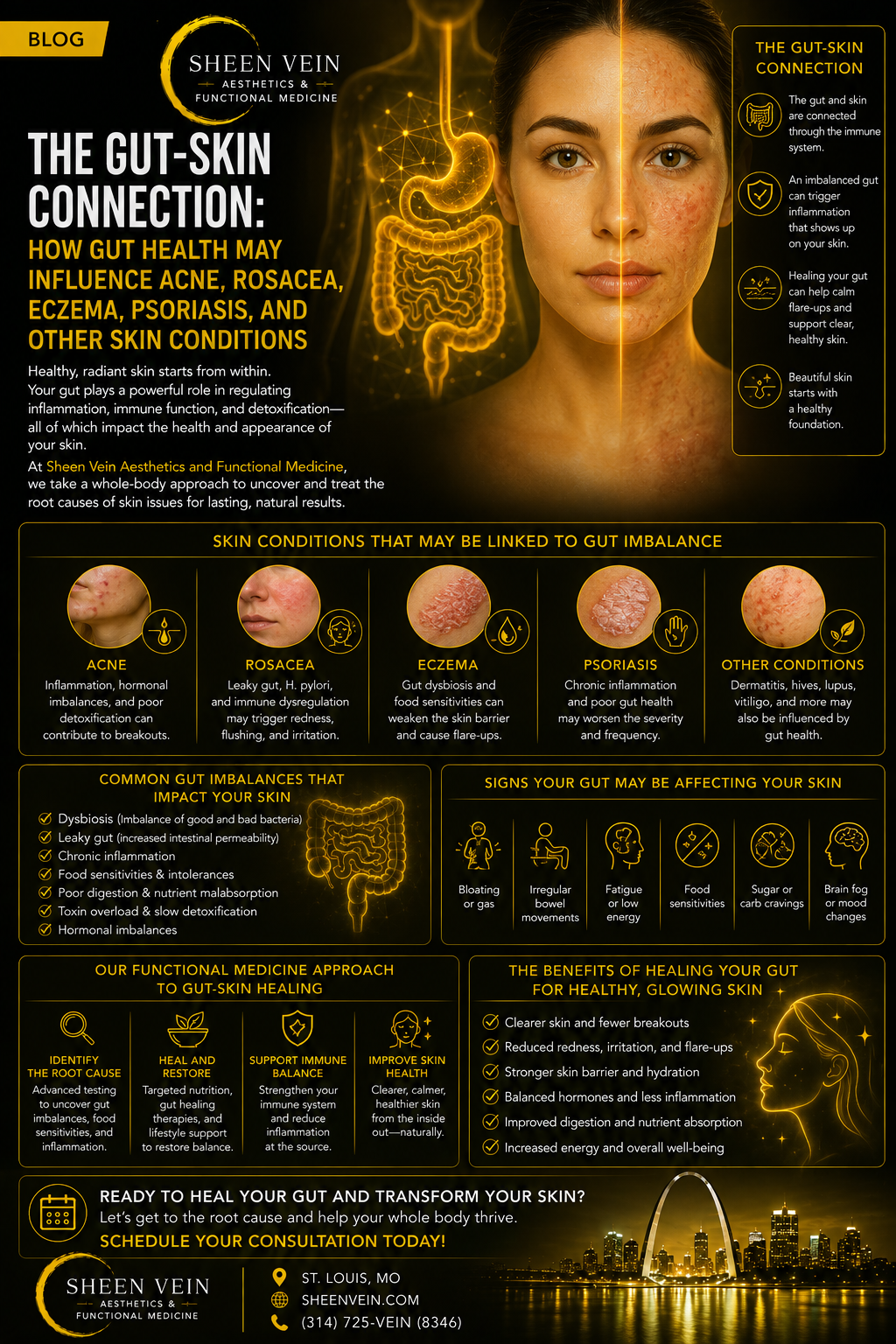
The Gut-Skin Connection: How Your Digestive Health May Be Affecting Your Skin
Your skin is often described as a window into your overall health. While skincare products, genetics, hormones, and environmental exposures certainly play important roles in skin health, researchers have increasingly recognized another major influence that often goes unnoticed—the health of your gut.
Over the last decade, studies have shown that the gut microbiome, intestinal barrier function, immune system, and chronic inflammation all play important roles in many common skin conditions. Although the relationship is complex and still being actively studied, there is growing evidence that disturbances within the digestive system may contribute to inflammatory skin disorders such as acne, rosacea, eczema, psoriasis, hidradenitis suppurativa, and even premature skin aging.
This communication network between the digestive tract and the skin has become known as the gut-skin axis.
At Sheen Vein & Aesthetics in St. Louis, we believe healthy skin begins with a comprehensive understanding of the body as a whole. While advanced laser treatments, regenerative medicine, and medical-grade skincare can produce remarkable results, addressing underlying contributors such as gut health may further support long-term skin wellness in appropriate patients.
What Is the Gut Microbiome?
Your digestive tract contains trillions of microorganisms, including bacteria, fungi, viruses, and other microbes that collectively form the gut microbiome.
These organisms perform numerous important functions, including:
- Digesting dietary fiber
- Producing vitamins
- Supporting immune function
- Helping regulate inflammation
- Producing short-chain fatty acids
- Maintaining the intestinal barrier
- Communicating with the brain and nervous system
- Influencing metabolism
A healthy microbiome contains a diverse balance of beneficial organisms that help maintain normal digestive and immune function.
When this balance is disrupted—a condition called dysbiosis—chronic inflammation and immune dysfunction may develop.
Understanding the Gut-Skin Axis
The gut and skin constantly communicate through several biological pathways.
These include:
- The immune system
- Hormonal signaling
- Inflammatory cytokines
- The nervous system
- Microbial metabolites
- Oxidative stress
- Nutrient absorption
When gut health is compromised, inflammatory signals produced within the digestive tract may circulate throughout the body, potentially influencing the skin.
While gut dysfunction is rarely the sole cause of a skin condition, it may contribute to symptom severity in susceptible individuals.
What Is Intestinal Permeability?
One topic frequently discussed is intestinal permeability, sometimes referred to as "leaky gut."
The lining of the intestines normally acts as a carefully regulated barrier that allows nutrients to enter the bloodstream while keeping bacteria, toxins, and large food particles within the digestive tract.
When this barrier becomes impaired, larger molecules may cross into the bloodstream more readily, potentially activating the immune system.
Although the concept of intestinal permeability has sometimes been overstated online, research supports that increased intestinal permeability is present in several inflammatory and autoimmune diseases.
Scientists continue to investigate how these changes may influence skin disorders.
Chronic Inflammation: A Common Link
Inflammation is an essential part of normal healing.
However, persistent low-grade inflammation may contribute to both digestive and skin disorders.
An unhealthy microbiome may increase the production of inflammatory molecules that circulate throughout the body.
These inflammatory signals can influence:
- Oil gland activity
- Collagen breakdown
- Immune regulation
- Skin barrier function
- Blood vessel activity
- Oxidative stress
The result may be worsening of existing skin conditions in some individuals.
Acne and Gut Health
Acne has traditionally been viewed as a disease involving hormones, bacteria, and clogged pores.
Today we know the story is more complicated.
Research suggests the gut microbiome may influence acne through several mechanisms:
- Systemic inflammation
- Insulin resistance
- Hormonal regulation
- Immune activation
- Nutrient absorption
People consuming diets high in refined carbohydrates and ultra-processed foods often have less microbial diversity and higher levels of inflammatory markers.
Conversely, diets rich in vegetables, fiber, legumes, healthy fats, and fermented foods may support a healthier microbiome.
This does not mean acne is caused solely by gut problems, but improving gut health may be one component of a comprehensive treatment plan.
Rosacea and the Gut
Rosacea is perhaps one of the skin conditions most strongly associated with digestive health.
Several gastrointestinal conditions have been reported more frequently in individuals with rosacea, including:
- Small intestinal bacterial overgrowth (SIBO)
- Helicobacter pylori infection
- Celiac disease
- Inflammatory bowel disease
- Irritable bowel syndrome
Some studies have shown that treating SIBO in carefully selected patients may improve rosacea symptoms.
Researchers believe inflammation, altered immune responses, and changes in the gut microbiome may contribute to facial flushing and chronic skin inflammation.
Not every patient with rosacea has an underlying digestive disorder, but evaluating gastrointestinal symptoms may be worthwhile when appropriate.
Eczema (Atopic Dermatitis)
Eczema is characterized by:
- Dry skin
- Itching
- Redness
- Skin barrier dysfunction
- Immune dysregulation
Children with eczema often have differences in their gut microbiome compared with healthy controls.
Scientists are investigating whether certain probiotic strains, dietary interventions, and improved gut health may help reduce eczema severity in selected individuals.
The evidence continues to evolve, and responses vary between patients.
Psoriasis
Psoriasis is a chronic autoimmune condition involving excessive skin cell turnover and inflammation.
Emerging research suggests patients with psoriasis frequently demonstrate alterations in their gut microbiome.
Scientists believe microbial diversity may influence:
- T-cell activity
- Cytokine production
- Immune balance
- Systemic inflammation
While gut health alone cannot cure psoriasis, reducing inflammatory burden may complement traditional dermatologic therapies.
Hidradenitis Suppurativa
Hidradenitis suppurativa (HS) is a chronic inflammatory condition involving painful nodules and abscesses.
Although its exact cause remains unclear, obesity, insulin resistance, smoking, genetics, and immune dysfunction all contribute.
Researchers are increasingly exploring the role of gut dysbiosis in HS because chronic systemic inflammation appears central to the disease process.
Skin Aging and the Gut
Gut health may influence more than inflammatory skin disorders.
A healthy microbiome may support:
- Collagen production
- Antioxidant defenses
- Reduced oxidative stress
- Improved nutrient absorption
- Better hydration
- Healthier skin barrier function
Although aging is inevitable, reducing chronic inflammation may support healthier skin over time.
The Role of Diet
Diet is one of the strongest influences on the gut microbiome.
Foods that generally support microbial diversity include:
- Vegetables
- Fruits
- Legumes
- Whole grains
- Nuts
- Seeds
- Fermented foods
- Olive oil
- Fatty fish
These foods provide fiber and polyphenols that beneficial bacteria use to produce short-chain fatty acids.
These compounds help regulate inflammation and maintain the intestinal barrier.
Foods That May Promote Inflammation
Not every person reacts the same way to food.
However, diets consistently high in:
- Ultra-processed foods
- Added sugars
- Sugar-sweetened beverages
- Refined carbohydrates
- Excess alcohol
have been associated with increased inflammation and reduced microbial diversity.
A personalized nutritional approach is often more effective than following restrictive fad diets.
Fiber: Feeding Your Gut Microbiome
Fiber is one of the most important nutrients for gut health.
Beneficial bacteria ferment dietary fiber into short-chain fatty acids such as butyrate.
These compounds help:
- Nourish intestinal cells
- Support immune regulation
- Strengthen the gut barrier
- Reduce inflammation
Unfortunately, many Americans consume far less fiber than recommended.
Increasing fiber gradually while maintaining adequate hydration can support digestive health for many individuals.
Can Probiotics Help?
Probiotics are live microorganisms that may provide health benefits when consumed in adequate amounts.
Some studies suggest certain probiotic strains may improve:
- Acne
- Rosacea
- Eczema
- Skin hydration
- Immune regulation
However, probiotics are not one-size-fits-all.
Different strains perform different functions, and not every product contains organisms that have been studied for specific skin conditions.
Working with a knowledgeable healthcare provider can help determine whether probiotics are appropriate for your situation.
Prebiotics Matter Too
Prebiotics are non-digestible fibers that nourish beneficial gut bacteria.
Sources include:
- Onions
- Garlic
- Asparagus
- Bananas
- Chicory root
- Oats
- Jerusalem artichokes
Supporting the bacteria you already have may be just as important as adding new bacteria through probiotics.
Stress, the Gut, and the Skin
Stress affects nearly every organ system—including both the gut and the skin.
Chronic stress may:
- Alter the gut microbiome
- Increase intestinal permeability
- Raise cortisol levels
- Worsen inflammation
- Trigger acne
- Exacerbate eczema
- Aggravate psoriasis
- Increase rosacea flares
Managing stress through sleep, exercise, mindfulness, and relaxation techniques may positively influence both gut and skin health.
Sleep and Skin Health
Poor sleep is associated with:
- Increased inflammatory cytokines
- Slower skin healing
- Reduced collagen production
- Higher cortisol
- Altered immune regulation
Improving sleep habits may benefit overall wellness while supporting healthier skin.
Exercise Supports Both Gut and Skin
Regular physical activity has been shown to:
- Increase microbial diversity
- Improve insulin sensitivity
- Reduce inflammation
- Enhance circulation
- Support healthy body composition
Even moderate exercise several days per week can positively influence overall health.
When Should Gut Health Be Considered?
Not every skin condition is caused by digestive problems.
However, it may be reasonable to consider the gut-skin connection if skin disease occurs alongside symptoms such as:
- Chronic bloating
- Constipation
- Diarrhea
- Abdominal discomfort
- Food intolerances
- Frequent antibiotic use
- Autoimmune disease
- Unexplained fatigue
A comprehensive evaluation can help determine whether additional investigation is appropriate.
A Whole-Body Approach to Healthy Skin
The most effective skin care plans often combine multiple strategies.
Depending on the condition, treatment may include:
- Medical-grade skincare
- Laser treatments
- Lifestyle modifications
- Nutritional counseling
- Gut health optimization
- Anti-inflammatory dietary changes
- Appropriate medications
- Regenerative medicine
- Sun protection
- Stress management
Rather than focusing on one single factor, addressing multiple contributors often leads to the best long-term outcomes.
Frequently Asked Questions
Can poor gut health cause acne?
Acne is a multifactorial condition involving hormones, genetics, oil production, bacteria, and inflammation. Gut health may influence inflammation and immune function, making it one potential contributing factor rather than the sole cause.
Does everyone with rosacea have gut problems?
No. Many people with rosacea have normal digestive health. However, research has identified higher rates of certain gastrointestinal disorders among individuals with rosacea, and addressing these conditions when present may improve symptoms in some patients.
Should I take probiotics for my skin?
Not necessarily. While some probiotic strains have shown promise for certain skin conditions, probiotics are not universally beneficial for everyone. The choice of strain, dosage, and duration matters, and recommendations should be individualized.
Can improving my diet help my skin?
For many people, yes. Diets rich in vegetables, fruits, fiber, healthy fats, and minimally processed foods support overall health and may reduce systemic inflammation. Although dietary changes are not a cure, they can be an important part of a comprehensive skin care plan.
Can laser treatments still help if my skin condition is related to gut health?
Absolutely. Addressing gut health does not replace evidence-based dermatologic treatments. Many patients benefit from combining internal health optimization with advanced therapies such as laser skin rejuvenation, vascular laser treatments for rosacea, scar revision, or collagen-stimulating procedures.
Why Choose Sheen Vein & Aesthetics for a Whole-Body Approach to Skin Health in St. Louis?
At Sheen Vein & Aesthetics, we believe beautiful skin is more than skin deep. While advanced aesthetic procedures can dramatically improve the appearance of your skin, long-term results are often enhanced by understanding the underlying factors that contribute to inflammation, aging, and chronic skin conditions.
Our comprehensive approach combines functional medicine principles with state-of-the-art aesthetic technology. We evaluate lifestyle, nutrition, metabolic health, and, when appropriate, factors that may influence the gut-skin axis, while also offering advanced treatments such as Fotona laser skin rejuvenation, laser treatments for rosacea, PRP/PRF regenerative therapies, microneedling, and medical-grade skincare.
Every patient receives a personalized treatment plan designed around their unique concerns and goals. Whether you're struggling with acne, rosacea, eczema, psoriasis, premature aging, or simply want healthier-looking skin, our goal is to address both the visible symptoms and the potential underlying contributors.
Healthy skin starts with a healthy body, and we're here to help you achieve both.
Schedule Your Skin and Wellness Consultation Today
If you've been frustrated by recurring skin problems or want a more comprehensive approach to skin health, schedule a consultation with Sheen Vein & Aesthetics.
Together, we'll develop a personalized plan that may include advanced aesthetic treatments, nutrition and lifestyle recommendations, and functional medicine strategies to support healthier skin from the inside out.