How Long Does Laser Resurfacing Last and What Affects the Results?
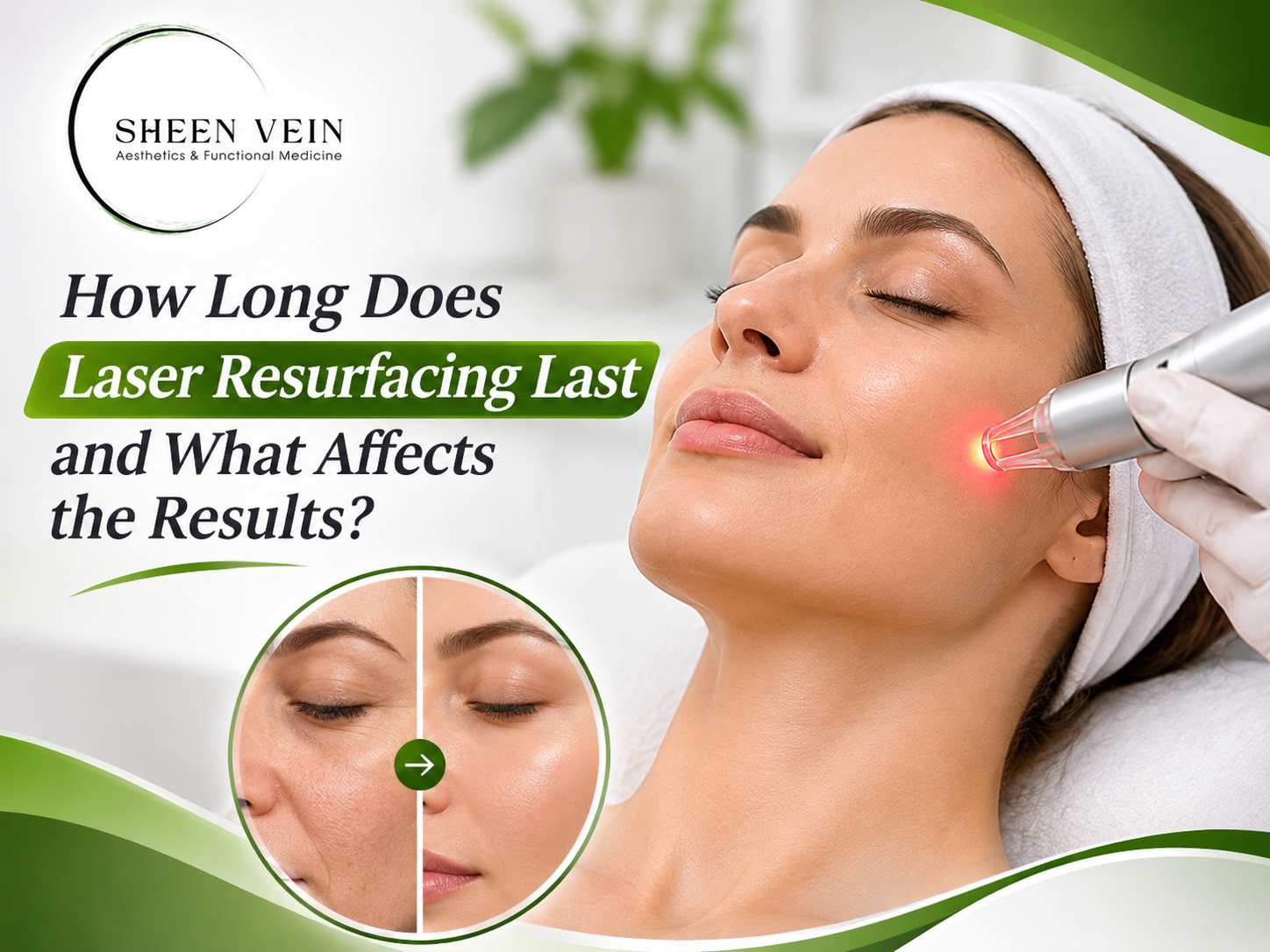
If you are weighing laser resurfacing, you probably want to know whether the improvement will last long enough to justify the recovery. So how long does laser resurfacing last? There is no single answer. Some improvements, such as smoother texture or softened scars, may remain noticeable for years, while fine lines and sun-related changes can gradually return as skin keeps aging. Results depend on the laser type, treatment depth, the concern being treated, your healing, and sun exposure afterward.
How Long Do Laser Resurfacing Results Typically Last?
No reliable universal timeline exists, and anyone who quotes one is simplifying. Long-term research is limited, and it varies by treatment and by what is being treated.
The available evidence suggests that some improvements may last for a year or longer, but the durability of results varies by treatment type and individual factors. A 2015 review reported that skin tightening from fractional resurfacing has been shown to persist for about a year. A small published study reported that improvements following fractional laser resurfacing were still visible after one to two years, although some results had diminished compared with the three-month assessment. The researchers suggested possible explanations, including relaxation of tightening, normal aging, and ongoing remodeling, and noted that additional treatments might be needed to enhance long-term results. A small study cannot be applied to everyone, but it illustrates the pattern.
It helps to separate two ideas. A treated concern, such as a shallow scar, may stay improved. Your skin, however, keeps aging and is still exposed to the sun, so new lines and spots can form around those improvements. Kaiser Permanente's patient resource makes the same point, noting that the long-term results for wrinkles are not known and that new wrinkles will probably appear.
Does the Type of Laser Affect How Long Results Last?
Yes, though not in a simple way. The categories below overlap because ablative and nonablative describe how a laser interacts with the skin, while fractional describes the pattern in which laser energy is delivered. Some specialists describe treatments along a spectrum from nonablative to partially ablative to fully ablative.
Ablative Laser Resurfacing
Ablative lasers remove the outer layer of skin and heat the layers beneath it. They tend to produce more noticeable improvements but involve greater downtime and a higher risk of side effects. New skin typically forms within 7 to 10 days, although full recovery may take a month or longer, and redness can persist for several months. Ablative resurfacing requires particular caution in people with darker skin tones because of the increased risk of pigmentation changes. Suitability depends on the laser, treatment settings, skin characteristics, and clinician's experience. A stronger treatment does not guarantee a longer-lasting result, because aging and sun exposure continue either way.
Nonablative Laser Resurfacing
Nonablative treatments heat deeper tissue without removing the surface layer. Recovery is shorter, but improvement is usually more gradual and often requires several sessions. Nonablative treatments generally produce more gradual improvements than fully ablative resurfacing, but they typically involve less downtime. Results and risks vary depending on the laser technology, treatment settings, and skin concern.
Fractional Laser Resurfacing
Fractional technology treats a pattern of tiny zones and leaves the skin between them untouched, which speeds healing. It is not a separate category. A fractional laser can be ablative or nonablative, and its intensity influences both results and recovery. CO2 and erbium:YAG lasers are commonly used for ablative resurfacing and may be delivered in fractional or fully ablative modes, depending on the device and treatment settings. No evidence shows that one laser produces longer-lasting results for every patient.
What Factors Affect Laser Resurfacing Results?
Some factors have strong support, and others are patient-specific.
- Sun exposure. This has the clearest evidence. Mayo Clinic notes that new sun damage can reverse results, and it recommends daily moisturizer and sunscreen with an SPF of at least 30.
- Treatment intensity and technology. Deeper or fully ablative treatment generally produces stronger change but carries more risk. The right level depends on your goals and skin.
- The concern being treated. Acne scar remodeling and the ongoing formation of wrinkles are different processes. A scar may improve and stay that way, while expression lines can keep forming.
- Age and natural skin changes. Skin continues to age after any procedure.
- Skin type and pigmentation. Darker skin tones carry a higher risk of pigment changes, so settings and technology are chosen carefully. This affects safety and planning more than it predicts durability.
- Smoking. Cleveland Clinic and Mayo Clinic both advise quitting, because smoking impairs healing.
- Healing response and history. A history of poor healing, keloids, or abnormal scarring may make aggressive resurfacing a poor fit.
- Aftercare and number of sessions. Following your clinician's instructions supports healing, and some concerns respond best to a planned series.
When Will You See the Full Results of Laser Resurfacing?
Recovery and results are not the same thing. Early healing comes first, with redness, swelling, tenderness, and peeling. Kaiser Permanente notes that redness often lasts 6 to 12 weeks and occasionally up to six months. Visible improvement begins as the skin heals. Collagen remodeling then continues for months, and the long-term results may not be fully visible for several months.
Timelines differ by treatment, so ask your provider what applies to the procedure recommended for you.
Are Laser Resurfacing Results Permanent?
No. Some structural improvements, such as a smoother scar surface, may persist for a long time. But aging, sun exposure, and lifestyle continue, so treatment does not stop the aging process or permanently restore youthful skin. That does not mean everything disappears on a schedule. Duration varies by person and by goal.
How Can You Make Laser Resurfacing Results Last Longer?
Nothing preserves results permanently, but these steps help.
- Use broad-spectrum sunscreen every day, and wear protective clothing and hats.
- Follow your clinician's aftercare exactly. Do not restart retinoids, acids, or other active ingredients until your clinician says you can.
- Keep healing skin moisturized and avoid picking or peeling.
- Avoid smoking.
- Manage skin conditions that affect your complexion.
- Ask whether maintenance treatments make sense for you.
What Risks Come With Laser Resurfacing?
Common side effects include redness, swelling, tenderness, and peeling, particularly after ablative resurfacing. The severity and duration vary according to the treatment performed. Less common risks include infection, darker or lighter patches of skin, delayed healing, and scarring. Cold sore reactivation can occur, and people with a history may be given preventive antiviral medication. Risk depends on the treatment, your skin, your health history, and the clinician's experience, which is why candidate selection matters.
How Often Might You Need Laser Resurfacing Treatments?
There is no universal schedule. The answer depends on the laser type, intensity, your concern, your initial response, and your goals. It helps to distinguish a planned initial series, such as several nonablative sessions, from later maintenance sessions after results have faded. Ask your provider which one is being recommended and why.
When Should You Consult a Laser Skin Resurfacing Professional in St. Louis?
A consultation can clarify whether you are a good candidate, what is realistic for your concern, how much downtime fits your life, and what maintenance might involve. Sheen Vein Aesthetics and Functional Medicine in St. Louis lists laser skin resurfacing among its services. Its website does not specify which laser technology is used, so ask directly. Useful questions include the following.
- Which technology do you recommend for my concern, and why?
- How long might the improvement last for my specific concern?
- What are the risks for my skin type and history?
- How many sessions are typical, and when would maintenance be considered?
For more on healing, see our guide to laser skin resurfacing benefits and recovery.
Frequently Asked Questions
How long do CO2 laser resurfacing results last?
There is no fixed duration. CO2 lasers are ablative and can be used fully or in fractional mode, and results depend on settings, your skin, and your concern. New aging and sun damage continue afterward.
Does laser resurfacing permanently remove wrinkles?
No. It can soften lines and wrinkles, but your skin continues to age, so new lines form over time.
Can laser resurfacing results fade over time?
Yes. Improvements can gradually diminish as skin ages and is exposed to the sun. One small study found less improvement at one to two years than at three months.
How many laser resurfacing sessions are usually needed?
It depends on the treatment. Some patients are treated once, while nonablative approaches often involve several sessions. Your provider can recommend a plan.
Does sun exposure affect laser resurfacing results?
Yes. New sun damage can undo improvements, and unprotected sun during healing raises the risk of pigment changes. Daily sunscreen helps.
Laser Resurfacing Results: What to Expect and When to Seek Professional Advice
How long laser resurfacing results last depends on the laser technology, treatment intensity, skin concerns, individual healing response, and sun protection. Maintaining realistic expectations, following proper aftercare, and protecting your skin from sun damage may help preserve treatment results over time.
If you are considering laser resurfacing, schedule a consultation with Sheen Vein Aesthetics and Functional Medicine in St. Louis, Missouri. A personalized assessment can help determine whether laser resurfacing is suitable for your skin concerns, discuss expected results and recovery, and explore treatment options aligned with your aesthetic goals.