Inflammatory Bowel Disease (Crohn's Disease & Ulcerative Colitis): Understanding the Connection Between Gut Health, Immunity, and Chronic Inflammation
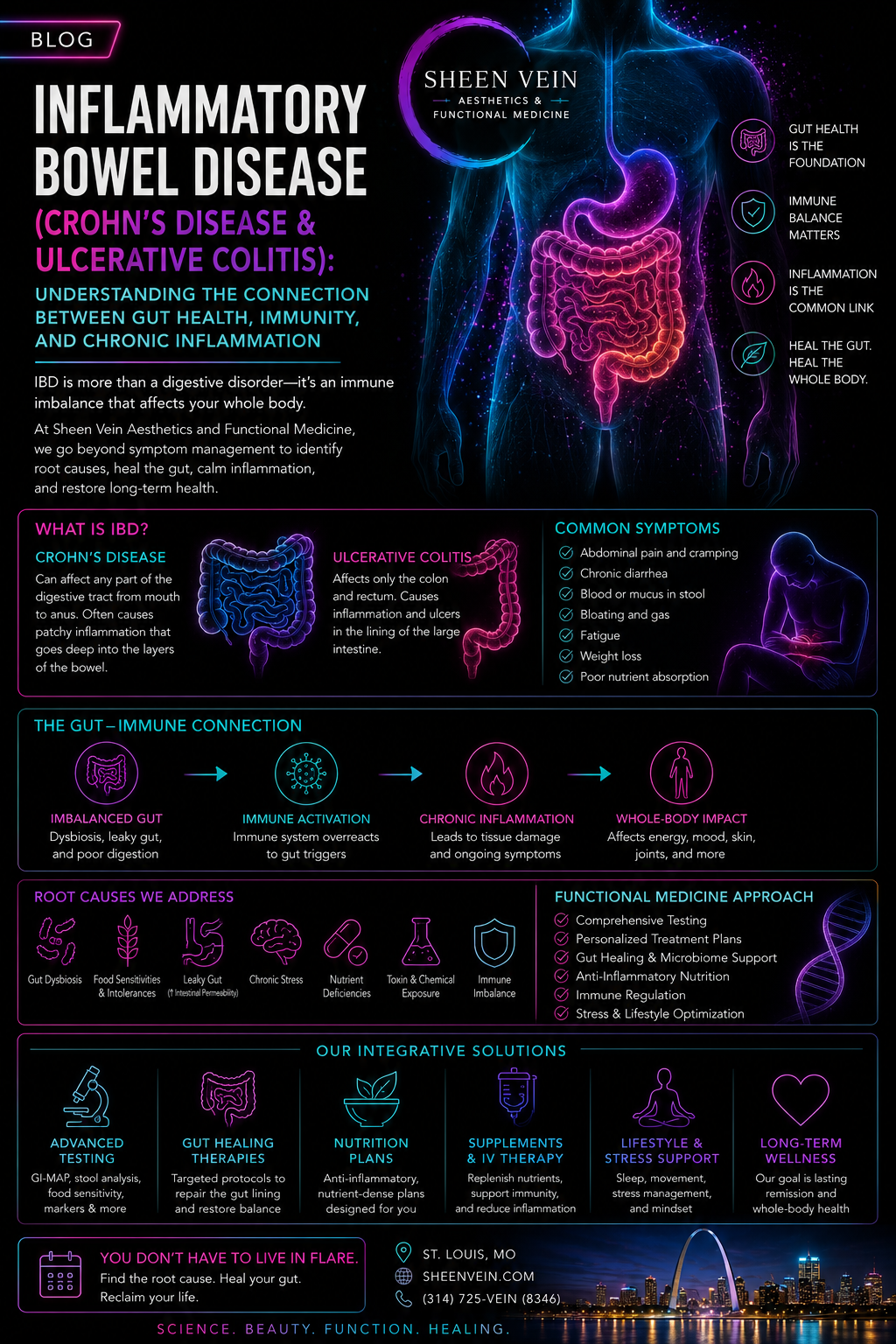
Inflammatory Bowel Disease (Crohn's Disease & Ulcerative Colitis): Understanding the Connection Between Gut Health, Immunity, and Chronic Inflammation
Living with Inflammatory Bowel Disease (IBD) can be physically and emotionally exhausting. Persistent abdominal pain, diarrhea, fatigue, weight loss, urgency, and unpredictable flare-ups often interfere with work, family life, travel, and everyday activities. For many patients, IBD is much more than a digestive disorder—it is a chronic immune-mediated disease that can affect the entire body.
The two primary forms of inflammatory bowel disease are Crohn's disease and ulcerative colitis. Although they share many similarities, they affect the digestive tract differently and require individualized treatment plans.
Over the past several decades, researchers have learned that IBD is not caused by a single factor. Instead, it appears to result from a complex interaction among genetics, the immune system, the gut microbiome, environmental exposures, and intestinal barrier function. These discoveries have transformed how physicians understand and manage these conditions.
At Sheen Vein & Aesthetics in St. Louis, our functional medicine philosophy recognizes that digestive health influences overall wellness. While conventional medical therapies remain the cornerstone of IBD treatment, optimizing nutrition, supporting gut health, correcting nutritional deficiencies, improving metabolic health, and addressing lifestyle factors may complement the care provided by your gastroenterologist.
What Is Inflammatory Bowel Disease?
Inflammatory bowel disease (IBD) refers to a group of chronic conditions characterized by inappropriate immune activation within the digestive tract.
Unlike temporary stomach infections or irritable bowel syndrome (IBS), IBD causes ongoing inflammation that can damage the lining of the intestines over time.
The two major forms include:
- Crohn's disease
- Ulcerative colitis
Although both involve chronic intestinal inflammation, they differ in important ways.
Crohn's Disease vs. Ulcerative Colitis
Understanding the differences helps explain why treatment may vary.
Crohn's Disease
Crohn's disease can affect any portion of the digestive tract, from the mouth to the anus.
Common characteristics include:
- Patchy areas of inflammation ("skip lesions")
- Inflammation involving the full thickness of the bowel wall
- Narrowing of the intestines (strictures)
- Fistulas
- Abscesses
The terminal ileum (the last portion of the small intestine) is one of the most frequently affected areas.
Ulcerative Colitis
Ulcerative colitis affects only the:
- Colon (large intestine)
- Rectum
Unlike Crohn's disease:
- Inflammation is continuous rather than patchy.
- Disease affects only the inner lining of the colon.
- Fistulas are uncommon.
Both conditions cause chronic inflammation, but their patterns of involvement differ significantly.
Common Symptoms of Inflammatory Bowel Disease
Symptoms vary depending on disease severity and location but commonly include:
- Chronic diarrhea
- Abdominal pain
- Blood in the stool
- Rectal bleeding
- Urgency
- Fatigue
- Weight loss
- Poor appetite
- Fever during flares
- Anemia
- Malnutrition
Some patients experience prolonged periods of remission followed by disease flare-ups.
Why Does Inflammatory Bowel Disease Develop?
Researchers believe IBD develops when several factors occur simultaneously.
These include:
- Genetic susceptibility
- Immune system dysregulation
- Gut microbiome alterations
- Environmental triggers
- Intestinal barrier dysfunction
No single factor fully explains the disease.
Instead, multiple influences interact over time.
The Immune System: Friend Turned Foe
Normally, the immune system protects the intestines from dangerous bacteria and viruses while peacefully coexisting with beneficial microbes.
In IBD, this balance appears disrupted.
Instead of calming inflammation after a threat has passed, the immune system continues attacking the intestinal lining.
This persistent inflammatory response damages healthy tissue and leads to many of the symptoms patients experience.
The Gut Microbiome
Your digestive tract contains trillions of microorganisms, collectively known as the gut microbiome.
These microbes help:
- Digest fiber
- Produce vitamins
- Generate short-chain fatty acids
- Support immune regulation
- Protect against harmful bacteria
- Maintain the intestinal barrier
A healthy microbiome contains tremendous diversity.
Researchers consistently find altered microbial populations in patients with inflammatory bowel disease.
Dysbiosis: An Imbalance in Gut Bacteria
An imbalance in the microbiome is known as dysbiosis.
Patients with IBD often demonstrate:
- Reduced bacterial diversity
- Lower levels of beneficial bacteria
- Increased inflammatory bacterial species
- Reduced production of beneficial metabolites
Scientists continue to investigate whether dysbiosis contributes to disease development or results from chronic inflammation—or both.
The Intestinal Barrier
The intestinal lining serves as a protective barrier.
It allows nutrients into the bloodstream while preventing bacteria, toxins, and large food particles from entering the body.
Specialized proteins called tight junctions regulate this barrier.
Increased intestinal permeability has been documented in many patients with Crohn's disease and ulcerative colitis.
This may allow bacterial products to stimulate further immune activation.
Genetics Matter—but They Are Not the Whole Story
More than 200 genetic variants have been associated with inflammatory bowel disease.
However, genetics alone cannot explain the rapid rise in IBD worldwide.
Environmental influences appear to play an equally important role.
Examples include:
- Western dietary patterns
- Antibiotic exposure
- Smoking (particularly in Crohn's disease)
- Urbanization
- Reduced microbial diversity
- Environmental pollutants
The Role of Chronic Inflammation
Persistent inflammation affects much more than the intestines.
Inflammatory cytokines circulating throughout the body contribute to symptoms such as:
- Fatigue
- Muscle loss
- Weight loss
- Poor appetite
- Joint pain
- Reduced exercise tolerance
This helps explain why many patients feel unwell even outside of active digestive symptoms.
Nutritional Deficiencies in IBD
Inflammation, reduced food intake, diarrhea, and impaired absorption increase the risk of nutritional deficiencies.
Common deficiencies include:
- Iron
- Vitamin B12
- Folate
- Vitamin D
- Zinc
- Magnesium
- Calcium
Correcting deficiencies is an important part of comprehensive care.
Extraintestinal Manifestations
Inflammatory bowel disease can affect organs beyond the digestive tract.
Patients may develop:
- Joint pain
- Arthritis
- Skin disorders
- Eye inflammation
- Liver disease
- Osteoporosis
- Blood clots
This highlights that IBD is truly a systemic immune-mediated disease.
Diet and Inflammatory Bowel Disease
Diet does not directly cause Crohn's disease or ulcerative colitis.
However, nutrition can influence:
- Gut bacteria
- Inflammation
- Symptom severity
- Nutritional status
- Overall health
Individual food triggers vary considerably.
There is no single "IBD diet" that works for everyone.
Fiber: Friend or Foe?
Fiber supports healthy gut bacteria by producing short-chain fatty acids.
However, during active flares or when strictures are present, high-fiber foods may worsen symptoms for some individuals.
Dietary recommendations should therefore be individualized based on disease activity and anatomy.
Short-Chain Fatty Acids
Beneficial bacteria ferment dietary fiber into:
- Butyrate
- Acetate
- Propionate
These compounds help:
- Nourish colon cells
- Strengthen the intestinal barrier
- Support immune regulation
- Reduce inflammation
Reduced butyrate-producing bacteria have been identified in many patients with IBD.
Can Probiotics Help?
Research on probiotics remains mixed.
Certain probiotic formulations have demonstrated benefits for ulcerative colitis, particularly in maintaining remission in selected patients.
Evidence for Crohn's disease is less consistent.
Not all probiotics perform the same functions, and recommendations should be individualized.
Stress and IBD
Stress does not cause inflammatory bowel disease.
However, chronic stress may:
- Worsen symptoms
- Increase perceived pain
- Affect sleep
- Influence the gut microbiome
- Alter immune function
Stress reduction techniques may complement medical treatment.
Sleep Matters
Poor sleep is associated with:
- Increased inflammatory markers
- Higher flare rates
- Reduced quality of life
- Greater fatigue
Prioritizing restorative sleep is an important part of managing chronic inflammatory diseases.
Exercise and IBD
Regular physical activity offers numerous benefits.
Exercise may:
- Improve bone health
- Preserve muscle mass
- Reduce fatigue
- Improve mood
- Support metabolic health
- Improve cardiovascular fitness
During active flares, activity should be adjusted according to symptoms.
Modern Medical Treatment
Treatment depends on disease severity.
Common therapies include:
- Aminosalicylates
- Corticosteroids
- Immunomodulators
- Biologic medications
- Small molecule therapies
- Surgery when necessary
These treatments aim to reduce inflammation, promote healing, and maintain long-term remission.
Functional Medicine: A Complementary Approach
Functional medicine does not replace conventional IBD treatment.
Instead, it seeks to optimize factors that influence overall health.
Depending on the patient, this may include:
- Nutritional evaluation
- Correcting vitamin deficiencies
- Gut microbiome support
- Lifestyle optimization
- Sleep improvement
- Stress reduction
- Weight management
- Metabolic health assessment
The goal is to complement the care provided by your gastroenterologist while supporting your body's overall resilience.
Frequently Asked Questions
Is inflammatory bowel disease the same as irritable bowel syndrome?
No. IBS is a functional gastrointestinal disorder that does not cause chronic intestinal inflammation or permanent bowel damage. Inflammatory bowel disease involves immune-mediated inflammation that can damage the digestive tract over time.
Can poor gut health cause Crohn's disease or ulcerative colitis?
Current evidence suggests that changes in the gut microbiome may contribute to disease development in genetically susceptible individuals, but poor gut health alone does not directly cause inflammatory bowel disease.
Can improving gut health cure IBD?
No. There is currently no cure for Crohn's disease or ulcerative colitis through diet or gut health optimization alone. However, supporting gut health, correcting nutritional deficiencies, and maintaining a healthy lifestyle may complement medical treatment and improve overall well-being.
Should everyone with IBD take probiotics?
Not necessarily. Some probiotic strains may benefit selected patients with ulcerative colitis, but evidence varies depending on the disease, the probiotic strain, and the individual. Probiotics should be discussed with your healthcare provider.
Why do patients with IBD often feel fatigued?
Fatigue may result from several factors, including chronic inflammation, anemia, nutritional deficiencies, poor sleep, medication effects, or active disease. Identifying the underlying contributors is important because fatigue often has multiple causes.
Why Choose Sheen Vein & Aesthetics for Functional Medicine in St. Louis?
At Sheen Vein & Aesthetics, we understand that inflammatory bowel disease affects far more than the digestive tract. Chronic inflammation can influence nutrition, metabolism, immune function, energy levels, bone health, skin, and overall quality of life.
Our functional medicine approach is designed to work alongside your gastroenterologist's treatment plan, not replace it. We evaluate lifestyle, nutrition, metabolic health, micronutrient status, sleep quality, stress, and digestive wellness to identify factors that may influence your overall health while living with Crohn's disease or ulcerative colitis.
Depending on your needs, your personalized wellness plan may include nutritional counseling, correction of vitamin and mineral deficiencies, gut-supportive dietary strategies, metabolic optimization, weight management, and lifestyle interventions aimed at reducing systemic inflammation and supporting long-term wellness.
Every patient is unique, and every care plan is individualized. Our goal is to help you feel your best while complementing the evidence-based medical therapies prescribed by your specialist.
Schedule Your Functional Medicine Consultation Today
If you're living with Crohn's disease, ulcerative colitis, chronic digestive symptoms, or ongoing fatigue related to inflammatory bowel disease, you don't have to focus solely on symptom management.
At Sheen Vein & Aesthetics, we provide comprehensive functional medicine evaluations that consider your nutrition, gut health, metabolism, immune function, and overall wellness. Together, we'll develop a personalized plan that complements your conventional medical care and helps support your long-term health.
By addressing the whole person—not just the diagnosis—we strive to help patients throughout the St. Louis area improve their quality of life and better understand the many factors that influence chronic inflammatory diseases.