Lymphedema vs. Lipedema: Understanding the Differences in Leg Swelling
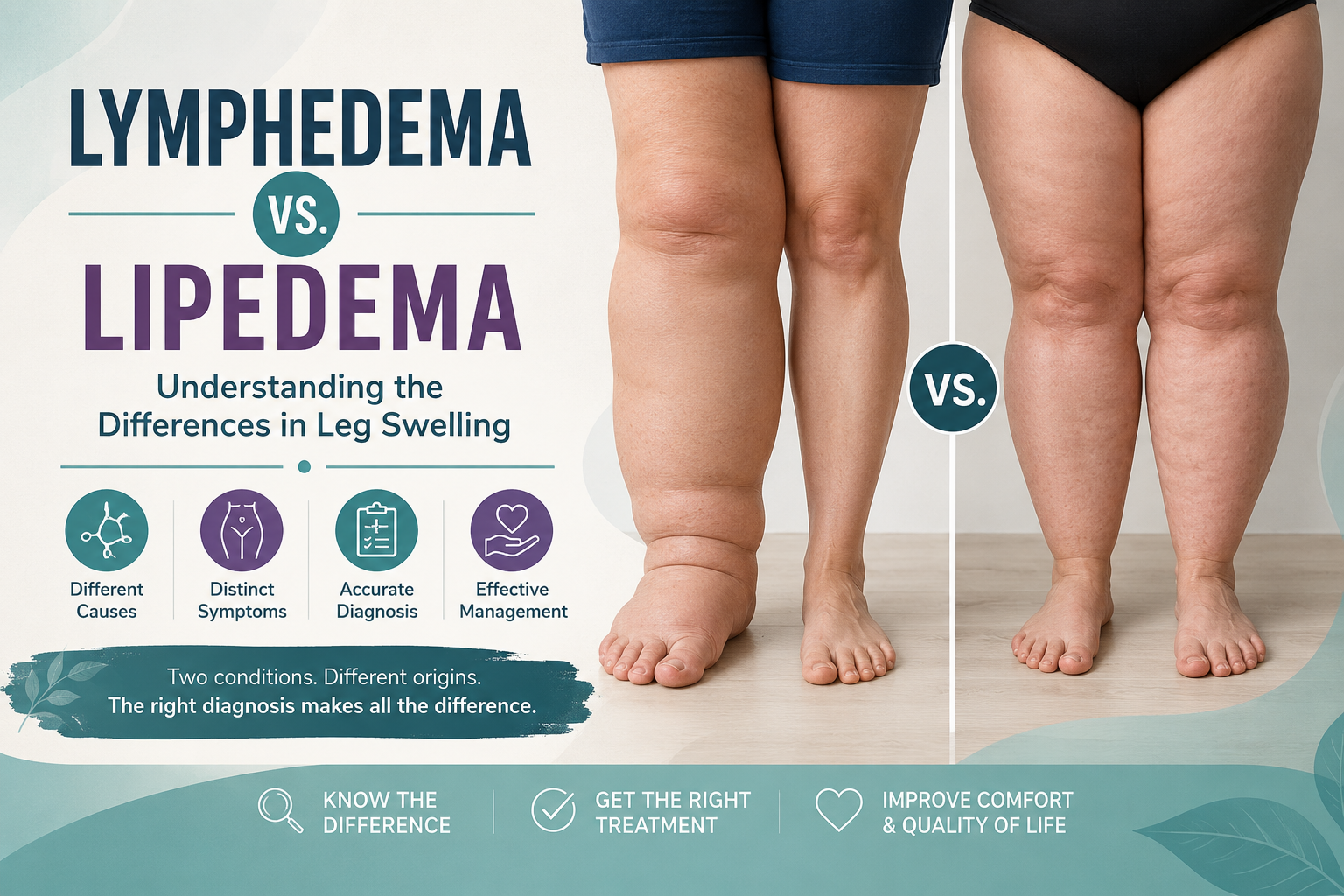
Lymphedema vs. Lipedema: Understanding the Differences in Leg Swelling
Leg swelling is a common problem, but not all swelling has the same cause. Two conditions that are frequently confused are lymphedema and lipedema. Although both can cause enlargement of the legs and significant discomfort, they are different medical conditions with different underlying mechanisms and treatment approaches.
For patients in St. Louis and surrounding Missouri and Illinois communities, correctly identifying the cause of chronic leg swelling is essential. Swelling may be related to the lymphatic system, abnormal fat distribution, chronic venous insufficiency, or a combination of circulatory disorders.
What Is Lymphedema?
Lymphedema occurs when the lymphatic system is unable to adequately transport lymphatic fluid away from the tissues. The lymphatic system normally collects excess fluid, proteins, and cellular waste from tissues and returns them to the circulation.
When lymphatic drainage is impaired, protein-rich fluid can accumulate in the tissues, causing progressive swelling and inflammation.
Lymphedema may be primary, resulting from abnormal development of the lymphatic system, or secondary to another condition. Secondary lymphedema can occur after lymph node removal, radiation therapy, trauma, infection, obesity, or longstanding circulatory disease.
Common signs of lymphedema include:
• Swelling that may affect one leg more than the other
• Swelling involving the foot and toes
• A feeling of heaviness or tightness
• Pitting edema, especially in earlier stages
• Progressive skin thickening or hardening
• Reduced flexibility or mobility
• Recurrent skin infections in some patients
As lymphedema progresses, the tissue may become increasingly fibrotic, making early recognition and management important.
What Is Lipedema?
Lipedema is a chronic disorder involving abnormal and disproportionate accumulation of fat, most commonly in the hips, thighs, buttocks, and lower legs. It occurs almost exclusively in women and frequently becomes more noticeable during periods of hormonal change.
Unlike general weight gain, lipedema fat tends to follow a characteristic symmetrical pattern. Both legs are usually affected, while the feet are typically spared. This can create a noticeable cuff-like appearance around the ankles.
Common signs of lipedema include:
• Symmetrical enlargement of both legs
• Disproportion between the upper and lower body
• Fat accumulation from the hips to the ankles
• Relative sparing of the feet
• Pain or tenderness in affected tissue
• Easy bruising
• A nodular or irregular texture beneath the skin
• Limited response of affected areas to traditional diet and exercise
Lipedema is often misunderstood as simple obesity. A person can have lipedema and obesity at the same time, but they are not the same condition.
Lymphedema vs. Lipedema: What Is the Difference?
One of the clearest differences is the distribution of swelling.
Lymphedema may affect one or both limbs and commonly involves the feet and toes. Lipedema is usually symmetrical and typically spares the feet.
Pain and easy bruising are also more characteristic of lipedema, while progressive fluid accumulation, tissue fibrosis, and skin changes are more typical of lymphedema.
However, the distinction is not always simple. Advanced lipedema may impair lymphatic function and lead to secondary lymphedema, sometimes referred to as lipo-lymphedema.
Patients can also have venous insufficiency and lymphatic dysfunction at the same time.
Could Chronic Venous Insufficiency Be Contributing to Leg Swelling?
Not all chronic leg swelling is caused by primary lymphatic dysfunction or lipedema. Chronic venous insufficiency can cause swelling when damaged vein valves allow blood to flow backward and pool in the lower legs.
Persistent venous hypertension can increase fluid movement into surrounding tissues and place additional stress on the lymphatic system. Over time, combined venous and lymphatic dysfunction may develop.
Signs that may suggest a venous component include varicose veins, ankle swelling that worsens throughout the day, leg heaviness, aching, itching, inflammation, brown skin discoloration around the ankles, or venous ulcers.
This is why patients with unexplained chronic leg swelling may benefit from a comprehensive circulatory evaluation rather than assuming that every swollen leg is simply “lymphedema.”
Why Proper Diagnosis Matters
Lymphedema, lipedema, and chronic venous insufficiency require different treatment strategies.
Management of lymphedema may include compression, exercise, skin care, weight management when appropriate, pneumatic compression, and specialized lymphatic therapy.
Lipedema management may involve compression, physical activity, nutritional strategies for overall metabolic health, symptom management, and consultation with clinicians experienced in the condition. In selected cases, specialized surgical approaches may be considered.
When venous reflux is contributing to swelling, treatment of the underlying abnormal veins may also be an important part of the treatment strategy.
The key is identifying which circulatory systems are involved.
Evaluation of Chronic Leg Swelling in St. Louis
At Sheen Vein Aesthetics and Functional Medicine, we evaluate patients with leg swelling, varicose veins, chronic venous insufficiency, skin discoloration, inflammation, and venous circulation problems.
For patients with chronic leg swelling, a venous duplex ultrasound can help determine whether abnormal venous reflux is contributing to the condition. Understanding whether swelling has a venous component can help guide a more complete and individualized treatment plan.
Patients from St. Louis, South County, Sunset Hills, Crestwood, Kirkwood, Webster Groves, Fenton, Arnold, and surrounding Missouri and Southern Illinois communities can schedule an evaluation to better understand whether underlying venous disease is contributing to chronic leg swelling.
If your legs are chronically swollen, painful, heavy, or changing in appearance, determining the underlying cause is the first step toward choosing the appropriate treatment.
Contact Sheen Vein Aesthetics and Functional Medicine at 314-842-1441 or visit our office at 11144 Tesson Ferry Rd., Suite 100, St. Louis, MO 63123.