Nighttime Leg Cramps: Could Vein Disease Be the Hidden Cause? Understanding Nocturnal Leg Cramping and Treatment Options in St. Louis
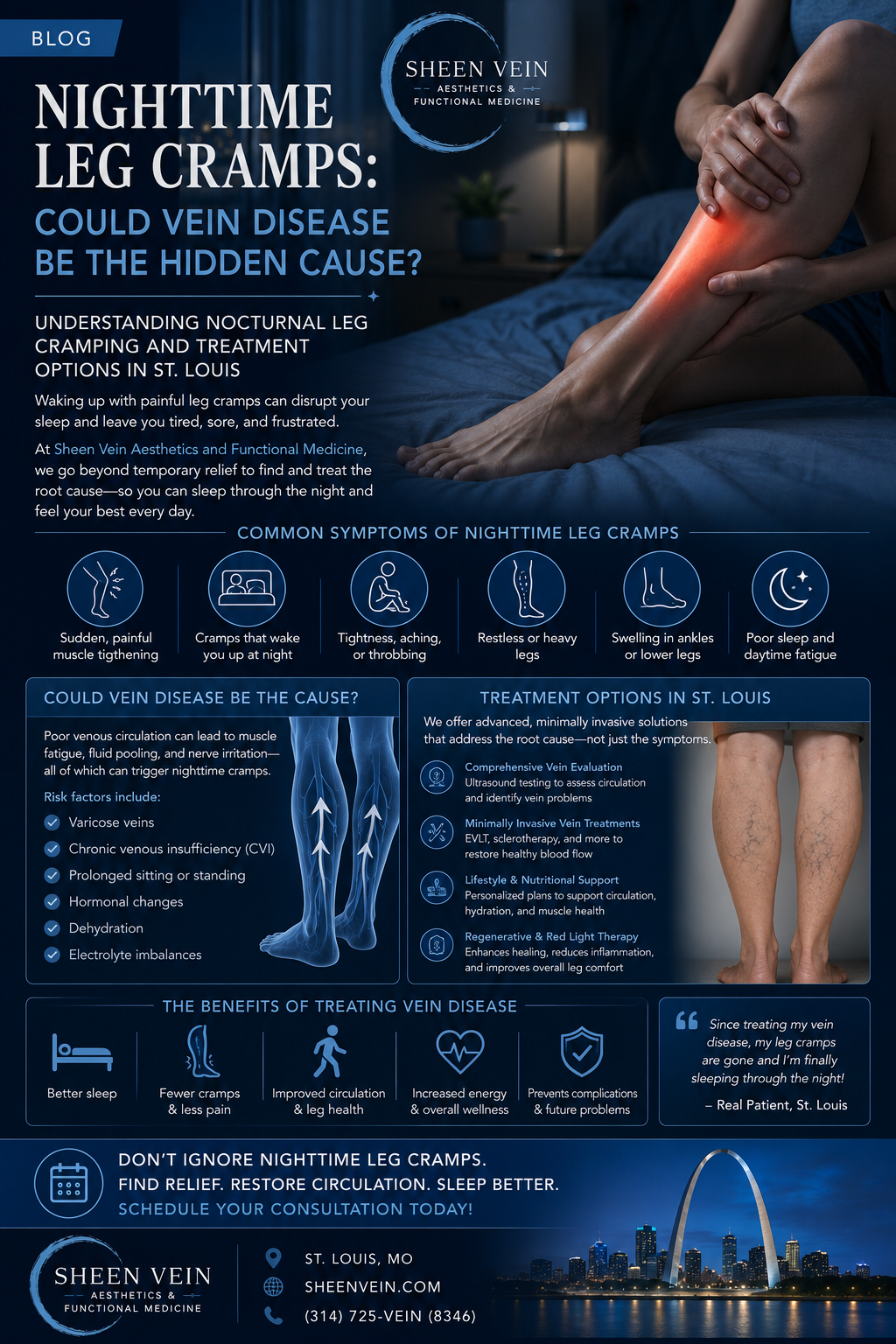
Nighttime Leg Cramps: Could Vein Disease Be the Hidden Cause?
Few things are more frustrating than being awakened in the middle of the night by a sudden, painful cramp in your calf or foot. The muscle tightens unexpectedly, making it difficult to move, stretch, or even stand. While the cramp may last only a few seconds or several minutes, the soreness can linger for hours—or even days.
Nocturnal leg cramps, commonly known as nighttime leg cramps, affect millions of adults each year. Although they become more common with age, they can occur in younger adults, athletes, pregnant women, and even healthy individuals.
Many people assume nighttime leg cramps are simply due to dehydration or low potassium. While those can occasionally contribute, research has shown that the causes of nocturnal leg cramps are often far more complex. One frequently overlooked contributor is chronic venous insufficiency (CVI)—a condition in which damaged leg veins allow blood to pool in the lower extremities rather than efficiently returning to the heart.
At Sheen Vein & Aesthetics in St. Louis, we routinely evaluate patients with nighttime leg cramps who are surprised to learn that their symptoms may be related to underlying vein disease. Understanding the potential causes is the first step toward finding lasting relief.
What Are Nocturnal Leg Cramps?
Nocturnal leg cramps are sudden, involuntary contractions of one or more muscles that occur during sleep or while resting at night. They most commonly affect the:
- Calf muscles
- Feet
- Toes
- Hamstrings
Unlike restless legs syndrome (RLS), which creates an uncomfortable urge to move the legs, nocturnal leg cramps involve forceful muscle contractions that are often painful and may temporarily prevent movement.
These cramps can occur occasionally or several times each night, disrupting sleep and significantly affecting quality of life.
Why Do Leg Cramps Occur at Night?
Researchers still do not completely understand why nighttime cramps develop, but several factors appear to contribute.
During sleep:
- Blood circulation naturally changes.
- Muscles remain in shortened positions for prolonged periods.
- Nerves may become more excitable.
- Minor electrolyte shifts can occur.
- Decreased movement reduces the normal pumping action of the calf muscles.
For individuals with underlying vein disease, these nighttime changes may further impair circulation and increase the likelihood of cramping.
The Overlooked Connection Between Vein Disease and Leg Cramps
Many people do not realize that chronic venous insufficiency can contribute to nighttime leg cramps.
Healthy veins contain one-way valves that keep blood flowing upward toward the heart. When these valves weaken or become damaged, blood leaks backward and pools in the lower legs—a condition called venous reflux.
This pooling increases pressure within the veins, leading to:
- Poor circulation
- Swelling
- Inflammation
- Reduced oxygen delivery
- Accumulation of metabolic waste products
These changes may increase muscle irritability and contribute to cramping, particularly after a full day of standing or sitting.
Several studies have shown that patients with chronic venous insufficiency frequently report symptoms such as nighttime cramping, aching, heaviness, fatigue, and restless legs. Many experience improvement after treatment of their underlying venous disease.
How Does Poor Venous Circulation Cause Muscle Cramps?
Although the exact mechanism is still being studied, several theories exist.
Reduced Oxygen Delivery
When blood pools in the legs, oxygen exchange becomes less efficient. Muscles that receive inadequate oxygen may fatigue more easily and become more prone to involuntary contractions.
Increased Inflammatory Chemicals
Chronic venous insufficiency leads to persistent low-grade inflammation. Inflammatory mediators may increase nerve sensitivity and alter normal muscle function.
Fluid Accumulation
Swelling places pressure on surrounding muscles and nerves, potentially increasing muscle excitability and cramping.
Impaired Removal of Waste Products
Poor circulation may reduce the removal of metabolic byproducts generated during daily activity, contributing to muscle fatigue.
Other Symptoms That Suggest Vein Disease
If your nighttime leg cramps are related to chronic venous insufficiency, you may also notice:
- Varicose veins
- Spider veins
- Leg heaviness
- Aching legs
- Swelling around the ankles
- Restless legs
- Burning discomfort
- Itching
- Skin discoloration
- Leg fatigue
- Symptoms that worsen later in the day
- Relief when elevating the legs
These symptoms often develop gradually and are frequently dismissed as "just getting older."
Other Causes of Nighttime Leg Cramps
While vein disease is an important consideration, it is not the only possible cause.
A thorough medical evaluation is important because multiple factors may contribute.
Electrolyte Imbalances
Electrolytes help regulate normal muscle contraction.
Low levels of:
- Magnesium
- Potassium
- Calcium
- Sodium
may increase muscle excitability in some individuals.
True electrolyte deficiencies are less common than many people believe but should be considered in appropriate clinical settings.
Dehydration
Insufficient fluid intake may concentrate electrolytes and alter muscle function, particularly during:
- Hot weather
- Endurance exercise
- Illness
- Excessive sweating
Older adults are especially susceptible because the sense of thirst often declines with age.
Peripheral Artery Disease (PAD)
Reduced arterial blood flow can also produce leg pain.
Unlike venous disease, PAD symptoms often include:
- Pain while walking
- Cool feet
- Poor wound healing
- Decreased pulses
- Skin color changes
Distinguishing between arterial and venous disease is critical because treatment approaches differ significantly.
Nerve Disorders
Conditions affecting the nervous system may contribute to nighttime cramping.
Examples include:
- Peripheral neuropathy
- Lumbar spinal stenosis
- Pinched nerves
- Diabetic neuropathy
- Multiple sclerosis
- Parkinson's disease
These disorders may alter nerve signaling to muscles.
Medications
Certain medications have been associated with muscle cramping, including:
- Diuretics
- Statins (occasionally)
- Some asthma medications
- Certain blood pressure medications
- Hormonal therapies in some individuals
Never stop a prescribed medication without consulting your healthcare provider.
Pregnancy
Pregnant women frequently experience nighttime leg cramps, particularly during the second and third trimesters.
Potential contributing factors include:
- Increased blood volume
- Venous pressure from the growing uterus
- Mineral changes
- Muscle fatigue
- Swelling
Symptoms often improve after delivery.
Kidney Disease
Kidney disorders can alter electrolyte balance and muscle function.
Patients with chronic kidney disease or those receiving dialysis commonly report muscle cramps.
Liver Disease
Advanced liver disease may also contribute through metabolic and electrolyte abnormalities.
Thyroid Disorders
Both hypothyroidism and hyperthyroidism may increase the risk of muscle symptoms, including cramping.
Diabetes
People with diabetes may experience leg cramps due to:
- Peripheral neuropathy
- Circulation problems
- Electrolyte changes
- Muscle dysfunction
Good glucose control remains an important component of management.
Magnesium: Does It Really Help?
Magnesium is one of the most commonly recommended supplements for leg cramps.
While magnesium clearly benefits individuals who are deficient, research has shown mixed results for treating nocturnal leg cramps in the general population.
Some patients report meaningful improvement, while others notice little difference.
For individuals with documented deficiency or increased risk of deficiency, supplementation may be appropriate under medical guidance.
Stretching Can Make a Difference
One of the simplest and most effective non-medication treatments is regular stretching.
Daily stretching of the:
- Calf muscles
- Achilles tendon
- Hamstrings
- Feet
may reduce the frequency and severity of nighttime cramps.
Stretching before bed appears particularly helpful for many patients.
Staying Active
Regular walking improves circulation and strengthens the calf muscle pump.
The calf muscles serve as a "second heart," helping move blood back toward the heart during walking.
Prolonged sitting or standing allows blood to pool, particularly in individuals with vein disease.
Compression Stockings
For patients with chronic venous insufficiency, properly fitted compression stockings may reduce:
- Swelling
- Venous pressure
- Aching
- Fatigue
- Nighttime cramping
Compression should be individualized based on your circulation and medical history.
The Importance of a Venous Ultrasound
If vein disease is suspected, a venous duplex ultrasound is one of the most valuable diagnostic tools available.
This painless, non-invasive test evaluates:
- Venous reflux
- Valve function
- Blood flow
- Previous blood clots
- Deep and superficial veins
Ultrasound allows providers to determine whether chronic venous insufficiency is contributing to nighttime symptoms.
Modern Treatments for Vein Disease
If significant venous reflux is identified, treating the underlying vein disease may improve symptoms beyond just the appearance of varicose veins.
Treatment options include:
Endovenous Laser Therapy (EVLT)
Laser energy is used to close diseased veins from the inside, allowing blood to reroute through healthier veins.
Ultrasound-Guided Foam Sclerotherapy
A specialized medication is injected into abnormal veins under ultrasound guidance to eliminate refluxing veins.
Visual Sclerotherapy
Smaller symptomatic veins may be treated after addressing larger sources of reflux.
These minimally invasive procedures are performed in the office and typically require little downtime.
Many patients report improvement in heaviness, swelling, aching, and nighttime cramping following successful treatment.
Lifestyle Changes That May Help
Several healthy habits may reduce nighttime cramping:
- Stay well hydrated.
- Stretch before bed.
- Walk regularly.
- Wear supportive shoes.
- Maintain a healthy weight.
- Avoid prolonged standing without movement.
- Elevate your legs when resting.
- Wear compression if recommended.
- Discuss medication side effects with your healthcare provider.
These strategies often work best when combined with treatment of any underlying medical condition.
When Should You See a Specialist?
You should seek medical evaluation if your nighttime leg cramps:
- Occur frequently
- Wake you regularly from sleep
- Are associated with leg swelling
- Occur with varicose veins
- Cause severe pain
- Are accompanied by skin discoloration
- Limit your daily activities
- Are associated with weakness or numbness
- Continue despite conservative measures
Because multiple medical conditions can cause leg cramps, identifying the underlying reason is essential for effective treatment.
Frequently Asked Questions
Are nighttime leg cramps the same as restless legs syndrome?
No. Restless legs syndrome causes an uncomfortable urge to move the legs, usually relieved by movement. Nocturnal leg cramps involve painful, involuntary muscle contractions that may last from seconds to several minutes.
Can vein disease really cause leg cramps?
Yes. Many patients with chronic venous insufficiency report nighttime leg cramps, along with swelling, heaviness, aching, and fatigue. Research suggests that treating venous reflux may reduce these symptoms in appropriate patients.
Does drinking more water stop leg cramps?
Dehydration can contribute to muscle cramps in some individuals, particularly during illness, hot weather, or heavy exercise. However, many people with nighttime leg cramps are adequately hydrated, so additional evaluation may be necessary if symptoms persist.
Should I take magnesium?
Magnesium may help if you have a deficiency, but studies have shown mixed results for routine use in nocturnal leg cramps. Before starting supplements, it's best to discuss your symptoms with your healthcare provider to determine whether testing or supplementation is appropriate.
When are nighttime leg cramps a medical concern?
Seek prompt medical evaluation if cramps are associated with significant swelling, redness, weakness, numbness, persistent pain, skin changes, or symptoms suggestive of a blood clot or arterial circulation problem.
Why Choose Sheen Vein & Aesthetics for Nighttime Leg Cramping Evaluation in St. Louis?
At Sheen Vein & Aesthetics, we understand that nighttime leg cramps are often more than an inconvenience—they can disrupt sleep, reduce quality of life, and sometimes signal an underlying circulatory problem. Rather than simply treating the symptom, we focus on identifying the root cause.
If chronic venous insufficiency is contributing to your leg cramps, we offer comprehensive evaluation with venous duplex ultrasound and advanced, minimally invasive treatment options including Endovenous Laser Therapy (EVLT), Ultrasound-Guided Foam Sclerotherapy, and Visual Sclerotherapy. By addressing the underlying venous reflux, many patients experience improvement not only in leg cramps but also in heaviness, swelling, aching, and fatigue.
Our personalized approach considers your complete medical history, lifestyle, and symptoms to ensure you receive the most appropriate care. Whether your cramps are related to vein disease, another medical condition, or multiple contributing factors, we're committed to helping you find answers and lasting relief.
Schedule Your Vein Evaluation Today
If nighttime leg cramps are interrupting your sleep or are accompanied by varicose veins, swelling, or aching legs, don't assume it's simply part of getting older. An evaluation can help determine whether chronic venous insufficiency or another treatable condition is responsible.
At Sheen Vein & Aesthetics, we're proud to serve patients throughout the St. Louis area with advanced diagnostics, compassionate care, and evidence-based treatment designed to improve both your circulation and your quality of life.