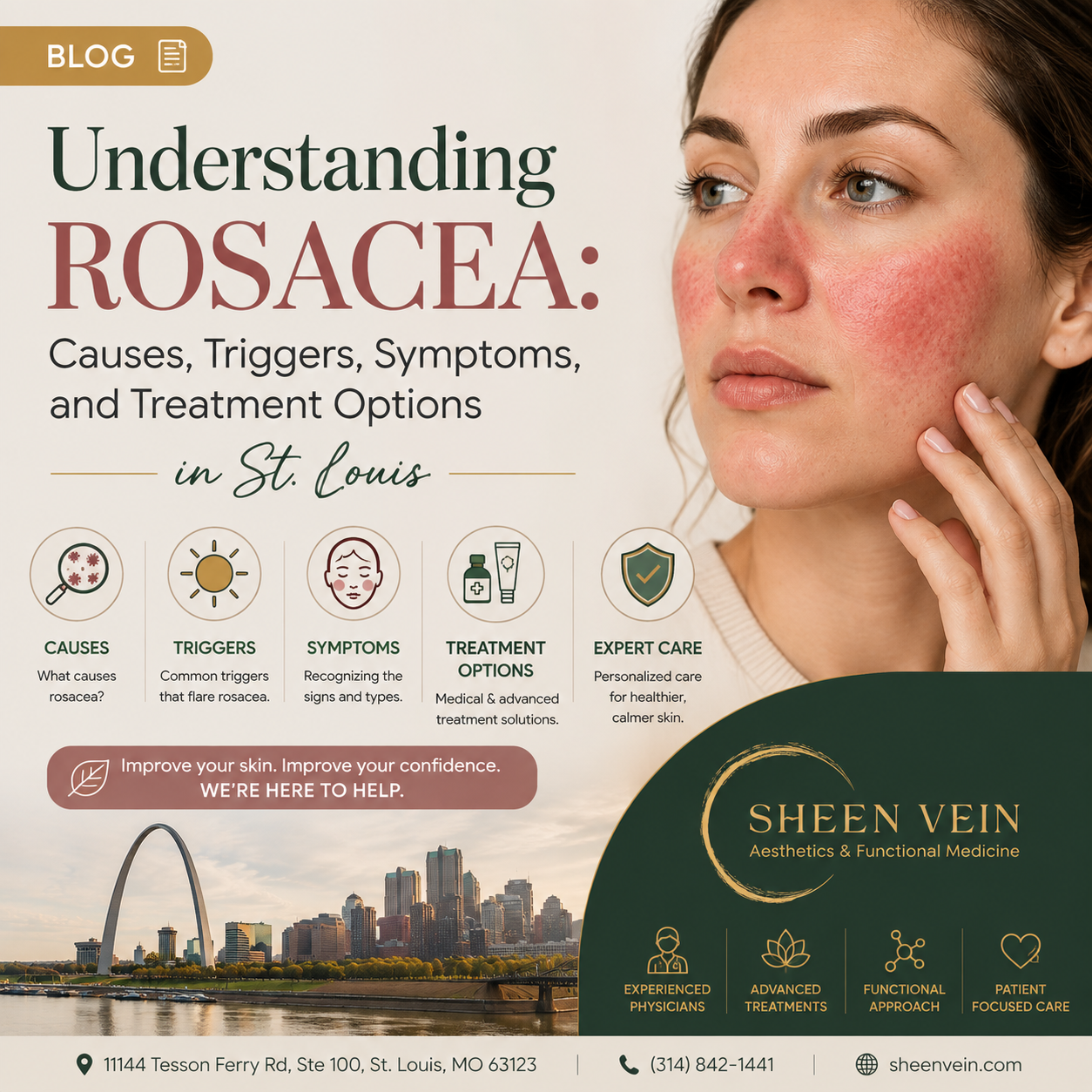
Understanding Rosacea: Causes, Triggers, Symptoms, and Treatment Options in St. Louis
Understanding Rosacea: Causes, Triggers, Symptoms, and Treatment Options in St. Louis
Rosacea is more than occasional facial redness. It is a chronic inflammatory skin condition that can cause persistent redness, flushing, visible facial blood vessels, acne-like bumps, skin sensitivity, and even eye irritation. For many people in St. Louis, rosacea symptoms become more noticeable during periods of extreme heat, cold winter weather, sun exposure, stress, or other environmental and lifestyle triggers.
According to the American Academy of Dermatology Rosacea Resource Center, rosacea can cause redness, sensitive skin, discomfort, and acne-like breakouts. The Mayo Clinic overview of rosacea symptoms and causes also explains that symptoms may flare for weeks or months before becoming less noticeable for a period of time.
Understanding what drives your symptoms is an important first step toward developing an effective rosacea treatment plan.
What Is Rosacea?
Rosacea is a long-term inflammatory condition that most commonly affects the central face, including the cheeks, nose, forehead, and chin. Some people primarily experience flushing and persistent redness, while others develop visible small blood vessels, inflammatory bumps, or eye symptoms.
The condition can sometimes be mistaken for acne, sun damage, sensitive skin, or dermatitis. However, rosacea has its own inflammatory and vascular characteristics and often requires a personalized management strategy.
The National Rosacea Society patient guide describes rosacea as a chronic but treatable condition characterized by periods of flare-ups and remission.
What Causes Rosacea?
The exact cause of rosacea is still being investigated. Current research suggests that multiple processes may be involved, including immune system activity, neurovascular dysregulation, skin barrier dysfunction, genetics, environmental exposure, and microorganisms that naturally live on the skin.
The American Academy of Dermatology discussion of rosacea causes explains that researchers continue to study how immune responses and common triggers such as sunlight, heat, and spicy foods may contribute to rosacea symptoms.
Research has also explored the roles of ultraviolet radiation, temperature extremes, microbes, skin barrier disruption, stress, inflammatory signaling, and abnormal neurovascular responses. Rosacea is therefore increasingly understood as more than simply a cosmetic redness problem.
Common Rosacea Triggers
Rosacea triggers are highly individual. What causes significant flushing in one person may have little effect on another. Commonly reported triggers include:
• Sun and ultraviolet exposure
• Hot or cold weather
• Rapid temperature changes
• Spicy foods
• Hot beverages
• Alcohol
• Emotional stress
• Intense exercise
• Wind exposure
• Harsh or irritating skincare products
• Certain cosmetics
Because triggers vary, keeping a simple daily diary of foods, activities, skincare products, weather exposure, and symptoms can help identify personal patterns.
Why Rosacea Can Be Challenging in St. Louis
Living in the St. Louis region can create unique challenges for rosacea-prone skin. Hot, humid summers can promote flushing and heat-related flare-ups, while cold temperatures, dry indoor heating, and winter wind can irritate the skin barrier.
Frequent transitions between outdoor temperatures and heated or air-conditioned indoor environments may also contribute to facial reactivity in susceptible individuals.
For patients in St. Louis, South County, Sunset Hills, Crestwood, Kirkwood, Webster Groves, Fenton, Arnold, and surrounding Missouri and Illinois communities, successful rosacea management may require adjusting skincare and lifestyle strategies throughout the year.
Can Rosacea Be Treated?
Although rosacea is considered a chronic condition, its symptoms can often be managed. Treatment depends on the individual presentation and may include lifestyle changes, gentle skincare, sun protection, prescription topical medications, oral medications, and laser or light-based procedures.
The Mayo Clinic guide to rosacea diagnosis and treatment notes that treatment may include prescription topical therapies, oral medications for more significant disease, and laser treatment to reduce flushing and enlarged facial blood vessels.
Laser-based treatments may be particularly useful when persistent redness and visible facial vessels are prominent concerns. Because rosacea varies considerably between patients, treatment should be selected according to skin type, symptoms, vascular changes, inflammatory features, and individual triggers.
A Personalized Approach to Rosacea Treatment in St. Louis
At Sheen Vein Aesthetics and Functional Medicine in St. Louis, our approach begins with understanding the individual patient. Rosacea does not look exactly the same in everyone, and a treatment strategy should reflect the specific pattern of redness, flushing, visible vessels, inflammation, sensitivity, and environmental triggers.
Our goal is to help patients understand their skin and explore appropriate strategies for improving the appearance of facial redness and managing recurring symptoms. For individuals concerned about facial redness, visible blood vessels, or persistent flushing, an evaluation can help determine which treatment options may be appropriate.
Learn more about our rosacea treatment options in St. Louis.
If you are experiencing persistent facial redness or visible facial vessels, contact Sheen Vein Aesthetics and Functional Medicine at 314-842-1441 or visit us at 11144 Tesson Ferry Rd., Suite 100, St. Louis, MO 63123.