How Can You Improve Uneven Skin Texture Without Surgery?
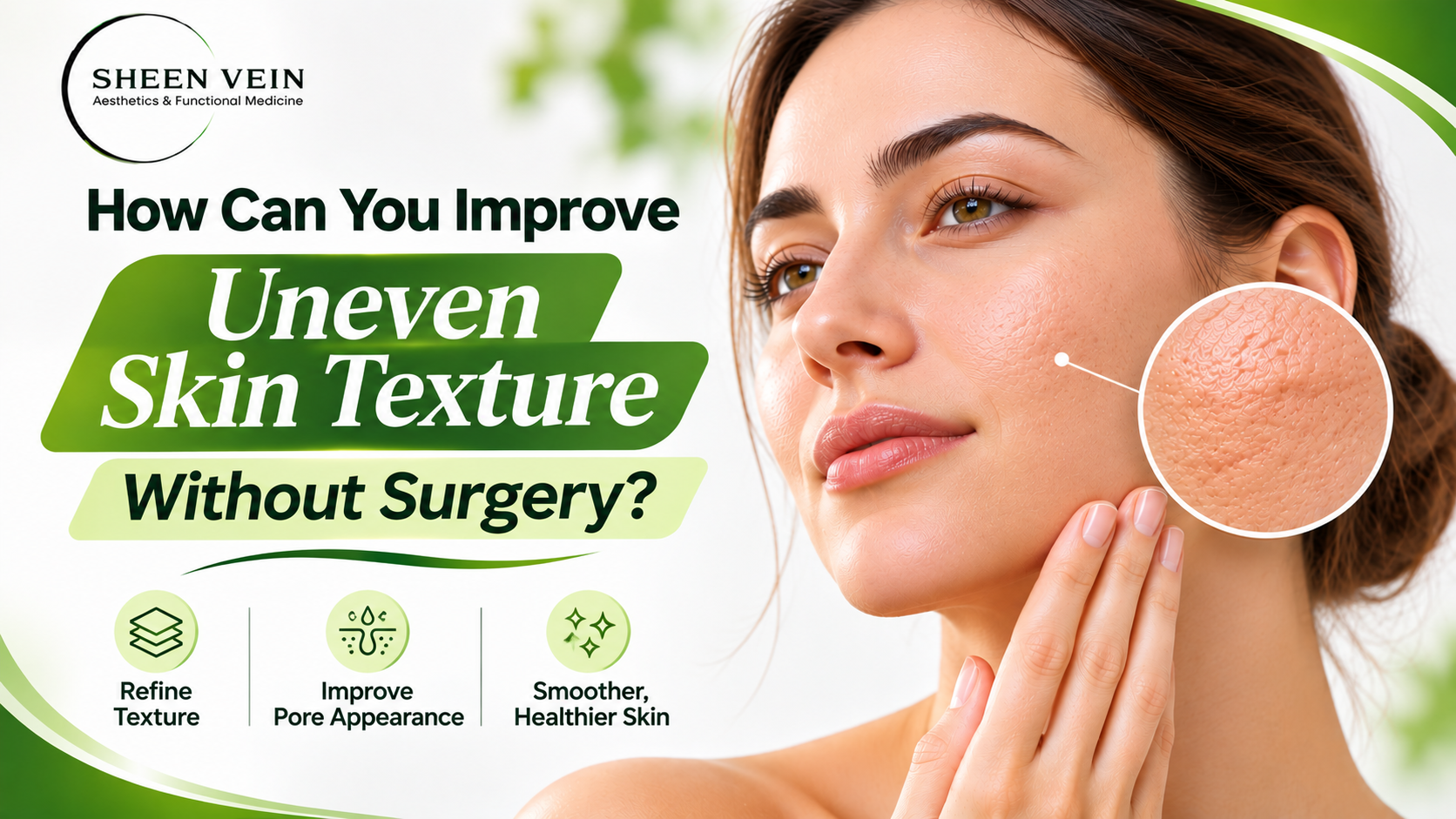
You cleanse, moisturize, and wear sunscreen, yet your cheeks still feel rough, or small bumps and shallow dents become noticeable under bathroom lighting. This can be frustrating, especially when you're following a consistent skincare routine. Uneven skin texture can often improve without surgery through targeted skincare, treatment of underlying problems such as acne, and, for some people, selected professional procedures. The right uneven skin texture treatment depends on what is causing the texture in the first place. Dry skin and depressed acne scars can look similar from a distance, but they respond to very different approaches.
What Causes Uneven Skin Texture?
Uneven skin texture can result from surface-level concerns or deeper structural changes. Surface concerns may improve with consistent skincare, while structural changes often require a different approach.
Surface causes include dryness, a buildup of dead skin cells, and clogged pores. Dry skin often looks dull and feels rough or flaky. Blackheads and whiteheads, also called comedones, can create small bumps that persist over time. Active acne may also cause inflammation and make the skin appear uneven.
Structural causes run deeper. Atrophic acne scars are depressions left when inflammation damages the tissue beneath the surface. Sun exposure and natural aging can affect collagen production, skin elasticity, and thickness, making fine lines and surface irregularities more noticeable. Enlarged pores are influenced by oil production, genetics, and age, so they can look more prominent over the years. Inflammatory conditions such as rosacea and eczema can also change how skin looks and feels.
The distinction matters. Moisturizer will not lift a depressed scar, and a scar procedure will not fix dehydrated skin.
How Can You Improve Uneven Skin Texture at Home?
A consistent skincare routine can help improve surface roughness, particularly when dryness or clogged pores are contributing to uneven texture.
Cleanse Gently and Moisturize
Use a mild cleanser and lukewarm water, then apply moisturizer while your skin is still slightly damp. A well-supported skin barrier holds water better, and hydrated skin reflects light more evenly. Hot water and abrasive scrubs strip the barrier and often leave skin rougher.
Protect Your Skin From the Sun
Ultraviolet exposure drives photoaging and can undo progress from other treatments. The American Academy of Dermatology recommends a broad-spectrum, water-resistant sunscreen with an SPF of 30 or higher on exposed skin.
Exfoliate With Restraint
Alpha hydroxy acids such as glycolic or lactic acid, and beta hydroxy acids such as salicylic acid, loosen dead cells and can help with clogged pores. Start with infrequent use and watch how your skin responds. Exfoliating too frequently or combining several exfoliating acids can cause stinging, redness, and flaking, making uneven texture more noticeable. If your skin burns or peels, pause and rely on moisturizer.
Consider a Topical Retinoid
Retinoids help regulate skin cell turnover, prevent clogged pores, and may improve fine lines and certain texture concerns over time. Adapalene is available over the counter, and stronger prescription options exist. Irritation and peeling are common early on, so start slowly, apply a pea-sized amount at night, and moisturize. Retinoids are not recommended during pregnancy or when trying to conceive. People with sensitive skin, a compromised skin barrier, or an active inflammatory condition should seek professional guidance before starting a retinoid. Combining retinoids with exfoliating acids, benzoyl peroxide, or abrasive scrubs may increase irritation, so the products and frequency should be selected carefully.
Home care can improve dryness, dullness, clogged pores, and mild roughness, and retinoid benefits build over months. It cannot reliably lift depressed scars or reverse structural change. If acne is behind the texture, controlling it comes first, because new breakouts keep creating new marks.
Which Non-Surgical Treatments Can Improve Uneven Skin Texture?
When home care plateaus, in-office procedures can address changes that products cannot reach. They are medical procedures with real trade-offs, and not every clinic offers every option.
Chemical Peels for Surface Texture
A chemical peel uses a chemical solution to exfoliate or remove targeted layers of skin, encouraging the development of a smoother-looking surface as the skin heals. Mayo Clinic notes that light peels are used for fine wrinkles, acne, uneven tone, and dryness, while medium peels reach deeper and are used for acne scars and uneven tone. Peels cannot remove deep scars. Risks include irritation, infection, prolonged redness, and, rarely, scarring. They can also darken or lighten the skin, and these changes are more common in people with brown or black skin and can sometimes be permanent.
Microneedling for Selected Textural Concerns
Microneedling uses fine needles to create controlled micro-injuries, prompting a repair response that includes collagen production. It is commonly considered for mild to moderate atrophic acne scars, enlarged pores, and fine lines. Improvement is gradual and usually requires a series of sessions. Radiofrequency (RF) microneedling combines fine needles with heat energy delivered into the skin. Possible complications include redness, swelling, infection, and pigmentation changes. The FDA has also reported serious complications associated with certain uses of RF microneedling, including burns, scarring, fat loss, and nerve damage. Choosing a qualified, experienced medical provider is important.
Laser Resurfacing for Skin Irregularities
Lasers deliver focused light energy to treat texture, scarring, and sun damage. Ablative lasers remove the outer skin layer and heat deeper tissue, usually giving stronger change with longer healing. Nonablative lasers leave the surface intact, with less downtime but often more sessions. Fractional versions treat microscopic columns of skin rather than the entire surface, which shortens recovery. Ablative lasers may produce more noticeable improvement for certain acne scars, but they generally require longer recovery and carry risks such as prolonged redness, scarring, and pigmentation changes. The appropriate laser treatment depends on scar type, skin tone, and individual risk factors.
Sheen Vein Aesthetics and Functional Medicine offers laser skin resurfacing to address selected skin texture concerns and scarring. The practice also provides laser acne treatment and scar revision, depending on individual needs and treatment suitability.
How Do You Choose the Right Treatment for Your Skin?
Choosing the right treatment starts with identifying the cause of uneven skin texture and considering your individual skin needs.
- Dry or mildly rough skin usually responds to barrier care, gentle exfoliation, and sometimes a retinoid.
- Clogged pores and active acne need acne control first, sometimes with prescription treatment.
- Shallow, depressed acne scars may benefit from procedures such as microneedling or fractional laser resurfacing after active acne is controlled.
- Sun damage and fine lines may respond to retinoids, peels, or lasers, depending on severity.
A provider should also consider your skin type, sensitivity, how easily your skin darkens after irritation, medical history, medications, goals, and tolerance for downtime. According to Mayo Clinic, factors such as recent isotretinoin use, a history of keloid scarring, pregnancy, and frequent or severe cold sores may affect whether certain chemical peels are appropriate. If you have a darker skin tone or a history of dark marks after breakouts or injuries, ask how the provider reduces pigment risk and how often they treat skin like yours.
How Long Does It Take to Notice Smoother Skin?
It depends on the cause. Consistent moisturizing may improve the appearance of dry, rough skin relatively quickly, while exfoliation and other skincare treatments may take several weeks to produce noticeable changes. Retinoids, acne control, and collagen-based procedures take longer, and improvement is typically gradual over months. Many procedures involve more than one session, and healing continues after each one. No clinic can promise a specific outcome, so ask what a realistic timeline looks like for your skin and concern.
When Should You See a Skin Care Professional?
Consider a professional skin evaluation if roughness persists despite consistent skincare, acne is leaving scars, your skin remains red or irritated, or products repeatedly cause discomfort. A professional can identify the cause and tell you whether treatment is needed at all.
Some changes are not cosmetic. See a medical professional promptly for a sore that does not heal, a spot that bleeds, a pearly or scaly growth, or a mole or patch that changes quickly in size, shape, or color.
Frequently Asked Questions
Can uneven skin texture improve without surgery?
Often, yes. Consistent skincare, acne treatment, and non-surgical procedures can improve many types of texture. How much improvement is realistic depends on the cause, and structural changes such as deep scars tend to improve rather than disappear.
What is the best treatment for bumpy facial skin?
It depends on what the bumps are. Clogged pores may respond to a retinoid or salicylic acid, and inflamed acne may need prescription treatment. Bumps that do not respond to routine care deserve an in-person diagnosis before you try stronger products.
Can uneven skin texture caused by acne scars be improved?
The appearance of many atrophic scars can be reduced with procedures such as microneedling, peels, or laser resurfacing, often over multiple sessions. Scars are rarely erased completely, and the best option depends on scar type, depth, and skin tone.
Does exfoliating every day make skin smoother?
Usually not. Over-exfoliation disrupts the skin barrier and causes irritation, which can worsen texture. Gentle, less frequent exfoliation is a safer starting point.
Are non-surgical skin texture treatments suitable for all skin types?
Not always. Some treatments may cause pigmentation changes, especially in darker skin tones. A qualified provider can recommend options based on your skin type and medical history.
Finding the Right Treatment for Uneven Skin Texture
Smoother-looking skin usually comes from matching the approach to the cause. Gentle cleansing, moisturizer, daily sunscreen, and careful use of exfoliants or retinoids can help many people, while depressed scars and other structural changes often call for professional assessment.
If you're in St. Louis and concerned about uneven skin texture, Sheen Vein Aesthetics and Functional Medicine can help you explore available treatment options, including laser skin resurfacing, laser acne treatment, and scar revision. Contact the office to discuss your concerns, treatment suitability, and realistic expectations.