Venous Stasis Ulcers: Why Healing the Wound Requires Treating the Underlying Vein Disease
Venous Stasis Ulcers: Why Healing the Wound Requires Treating the Underlying Vein Disease
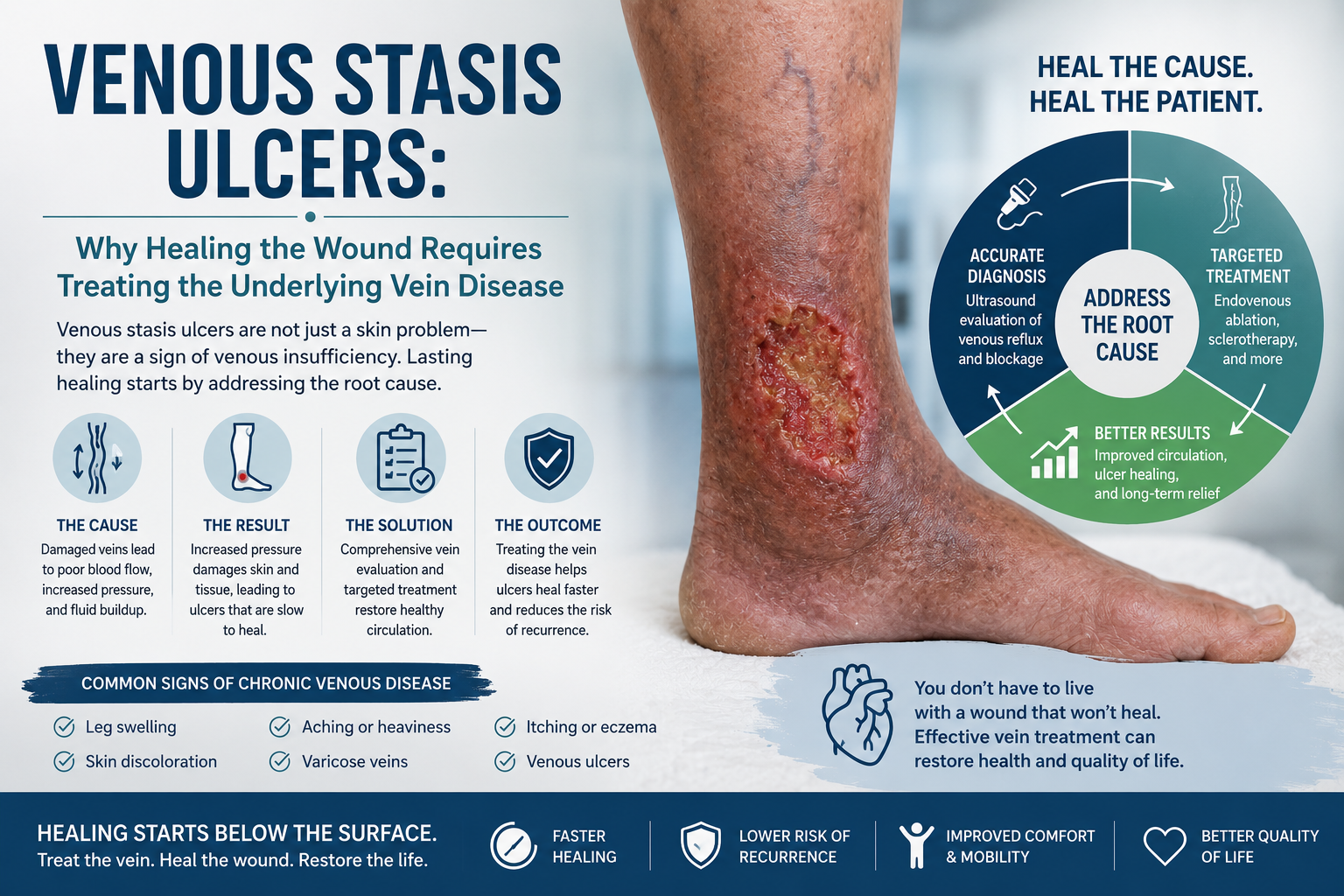
Venous stasis ulcers are chronic wounds that most commonly develop around the ankle or lower leg. While wound dressings, compression, and specialized wound care can help manage the open ulcer, long-term healing often requires addressing the underlying problem: chronic venous insufficiency and abnormal pressure within the veins of the legs.
For patients with venous leg ulcers in St. Louis and surrounding Missouri and Illinois communities, understanding the cause of the wound is an important part of developing an effective treatment plan.
What Causes a Venous Stasis Ulcer?
Healthy leg veins contain one-way valves that help move blood back toward the heart. When these valves become damaged or stop closing properly, blood can flow backward and pool in the lower legs. This condition is known as chronic venous insufficiency, or CVI.
Over time, persistent venous reflux can increase pressure inside the veins. This condition, known as venous hypertension, can affect the surrounding microcirculation and tissues. Fluid may leak into the tissue, swelling can develop, and chronic inflammation can damage the skin.
As the disease progresses, patients may experience:
• Leg swelling
• Aching or heaviness
• Varicose veins
• Skin itching or irritation
• Brown or reddish skin discoloration
• Thickening or hardening of the skin
• Recurrent inflammation
• Slow-healing wounds near the ankle
Eventually, the damaged skin and surrounding tissue may break down and form a venous stasis ulcer.
The Ulcer Is Often a Symptom of a Deeper Circulatory Problem
One of the most important concepts in treating venous leg ulcers is recognizing that the open wound is often the visible result of an underlying circulatory disorder.
Cleaning the wound, controlling infection when present, applying advanced dressings, and providing compression can all be important parts of treatment. However, if abnormal venous reflux and elevated pressure remain untreated, the underlying forces that contributed to tissue breakdown may still be present.
This can contribute to delayed healing or ulcer recurrence.
Effective treatment should therefore evaluate the entire venous circulation of the leg—not only the wound itself.
Why a Venous Ultrasound Is Important
A comprehensive venous duplex ultrasound can help identify abnormal blood flow and determine whether damaged veins are allowing blood to reflux toward the lower leg.
The ultrasound examination can evaluate the superficial and deep venous systems and identify patterns of venous reflux that may be contributing to chronic swelling, skin changes, and ulcer formation.
For patients with a suspected venous stasis ulcer, this evaluation can help answer an essential question:
Why did this wound develop in the first place?
If significant venous reflux is identified, treating the underlying vein disease may become an important component of the overall wound-healing strategy.
Treating the Cause: Chronic Venous Insufficiency
Treatment for venous insufficiency depends on the individual patient’s anatomy, ultrasound findings, medical history, and severity of disease. Depending on the source of reflux, treatment options may include endovenous laser therapy, ultrasound-guided foam sclerotherapy, or other minimally invasive vein procedures.
These treatments are designed to address abnormal veins that are contributing to venous hypertension. Once diseased veins are closed, blood is redirected through healthier functioning veins.
The goal is not simply to improve the appearance of the leg. In patients with advanced chronic venous disease, treatment may be directed toward improving venous circulation, reducing venous hypertension, supporting ulcer healing, and reducing the risk of recurrence.
Compression Therapy Is Important—but May Not Address the Entire Problem
Compression therapy is a cornerstone of venous ulcer management. Properly selected compression can help control edema, support venous return, and improve the environment for wound healing.
However, compression does not necessarily correct the underlying malfunctioning venous valves. This is why a comprehensive treatment approach may combine wound care and compression with evaluation and treatment of the underlying venous reflux.
For some patients, repeatedly treating the surface wound without investigating the venous circulation may leave an important part of the disease process unaddressed.
Venous Stasis Ulcer Treatment in St. Louis
At Sheen Vein Aesthetics and Functional Medicine, we evaluate patients with chronic venous insufficiency, leg swelling, skin discoloration, venous inflammation, and venous stasis ulcers.
Our approach centers on identifying the underlying source of venous hypertension using diagnostic ultrasound and developing an individualized treatment strategy based on the patient’s venous anatomy and disease severity.
Patients throughout St. Louis, South County, Sunset Hills, Crestwood, Kirkwood, Webster Groves, Fenton, Arnold, and surrounding Missouri and Southern Illinois communities can benefit from understanding whether chronic venous insufficiency is contributing to a non-healing leg wound.
If you or someone you care for has a chronic wound near the ankle or lower leg, treating the wound is important—but determining why the wound developed may be equally important.
A venous circulation evaluation can help identify whether underlying vein disease is contributing to the problem and whether minimally invasive vein treatment should be part of the overall treatment plan.
Contact Sheen Vein Aesthetics and Functional Medicine at 314-842-1441 or visit our office at 11144 Tesson Ferry Rd., Suite 100, St. Louis, MO 63123 to schedule a venous evaluation.