Venous Stasis Ulcers: Why They Develop, Why They Won't Heal, and How Treating Vein Disease Can Change Everything
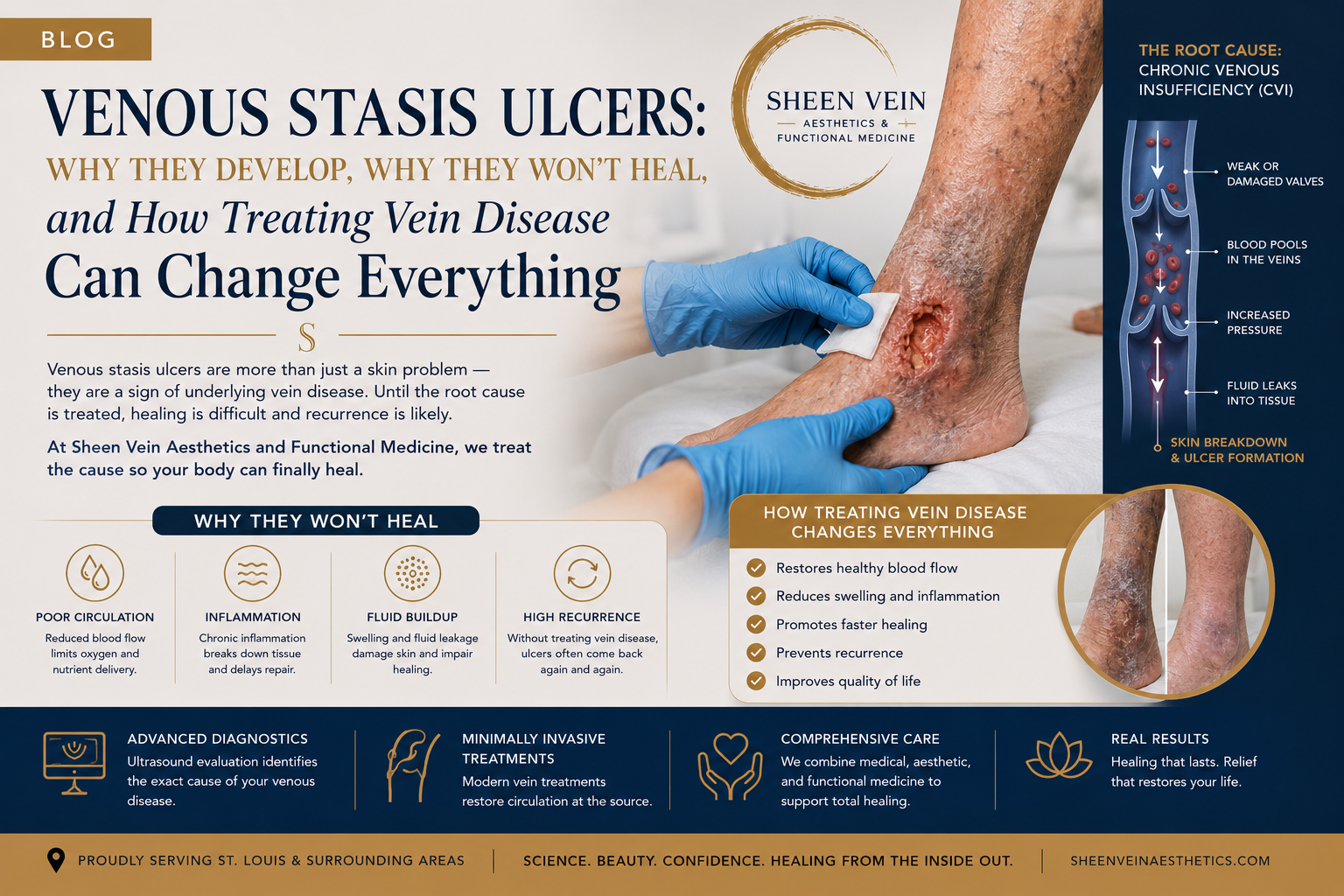
Venous stasis ulcers are one of the most serious complications of chronic venous insufficiency (CVI), yet they are frequently misunderstood and undertreated. Many people spend months—or even years—treating the wound itself without addressing the underlying reason it developed in the first place.
At Sheen Vein & Aesthetics in St. Louis, we believe that successful treatment begins by identifying and correcting the underlying vein disease that causes these wounds. While proper wound care is important, ulcers often continue to recur unless the abnormal venous circulation is treated.
If you or someone you love has a wound on the lower leg that simply refuses to heal, understanding venous stasis ulcers may be the first step toward finally finding a lasting solution.
What Is a Venous Stasis Ulcer?
A venous stasis ulcer is an open wound that develops because blood cannot efficiently return from the legs back to the heart. Instead of flowing upward, blood pools within the veins due to damaged vein valves. This creates persistently elevated venous pressure, known as venous hypertension, which gradually damages the surrounding skin and soft tissues.
Over time, this pressure decreases oxygen delivery to the skin, increases inflammation, and impairs normal tissue healing. Eventually, even a small scratch, insect bite, or minor trauma may progress into a chronic ulcer.
Venous stasis ulcers account for approximately 70–80% of all chronic leg ulcers, making them the most common chronic wound affecting the lower extremities.
How Healthy Veins Normally Work
Healthy leg veins contain one-way valves that keep blood moving upward toward the heart.
Every time you walk:
- Your calf muscles squeeze the veins.
- Blood is pumped upward.
- Vein valves prevent blood from falling backward.
This process is often called the "calf muscle pump."
When these valves become damaged, gravity causes blood to leak backward (venous reflux). Instead of circulating normally, blood remains trapped in the lower legs.
The longer this continues, the higher the pressure becomes inside the veins.
Eventually this damages:
- Small blood vessels
- Skin
- Fat beneath the skin
- Lymphatic drainage
- Local immune function
This is why venous disease is much more than a cosmetic issue.
What Causes Venous Stasis Ulcers?
Venous ulcers usually develop after years of untreated chronic venous insufficiency.
Common risk factors include:
- Varicose veins
- Previous blood clots (DVT)
- Family history of vein disease
- Obesity
- Pregnancy
- Standing occupations
- Aging
- Previous leg injury
- Limited mobility
- Smoking
- Lymphedema
Many patients have experienced swollen legs for years before their first ulcer appears.
Signs That an Ulcer Is Caused by Vein Disease
Venous ulcers typically develop:
- Around the inside of the ankle
- Just above the ankle bone
- Occasionally on the lower calf
They often have:
- Irregular borders
- Shallow depth
- Drainage
- Yellow tissue within the wound
- Surrounding brown skin discoloration
- Thickened skin
- Swelling
- Aching or heaviness
Patients frequently notice their legs become more swollen as the day progresses.
Skin Changes That Often Occur Before an Ulcer Forms
Most venous ulcers don't appear suddenly.
Years before the wound develops, patients often experience:
Leg Swelling
Fluid leaks into surrounding tissues because of elevated venous pressure.
Brown Skin Discoloration
Iron from red blood cells leaks into the skin.
This creates the classic rusty-brown staining called hemosiderin deposition.
Thickened Skin
Chronic inflammation causes the skin to become:
- Hard
- Tight
- Fibrotic
This condition is known as lipodermatosclerosis.
Itching
Many patients develop severe itching due to venous eczema.
Repeated scratching may eventually trigger skin breakdown.
White Scar-Like Areas
These pale patches (atrophie blanche) indicate severely impaired blood flow and carry a higher risk of ulcer formation.
Why Won't My Leg Wound Heal?
This is one of the most common questions we hear.
Many patients receive:
- Antibiotics
- Dressings
- Ointments
- Compression wraps
Yet the ulcer keeps returning.
The reason is simple.
These treatments help manage the wound but do not eliminate the high venous pressure causing ongoing tissue damage.
Imagine trying to repair a leaking ceiling without fixing the broken pipe above it.
Until the abnormal veins are treated, healing may remain slow or incomplete.
Are Venous Ulcers Dangerous?
Yes.
Without treatment they may lead to:
- Serious infections
- Cellulitis
- Bone infection (osteomyelitis)
- Hospitalization
- Chronic pain
- Reduced mobility
- Social isolation
- Permanent skin damage
Large ulcers may remain open for years.
Some patients become unable to work because of persistent drainage and discomfort.
How Are Venous Stasis Ulcers Diagnosed?
Diagnosis begins with a thorough medical history and physical examination.
However, the most important test is a venous duplex ultrasound.
This painless examination evaluates:
- Vein valve function
- Venous reflux
- Blood clots
- Deep veins
- Superficial veins
- Perforator veins
Without ultrasound, the true cause of the ulcer may be missed.
The Importance of Compression Therapy
Compression stockings or multilayer compression wraps remain one of the cornerstones of venous ulcer treatment.
Compression works by:
- Reducing swelling
- Improving blood flow
- Lowering venous pressure
- Supporting wound healing
However, compression alone does not permanently correct damaged veins.
Many patients experience recurrent ulcers if underlying venous reflux is left untreated.
Modern Treatment Options for Venous Disease
Fortunately, treatment has advanced tremendously over the past two decades.
Most patients no longer require surgical vein stripping.
Instead, minimally invasive office-based procedures can close diseased veins with little downtime.
These include:
Endovenous Laser Therapy (EVLT)
Laser energy seals the abnormal vein from the inside.
Blood naturally reroutes into healthier veins.
Ultrasound-Guided Foam Sclerotherapy
A specialized medication is injected into abnormal veins under ultrasound guidance.
This is particularly useful for tributary veins and recurrent disease.
Visual Sclerotherapy
Small residual varicose and spider veins can often be treated with injection therapy after larger refluxing veins have been corrected.
Individualized Treatment Plans
Every patient's anatomy is unique.
Treatment should be customized using ultrasound findings rather than applying a one-size-fits-all approach.
How Treating Vein Disease Improves Healing
Numerous studies have shown that correcting venous reflux can:
- Accelerate ulcer healing
- Reduce recurrence
- Improve quality of life
- Decrease chronic pain
- Reduce swelling
- Lower long-term healthcare costs
Patients often notice improvements in heaviness, aching, and fatigue even before complete wound healing occurs.
What Can Patients Do at Home?
While medical treatment is important, patients also play a major role in recovery.
Helpful measures include:
- Wear compression as directed.
- Walk regularly to activate the calf muscle pump.
- Elevate your legs several times daily.
- Maintain a healthy weight.
- Stay physically active.
- Moisturize dry skin.
- Avoid prolonged standing or sitting.
- Control diabetes if present.
- Stop smoking.
These lifestyle changes help improve circulation and reduce recurrence.
Can Venous Ulcers Come Back?
Unfortunately, yes.
Without treating the underlying venous insufficiency, recurrence rates remain high.
Even after successful healing, continued management may include:
- Compression stockings
- Regular walking
- Periodic follow-up
- Monitoring for recurrent reflux
Preventing another ulcer is much easier than treating a new one.
When Should You See a Vein Specialist?
You should seek evaluation if you have:
- A wound near the ankle lasting more than two weeks
- Chronic leg swelling
- Brown skin discoloration
- Varicose veins
- Heavy or aching legs
- Recurrent cellulitis
- A previous venous ulcer
- Skin thickening around the ankles
Early treatment may prevent an ulcer from ever developing.
Frequently Asked Questions
Can antibiotics heal a venous ulcer?
Only if an infection is present. Most venous ulcers are caused by poor circulation rather than infection. Treating the underlying vein disease is often necessary for lasting healing.
Are venous ulcers painful?
Many patients experience aching, burning, or throbbing discomfort, although some ulcers are surprisingly painless. Pain often worsens with prolonged standing and improves when the leg is elevated.
Will compression stockings heal the ulcer by themselves?
Compression is essential because it reduces swelling and venous pressure, but many patients also require treatment of the refluxing veins to achieve faster healing and reduce the risk of recurrence.
How long do venous ulcers take to heal?
Healing time varies depending on the size of the ulcer, the severity of venous insufficiency, overall health, and whether the underlying vein disease is treated. Some ulcers heal within weeks, while others can persist for months or even years if the cause is not addressed.
Can minimally invasive vein procedures be performed if I already have an ulcer?
Yes. In many cases, treating the underlying venous reflux with procedures such as endovenous laser therapy or ultrasound-guided foam sclerotherapy can improve healing rates and reduce the likelihood of future ulcers. Your treatment plan should be individualized after a comprehensive venous ultrasound evaluation.
Why Choose Sheen Vein & Aesthetics for Venous Stasis Ulcers in St. Louis?
At Sheen Vein & Aesthetics, we understand that venous ulcers are far more than just a wound—they are often the visible result of chronic vein disease that deserves a comprehensive evaluation. Rather than focusing solely on dressings and wound care, we work to identify and treat the underlying cause of venous hypertension.
Our practice offers advanced, minimally invasive vein treatments, including Endovenous Laser Therapy (EVLT), Ultrasound-Guided Foam Sclerotherapy, and Visual Sclerotherapy, all performed using detailed ultrasound mapping to create a personalized treatment plan. We emphasize patient education, compassionate care, and evidence-based therapies designed to improve healing, relieve symptoms, and reduce the chance of future ulcer recurrence.
If you have a leg wound that isn't healing, persistent swelling, skin discoloration, or painful varicose veins, don't wait for the problem to worsen. Early evaluation can make a significant difference in both healing and long-term leg health.
Schedule Your Vein Evaluation Today
If you're struggling with a chronic leg ulcer, swollen legs, or symptoms of chronic venous insufficiency, the experienced team at Sheen Vein & Aesthetics is here to help. Our goal is not only to heal your wound but also to address the underlying vein disease that caused it, helping you regain comfort, mobility, and confidence.
Serving patients throughout St. Louis and the surrounding communities, we're committed to providing advanced vein care with a personalized approach focused on long-term results.
Keywords: venous stasis ulcer St. Louis, venous ulcer treatment, chronic venous insufficiency, leg wound won't heal, leg ulcer specialist St. Louis, varicose vein treatment, EVLT St. Louis, ultrasound-guided foam sclerotherapy, chronic leg swelling, wound care St. Louis.