Vitamin and Mineral Deficiencies: How Nutrient Deficiencies May Contribute to Common Health Conditions
Vitamin and Mineral Deficiencies: The Hidden Connection to Many Common Medical Conditions
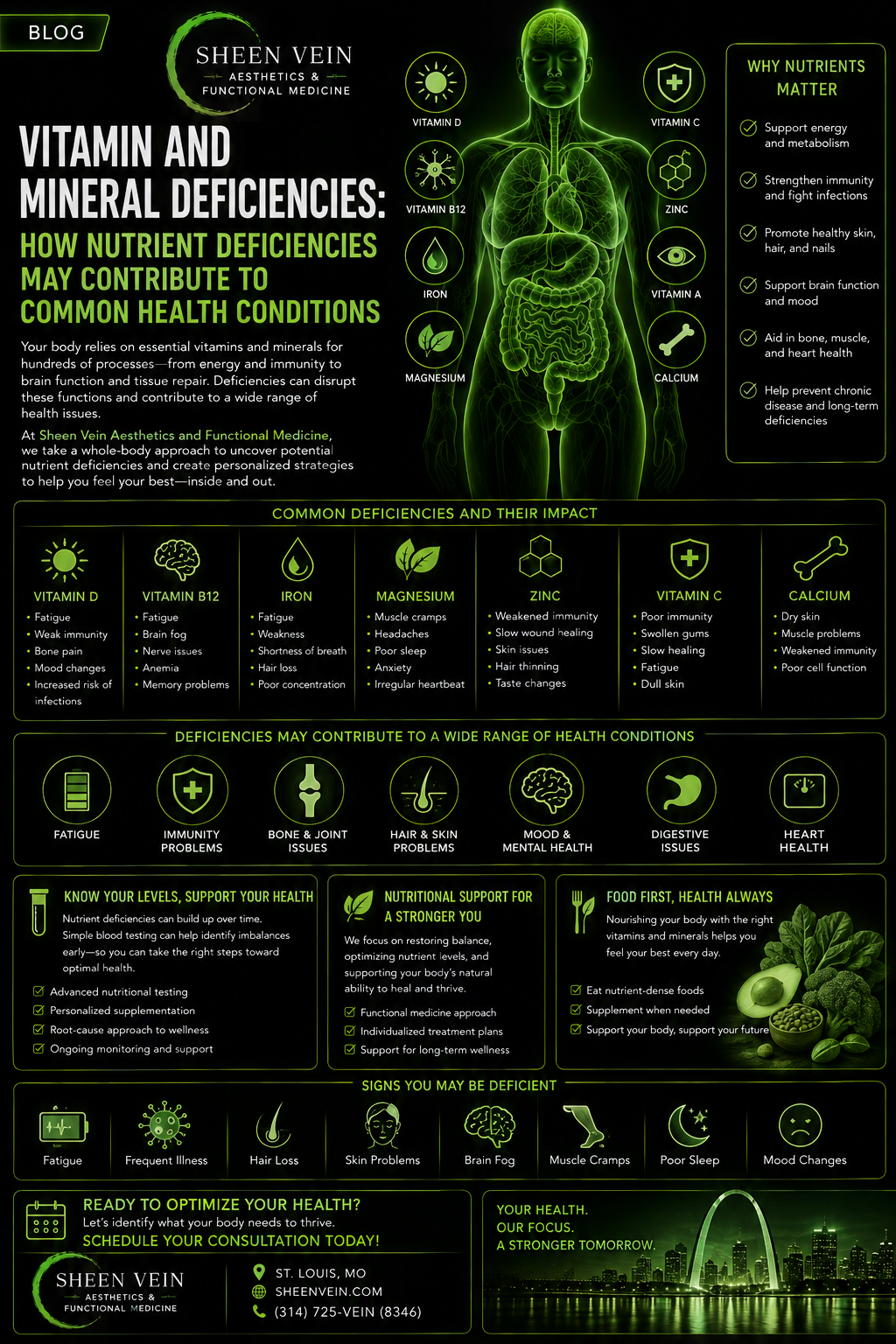
Many people assume that vitamin and mineral deficiencies are uncommon in developed countries. After all, food is readily available, and many products are fortified with essential nutrients. However, despite having access to abundant food, micronutrient deficiencies remain surprisingly common. In many cases, the issue isn't simply eating too little—it may involve eating foods that are calorie-rich but nutrient-poor, impaired absorption, certain medications, chronic medical conditions, aging, or increased nutritional demands.
Vitamins and minerals are required in relatively small amounts, but they are essential for virtually every biological process in the body. They help produce energy, regulate the immune system, maintain healthy bones, support nerve function, protect the cardiovascular system, aid hormone production, and promote healthy skin, hair, and muscles. Even mild deficiencies can contribute to symptoms that are often attributed to aging, stress, or a busy lifestyle.
At Sheen Vein & Aesthetics in St. Louis, our functional medicine approach looks beyond symptoms to identify potential nutritional gaps that may be affecting overall health. While vitamin deficiencies are rarely the sole cause of chronic disease, identifying and correcting clinically significant deficiencies can be an important part of a comprehensive wellness plan.
What Are Micronutrients?
Micronutrients include vitamins and minerals that your body requires to function properly.
Unlike carbohydrates, proteins, and fats, which provide calories, micronutrients primarily serve as cofactors in thousands of chemical reactions that keep the body operating efficiently.
Without adequate amounts, many normal biological processes begin to slow or function less effectively.
Why Do Deficiencies Occur?
Vitamin and mineral deficiencies develop for many different reasons.
Common causes include:
- Diets low in whole foods
- Highly processed foods
- Aging
- Digestive disorders
- Bariatric surgery
- Certain medications
- Chronic alcohol use
- Pregnancy
- Kidney disease
- Liver disease
- Autoimmune disorders
- Increased physical activity
- Food allergies or restrictive diets
Even people who eat what appears to be a healthy diet may develop deficiencies if absorption is impaired.
The Modern Diet Problem
Many people consume enough—or even too many—calories while still lacking important nutrients.
Ultra-processed foods often contain:
- Added sugars
- Refined carbohydrates
- Unhealthy fats
- Excess sodium
while providing relatively little:
- Magnesium
- Potassium
- Fiber
- Vitamin D
- Vitamin K
- Omega-3 fatty acids
- Trace minerals
This phenomenon is sometimes referred to as being "overfed but undernourished."
Vitamin D: More Than Bone Health
Vitamin D is one of the most commonly identified deficiencies worldwide.
Although it is well known for supporting calcium absorption and bone strength, vitamin D also plays important roles in:
- Immune function
- Muscle performance
- Mood regulation
- Inflammation
- Cell growth
- Neuromuscular function
Low vitamin D levels have been associated with:
- Osteoporosis
- Osteopenia
- Increased fracture risk
- Muscle weakness
- Falls in older adults
- Certain autoimmune diseases
- Mood disorders
- Reduced immune function
While low vitamin D levels are associated with many conditions, this does not necessarily mean they directly cause those diseases. Maintaining adequate vitamin D levels remains an important part of overall health.
Magnesium: The Forgotten Mineral
Magnesium participates in more than 300 enzymatic reactions throughout the body.
Despite its importance, many adults consume less magnesium than recommended.
Magnesium supports:
- Muscle function
- Nerve conduction
- Blood sugar regulation
- Blood pressure
- ATP production
- Protein synthesis
- Sleep quality
Low magnesium has been linked with:
- Muscle cramps
- Fatigue
- Headaches
- Constipation
- Insulin resistance
- High blood pressure
- Heart rhythm disturbances in susceptible individuals
Not every person with these conditions has magnesium deficiency, but evaluating magnesium status may be appropriate in selected patients.
Iron: Essential for Oxygen Transport
Iron is necessary for producing hemoglobin, the protein in red blood cells that carries oxygen.
Iron deficiency is one of the most common nutritional deficiencies worldwide.
Symptoms may include:
- Fatigue
- Weakness
- Shortness of breath
- Hair loss
- Pale skin
- Poor exercise tolerance
- Restless legs syndrome
- Difficulty concentrating
Women with heavy menstrual bleeding, pregnant individuals, vegetarians, and patients with gastrointestinal bleeding are at higher risk.
Vitamin B12 and Nerve Health
Vitamin B12 is essential for:
- Red blood cell production
- DNA synthesis
- Nerve function
- Brain health
Deficiency may develop due to:
- Pernicious anemia
- Long-term metformin use
- Acid-reducing medications
- Bariatric surgery
- Digestive disorders
- Vegan diets without supplementation
Symptoms may include:
- Fatigue
- Numbness
- Tingling
- Difficulty walking
- Memory problems
- Depression
- Neuropathy
Because nerve damage from prolonged B12 deficiency can become permanent, early recognition is important.
Folate
Folate works closely with vitamin B12.
It supports:
- DNA production
- Cell division
- Red blood cell formation
- Pregnancy
- Homocysteine metabolism
Deficiency may contribute to anemia and is especially important during pregnancy because adequate folate reduces the risk of neural tube defects.
Calcium and Bone Health
Calcium remains critical for:
- Bone strength
- Muscle contraction
- Nerve signaling
- Blood clotting
- Heart function
Adequate calcium intake should be balanced with sufficient vitamin D and vitamin K for optimal bone health.
Vitamin K
Vitamin K exists in two primary forms:
- Vitamin K1 (important for blood clotting)
- Vitamin K2 (important for bone and vascular health)
Vitamin K contributes to activation of proteins involved in directing calcium to bones and away from soft tissues.
Patients taking warfarin should always consult their healthcare provider before changing vitamin K intake.
Potassium
Potassium is essential for:
- Muscle contraction
- Heart rhythm
- Blood pressure regulation
- Nerve signaling
Low potassium levels may occur with:
- Diuretic use
- Gastrointestinal illness
- Kidney disorders
- Poor nutrition
Severe deficiency requires prompt medical evaluation.
Zinc
Zinc supports:
- Immune function
- Wound healing
- Taste and smell
- Skin health
- Hormone production
Low zinc levels have been associated with:
- Frequent infections
- Hair thinning
- Slow wound healing
- Poor appetite
- Skin rashes
Selenium
Selenium is a trace mineral involved in:
- Antioxidant protection
- Thyroid hormone metabolism
- Immune function
Some studies suggest selenium status may influence thyroid health, although supplementation should be individualized.
Omega-3 Fatty Acids
Although technically not vitamins or minerals, omega-3 fatty acids deserve mention because of their widespread effects.
Omega-3s support:
- Cardiovascular health
- Brain function
- Eye health
- Joint health
- Inflammatory balance
Many Western diets contain relatively little oily fish, resulting in lower omega-3 intake.
Nutrient Deficiencies and Fatigue
One of the most common symptoms of nutrient deficiency is fatigue.
Potential contributors include deficiencies in:
- Iron
- Vitamin B12
- Folate
- Vitamin D
- Magnesium
Because fatigue has many possible causes, laboratory evaluation is often necessary before assuming a nutritional deficiency.
Hair Loss and Nutrient Deficiencies
Several nutritional deficiencies have been associated with hair thinning.
These include:
- Iron
- Zinc
- Vitamin D
- Protein
- Biotin (less commonly)
- Essential fatty acids
Not all hair loss is nutritional, but evaluating deficiencies may be appropriate depending on the clinical situation.
Bone Health
Maintaining healthy bones requires more than calcium alone.
Important nutrients include:
- Vitamin D
- Calcium
- Magnesium
- Vitamin K
- Protein
- Phosphorus
Regular weight-bearing exercise also plays a critical role in maintaining bone density.
Immune Function
The immune system depends on numerous nutrients, including:
- Vitamin D
- Zinc
- Vitamin A
- Vitamin C
- Selenium
- Iron
Deficiencies may impair normal immune responses, although supplementation beyond recommended levels does not necessarily enhance immunity in healthy individuals.
Heart Health
Certain nutrient deficiencies may influence cardiovascular health.
Examples include:
- Magnesium
- Potassium
- Omega-3 fatty acids
- Folate
- Vitamin D (association studies)
A heart-healthy dietary pattern remains more beneficial than relying solely on supplements.
Brain Health
Healthy brain function depends upon adequate nutrition.
Nutrients involved include:
- Vitamin B12
- Folate
- Iron
- Omega-3 fatty acids
- Vitamin D
- Magnesium
Deficiencies may contribute to cognitive symptoms, although many neurological conditions have multiple causes.
Gut Health and Nutrient Absorption
Many vitamin deficiencies develop because nutrients are not absorbed properly.
Conditions affecting absorption include:
- Celiac disease
- Crohn's disease
- Ulcerative colitis
- Pancreatic insufficiency
- Small intestinal bacterial overgrowth (SIBO)
- Bariatric surgery
Treating the underlying digestive disorder is often just as important as replacing the missing nutrient.
Aging Increases Nutritional Risk
As we age:
- Appetite often declines.
- Stomach acid production decreases.
- Medication use increases.
- Nutrient absorption becomes less efficient.
- Muscle mass decreases.
These changes increase the risk of several vitamin deficiencies.
Can Supplements Replace a Healthy Diet?
No.
Supplements should supplement, not replace, healthy eating.
Whole foods provide:
- Fiber
- Phytochemicals
- Antioxidants
- Healthy fats
- Protein
- Vitamins
- Minerals
all working together in ways that individual supplements cannot fully replicate.
Why More Isn't Always Better
Many people assume that if a little is good, more must be better.
Unfortunately, excessive supplementation can cause harm.
Examples include:
- Vitamin A toxicity
- Iron overload
- Excessive vitamin D
- Too much selenium
- High-dose zinc causing copper deficiency
Supplementation should ideally be based on individual needs rather than guesswork.
Functional Medicine and Nutritional Evaluation
Functional medicine emphasizes identifying nutritional factors that may contribute to chronic symptoms.
Depending on your medical history, evaluation may include:
- Dietary assessment
- Medication review
- Digestive health
- Lifestyle factors
- Laboratory testing when appropriate
- Individualized nutrition planning
The goal is to optimize health while avoiding unnecessary supplementation.
Frequently Asked Questions
Should everyone take a multivitamin?
Not necessarily. Some individuals may benefit from a multivitamin, while others obtain adequate nutrients through a balanced diet. Recommendations should be individualized based on age, diet, medical history, and risk factors.
Can vitamin deficiencies make you tired?
Yes. Deficiencies in iron, vitamin B12, folate, vitamin D, and magnesium can contribute to fatigue. However, fatigue has many potential causes, so a proper medical evaluation is important.
Is it better to get nutrients from food or supplements?
Whenever possible, nutrients should come primarily from whole foods because they provide a complex mixture of beneficial compounds that work together. Supplements are useful when deficiencies are documented or dietary intake is inadequate.
Can blood tests detect vitamin deficiencies?
Yes. Many deficiencies, including vitamin D, vitamin B12, iron status, and folate, can be evaluated with laboratory testing. Not every nutrient is routinely measured, and testing should be guided by symptoms and clinical judgment.
Are all supplements safe?
No. Supplements can interact with medications, affect laboratory tests, and cause side effects when taken in excessive amounts. Always discuss new supplements with your healthcare provider, especially if you have chronic medical conditions or take prescription medications.
Why Choose Sheen Vein & Aesthetics for Functional Medicine and Nutritional Health in St. Louis?
At Sheen Vein & Aesthetics, we believe that optimal health begins with giving your body the nutrients it needs to function properly. Our functional medicine approach looks beyond symptoms to identify potential nutritional deficiencies, lifestyle factors, digestive concerns, and metabolic issues that may be affecting your overall well-being.
Rather than recommending unnecessary supplements, we emphasize evidence-based, individualized care. Depending on your medical history and symptoms, we may recommend nutritional counseling, laboratory evaluation, dietary modifications, targeted supplementation when appropriate, and strategies to improve nutrient absorption and overall metabolic health.
Whether you're experiencing chronic fatigue, hair thinning, brain fog, muscle cramps, poor recovery, immune concerns, or simply want to optimize your health, our goal is to help you understand how nutrition fits into the bigger picture of wellness.
Every patient receives a personalized treatment plan designed around their unique needs, helping support long-term health through both lifestyle optimization and modern functional medicine principles.
Schedule Your Functional Medicine Consultation Today
If you've been wondering whether vitamin or mineral deficiencies may be contributing to your symptoms, schedule a consultation with Sheen Vein & Aesthetics.
Our comprehensive approach focuses on identifying potential nutritional gaps, optimizing metabolic health, and creating a personalized wellness plan that complements your existing medical care.
Healthy nutrition is one of the foundations of long-term health—and understanding your body's needs is the first step toward feeling your best.