What Happens When Vein Valves Fail? | St. Louis Vein Specialist
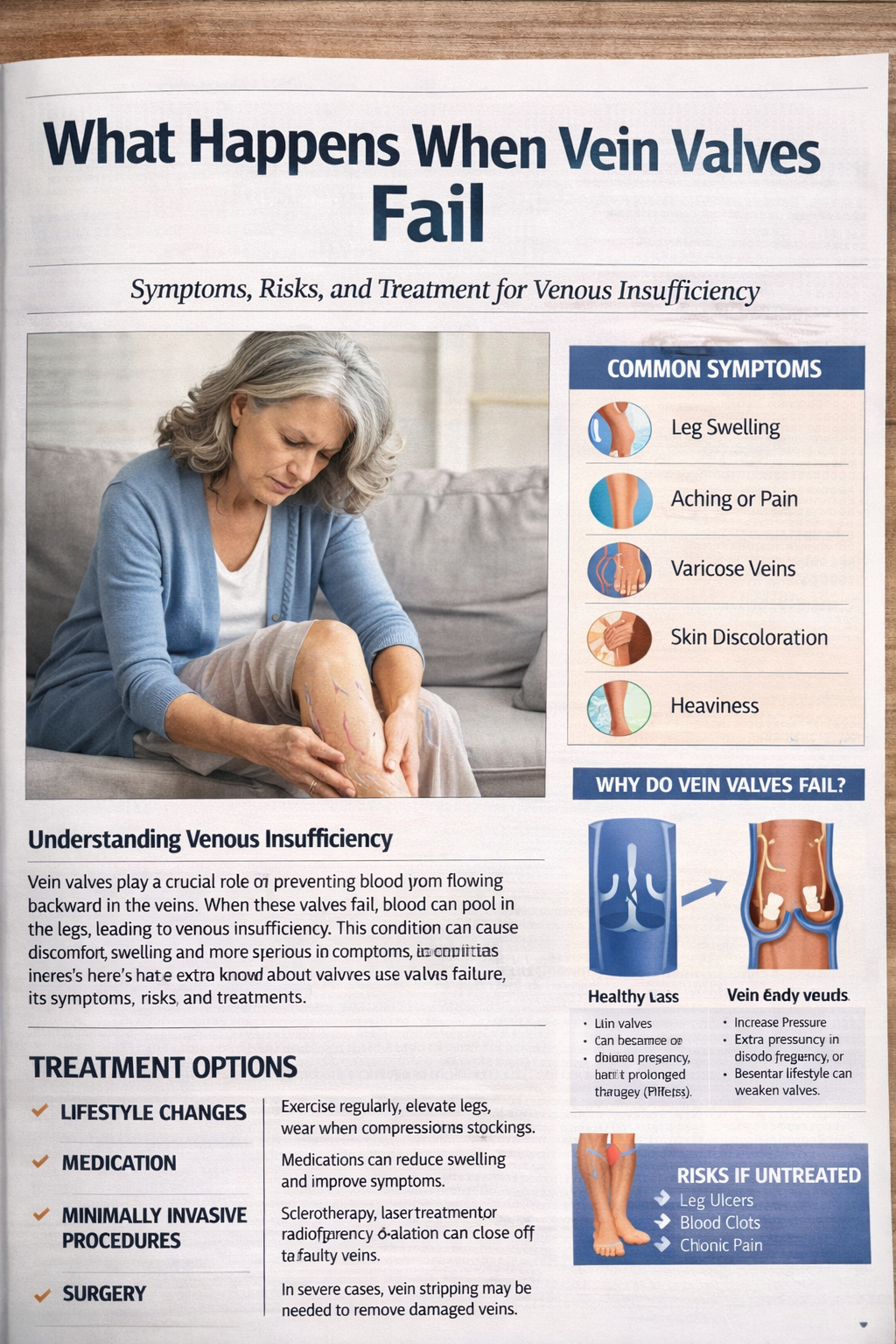
Understanding How Healthy Veins Work
Veins do one major job: they return blood back to the heart.
But unlike arteries, veins must fight against gravity.
Inside your veins are small one-way valves. These valves open to let blood move upward and close to prevent it from falling back down.
When those valves malfunction, we call it venous insufficiency, and everything from varicose veins to leg swelling, restless legs, itching, and skin discoloration stems from that dysfunction.
More about this can be found on our internal pages:
- Varicose Vein Treatment in St. Louis
- Spider Veins
- Ultrasound-Guided Vein Evaluation
What Happens When the Valves Fail
When valves weaken or collapse, blood doesn’t move efficiently up the leg.
Instead, it falls backward, pooling in the lower veins—a process called reflux.
1. Veins Begin to Stretch
Veins are stretchy by design, but they can only tolerate so much backward pressure. When blood pools, the vein walls stretch… then stretch again… until they eventually become enlarged and twisted.
2. Pressure Builds in the Lower Legs
This “backward pressure” is why patients describe symptoms such as:
- Heavy legs
- Burning
- Throbbing
- Cramping at night
- Restless legs
- Swelling around the ankles
- Prominent veins
- Skin darkening near the ankles
These symptoms are never random — they follow a pressure pattern we can see on venous ultrasound.
3. Skin Health Declines
As pressure increases, oxygen delivery to the lower leg tissues decreases.
This is why some people develop:
- Eczema-like rashes
- Itching
- Brown pigmentation
- Hardening of the skin
- Leg ulcers (in advanced cases)
We discuss these issues in more detail in our blogs on inflammation and chronic fatigue, which often overlap with circulatory dysfunction.
4. Blood Flow Slows
Poor flow increases your risk for:
- Superficial phlebitis
- Blood clots
- More pronounced varicosities
This is one reason we perform ultrasound-guided mapping before any vein treatment.
Why Vein Valve Breakdown Happens
Several factors contribute:
- Genetics
- Pregnancy
- Prolonged standing
- Age
- Prior blood clots
- Hormonal changes
- Weight gain
- Inactivity
Women are disproportionately affected, and many notice a worsening of symptoms around and after pregnancy due to increased pelvic pressure and hormonal changes.
We explain more about hormonal shifts on our internal pages such as:
Why Early Vein Evaluation Matters
Venous disease is progressive. It doesn’t improve spontaneously, and symptoms generally worsen over time. But when caught early, we can preserve leg health, improve appearance, and prevent complications.
A vein evaluation at our St. Louis office includes:
- Medical history
- Symptom review
- Vein ultrasound
- Valve function assessment
- Reflux mapping
This is the same standardized approach we use for varicose vein treatments, ultrasound-guided sclerotherapy, and radiofrequency ablation.
Your Legs Shouldn’t Hurt—Ever
If your legs feel heavy, restless, or swollen—especially at the end of the day—your vein valves may not be working the way they should.
You can learn more through related internal resources:
If you’re in St. Louis or the surrounding area, we’re here to help evaluate what’s happening inside your legs and guide you toward better long-term vascular health.