Why Are There Bulging Veins in Legs That Are Not Varicose?
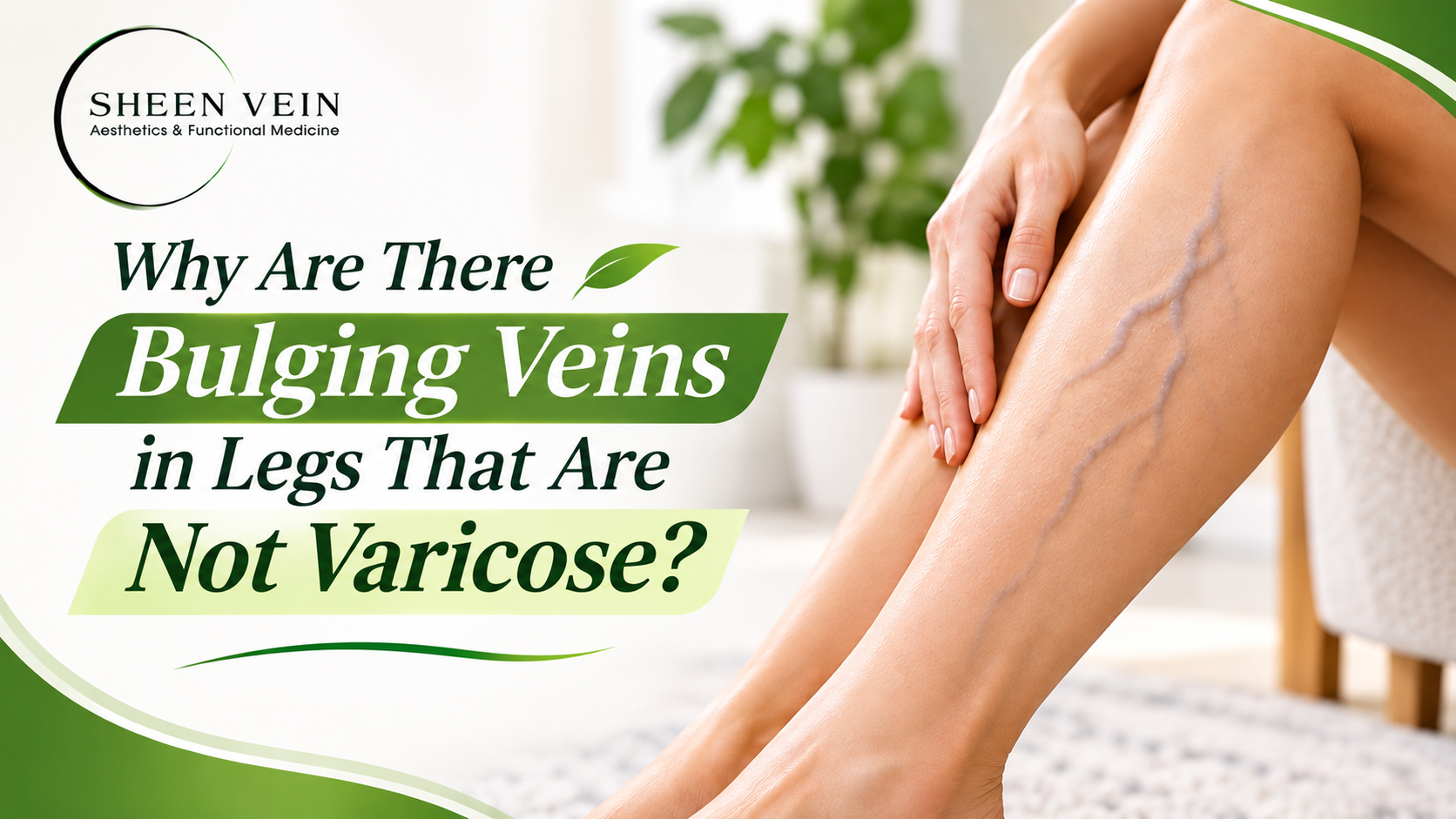
You look down after a workout or while relaxing by the pool and notice veins on your legs that seem more prominent than before. Could they be varicose veins?
Often, no. Prominent leg veins are not always varicose veins. Thin skin, low body fat, exercise, heat, genetics, age, and pregnancy can all make normal veins easier to see. Even so, appearance alone cannot tell you whether a vein is healthy, and some bulging veins do reflect an underlying circulation problem. Understanding the possible causes can help you recognize when visible veins are normal and when a medical evaluation may be needed.
Can Leg Veins Bulge Without Being Varicose?
Yes. Everyone has superficial veins just beneath the skin, and in many people they are visible. These veins may appear blue or green beneath the skin and can become more noticeable during exercise, in warm temperatures, or when standing.
Varicose veins, by contrast, are veins that have become enlarged and twisted, usually because valves inside them no longer close properly. Prominent veins and varicose veins can look alike at first glance, which is why this question is so common.
Why Are Veins Bulging in My Legs?
Thin Skin and Low Body Fat
Less fat and thinner skin mean less tissue covering the veins. Lean, muscular people, and those with fair or thin skin, often have noticeably visible veins even when their circulation is entirely normal.
Exercise and Increased Blood Flow
During activity, more blood flows to the working muscles, and the veins carrying it away may swell temporarily. Muscle growth can also push veins closer to the surface. This effect usually fades after rest. Exercise-related vein prominence does not, by itself, indicate an underlying venous condition.
Heat and Temperature Changes
Warm weather, hot showers, and saunas widen blood vessels near the skin to release heat. Veins can look fuller and more visible until you cool down.
Genetics and Natural Anatomy
Vein depth, vein size, and skin tone vary from person to person. If prominent veins run in your family, yours may simply be easy to see. However, having a family history of varicose veins can also increase your risk of developing them.
Aging and Skin Changes
As skin thins and loses some of its supporting tissue with age, veins that were once hidden become easier to see. The visibility itself is not a sign of disease. However, aging can also increase the risk of venous valve problems, so persistent or unexplained changes should not be ignored.
Prolonged Standing
Standing for long stretches increases pressure in the leg veins, so they may look fuller by evening and flatten after you elevate your legs. Temporary fullness is different from veins that stay enlarged or come with aching and swelling.
Pregnancy and Hormonal Changes
Pregnancy raises blood volume, increases pressure in the pelvic and leg veins, and brings hormonal changes that relax vein walls. That can make veins more prominent, and it can also contribute to true varicose veins. Some pregnancy-related vein changes improve after delivery, while others may persist.
Underlying Venous Conditions
Sometimes, enlarged veins can indicate an underlying condition such as venous reflux, which occurs when vein valves do not close properly and allow blood to flow backward. In other cases, a previous blood clot or venous obstruction may cause superficial veins to enlarge as blood finds alternative pathways. These possibilities cannot be diagnosed by sight alone.
How Can You Tell Normal Bulging Veins From Varicose Veins?
The following comparison highlights common differences, but appearance alone cannot confirm whether a vein is healthy or varicose.
Feature
Often a normal prominent vein
Often a varicose vein
Shape
Smooth, fairly straight course
Twisted, winding, or rope-like
Size
Relatively even, may sit flat or slightly raised
Enlarged, often bulging above the skin
Change with position
May become less noticeable after exercise or cooling
May also flatten with leg elevation but often becomes prominent again when standing
Symptoms
Usually none, or only briefly after activity
May include aching, heaviness, swelling, itching, or cramps
Skin
Normal
May show brown discoloration, dryness, or irritation
There are limits to self-assessment. Not every varicose vein looks twisted, and the visible vein is sometimes fed by a leaking vein higher in the leg that you cannot see. Reticular veins, which are small blue or green veins, and spider veins, which appear as fine red or purple lines, may also be present.
Are Painless Bulging Leg Veins Normal?
Frequently, yes, but painless does not automatically mean healthy. Many varicose veins cause little or no discomfort, and symptom severity does not reliably track how a vein looks.A smooth, painless vein may be harmless. However, if it becomes more prominent, changes over time, or appears alongside swelling, heaviness, or skin changes, a medical evaluation may be appropriate.
When Should You Worry About Bulging Veins in Your Legs?
Many visible leg veins are harmless, but certain symptoms may indicate a problem that requires medical attention.
Raise at a routine appointment
- Swelling that keeps returning or slowly worsens
- Persistent heaviness or aching
- Brown or reddish skin discoloration, especially near the ankles
- Thickened, itchy, or irritated skin
- A sore near the ankle that is slow to heal (see our page on venous stasis ulcers
Seek urgent medical evaluation, preferably the same day
- New redness, warmth, tenderness, or a hard, painful area along a vein
- Unexplained new leg pain, particularly when accompanied by swelling
- A sudden change in a vein's appearance accompanied by pain, redness, or swelling
- Sudden swelling or pain in one leg, which may be a sign of deep vein thrombosis (DVT)
Call 911 immediately if you experience:
- Sudden shortness of breath, chest pain, coughing up blood, or fainting, especially when accompanied by leg pain or swelling
How Are Unusual or Bulging Leg Veins Diagnosed?
A clinician typically starts with your history and a leg exam, often with you standing. If the examination suggests an underlying vein problem, a venous duplex ultrasound can assess blood flow, identify abnormal valve function, and help detect blood clots or obstructions. The test is noninvasive and generally well tolerated.
Not every visible vein needs imaging. If your veins are symptom-free and look benign, a clinician may reasonably advise that no testing is needed.
Do Bulging Veins That Are Not Varicose Need Treatment?
Often they do not. If your veins are normal and cause no symptoms, observation is appropriate, and no procedure is needed just because veins are visible.
Whether your veins are normal or affected by an underlying condition, these habits may help support healthy circulation:
- Walk and stay active
- Avoid long stretches of sitting or standing
- Elevate your legs when they feel tired
- Use compression stockings if a clinician recommends them (they are not suitable for everyone, such as people with poor arterial circulation)
When ultrasound confirms a venous condition, treatment depends on the cause and your symptoms rather than on how the veins look.Depending on the diagnosis, treatment options may include endovenous laser treatment (EVLT) or ultrasound-guided foam sclerotherapy for certain abnormal veins. Visual sclerotherapy may also be considered for smaller superficial veins.No treatment can promise a particular cosmetic result, and veins can recur over time.
When Should You Consult a Vein Specialist?
Consider scheduling a vein evaluation if your veins remain enlarged, change in appearance, or are accompanied by aching, swelling, or skin changes. An appointment may also be helpful if symptoms continue despite self-care.Starting with the clinic’s guide to varicose veins and venous circulation can help you decide what to ask.
Frequently Asked Questions
Can you have bulging leg veins without varicose veins?
Yes. Body composition, exercise, heat, genetics, age, and pregnancy can all make normal veins prominent.
Why are my leg veins suddenly more visible?
Common reasons include heat, a recent workout, weight loss, or standing for long periods. A change that persists or comes with swelling, pain, or skin changes should be evaluated.
Can exercise make leg veins bulge?
Yes, temporarily. Increased blood flow and muscle activity make veins stand out, and they usually settle after rest.
Will prominent leg veins go away on their own?
Veins that are only temporarily prominent often settle. Naturally prominent veins may remain visible, while established varicose veins often persist without treatment. However, some pregnancy-related varicose veins may improve after delivery.
When to Get Help for Bulging Leg Veins
Bulging leg veins are not always varicose veins. In many cases, they are simply normal veins that have become more visible because of exercise, body composition, aging, or other factors. However, appearance alone cannot rule out an underlying vein condition. If you notice persistent changes, aching, swelling, or skin discoloration, a vein evaluation can help identify the cause.
If you're concerned about bulging veins in your legs, schedule a consultation with Sheen Vein Aesthetics and Functional Medicine in St. Louis, MO. Our team can evaluate your concerns and discuss whether further testing or treatment may be appropriate. Seek emergency care for sudden chest pain, difficulty breathing, or other potentially life-threatening symptoms.