Why LDL Alone Doesn’t Cause Heart Disease | St. Louis Functional Medicine
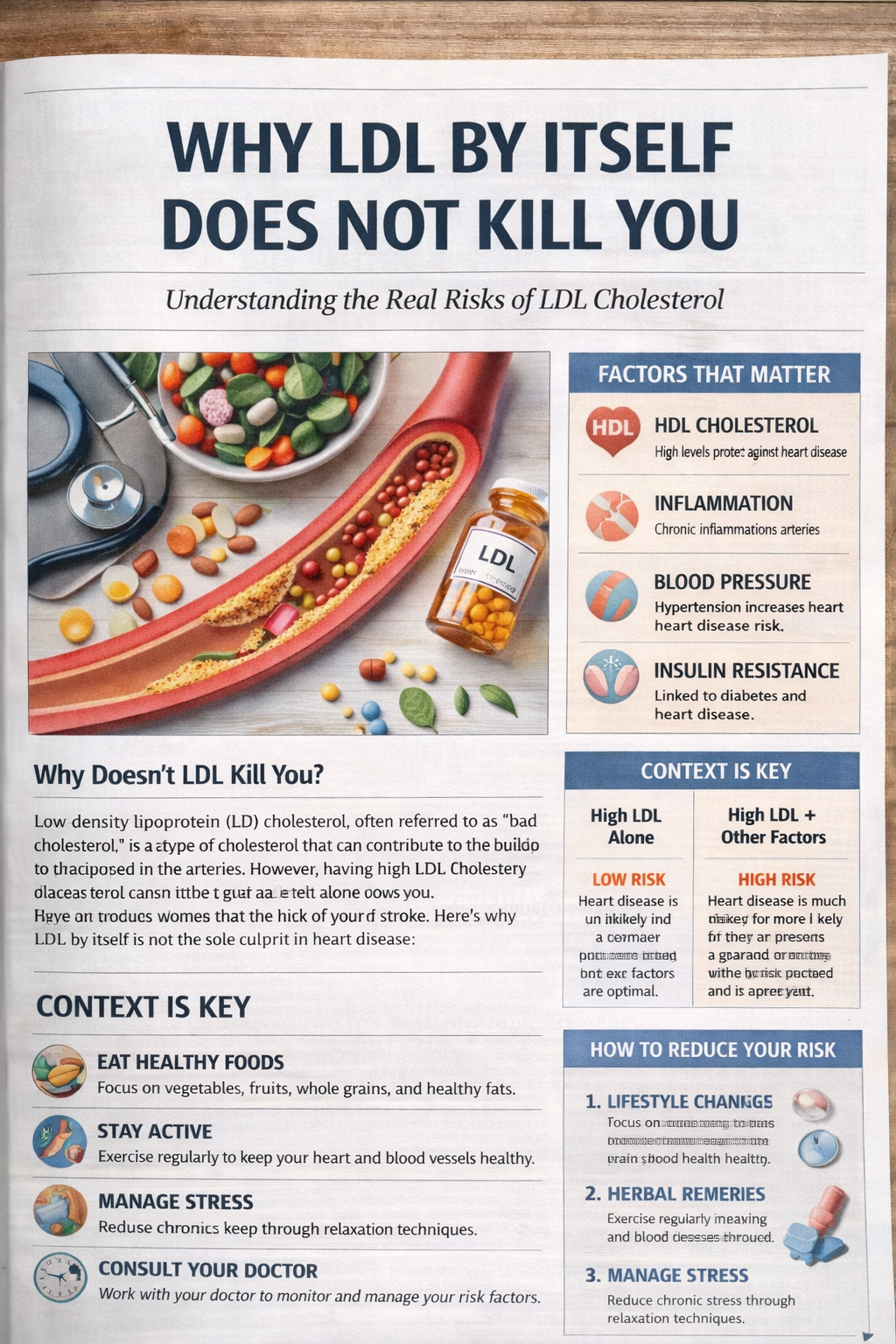
Myth: LDL Is the Cause of Plaque
Truth: LDL Becomes Harmful Only Under Certain Conditions
LDL is not inherently “bad.”
In fact:
- It carries cholesterol to tissues for hormone production
- It repairs cellular damage
- It helps stabilize membranes
- It supports immune function
LDL becomes harmful only when it is oxidized — damaged by inflammation, high insulin, poor diet, or chronic stress.
The Real Root Cause of Heart Disease: Inflammation
Atherosclerosis begins with injury to the blood vessel wall, not with LDL.
The true triggers include:
- Oxidative stress
- High insulin
- High blood sugar
- Chronic inflammation
- Toxic exposures
- Gut microbiome imbalances
- High cortisol
This is why two people can have identical LDL levels but drastically different cardiac risk.
LDL Particle Size Matters More Than LDL Quantity
There are two primary LDL particle types:
- Large, buoyant particles (Pattern A) — lower risk
- Small, dense particles (Pattern B) — higher risk
Pattern B particles become oxidized more easily and lodge into arterial walls.
Small dense LDL is strongly associated with:
- Prediabetes
- Insulin resistance
- Metabolic syndrome
- Visceral fat
See our internal pages:
- Prediabetes
- Insulin Resistance
Why Insulin Resistance Is the True Driver
When insulin stays elevated:
- Blood vessels inflame
- LDL becomes oxidized
- Triglycerides increase
- HDL decreases
- Small dense LDL increases
In other words, insulin resistance creates the environment in which LDL becomes harmful.
Why High LDL Can Actually Occur in Healthy Individuals
Many healthy people—especially those who eat low-carb or ketogenic diets—see LDL rise but maintain:
- Low inflammation
- Low triglycerides
- High HDL
- Low insulin
- Large particle size
This pattern is metabolically safe.
This ties into our functional medicine content on:
Other Key Drivers of Heart Disease
1. Chronic Stress
Raises cortisol → increases inflammation.
2. Gut Inflammation
Elevates LPS endotoxins → damages vessel walls.
3. Poor Sleep
Alters blood sugar and insulin.
4. Autoimmune Activity
Promotes vascular inflammation.
5. Smoking
Direct endothelial injury.
The Functional Medicine Approach
In our St. Louis practice, evaluating cardiovascular risk involves more than a simple cholesterol panel.
We assess:
- hs-CRP (inflammation)
- Fasting insulin
- HbA1c
- Triglyceride-to-HDL ratio
- LDL particle size
- ApoB
- Lp(a)
- Homocysteine
- Gut inflammation markers
This is true prevention—not just number management.
Learn more about our approach under:
Bottom Line
LDL is not the villain.
Inflammation is.
Insulin resistance is.
Small dense LDL is.
Cholesterol is part of your healing system—not the origin of disease.
If you want a deeper look into metabolic health, inflammation, cardiovascular risk, or hormone balance, our integrative practice in St. Louis is here to help guide you with a comprehensive approach.