Why Do Your Ankles Swell After Flying and How Can You Prevent It?
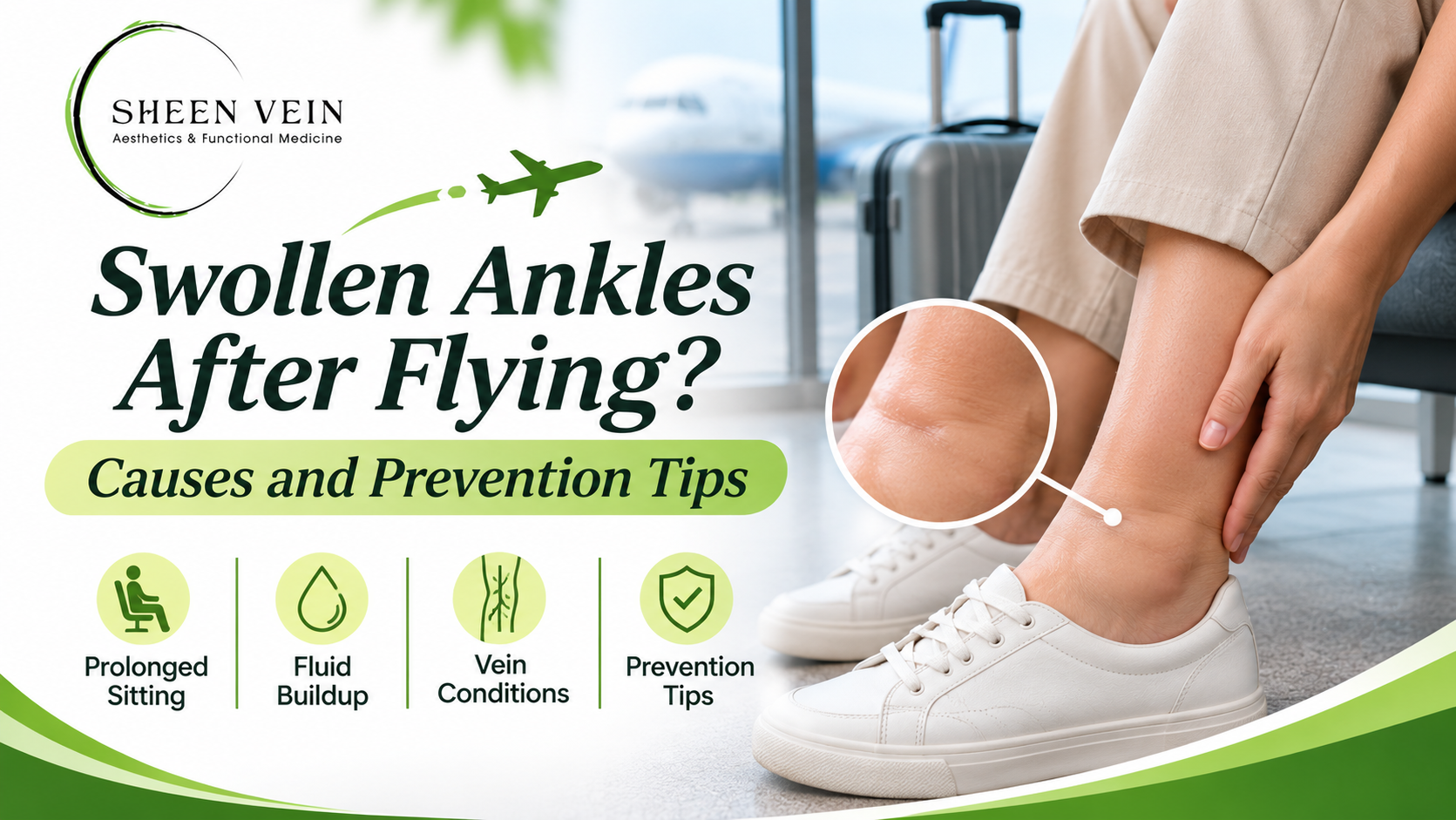
You slip off your shoes after a long flight, and getting them back on takes effort. Your ankles look rounder than they did this morning, and your socks have left deep grooves. Swollen ankles after flying are common, and the usual cause is simple. Sitting for hours with your feet down allows fluid to accumulate in your lower legs because your calf muscles are not actively helping blood return toward your heart. For most travelers, the swelling is temporary. Occasionally, though, swelling signals a blood clot or an underlying vein problem, so it helps to know which patterns are ordinary and which need medical attention.
Why Ankles Swell During a Flight
Your calf muscles act as a second pump for your circulation. Each step squeezes the deep veins in your lower legs and pushes blood upward against gravity. When you sit still for hours, this pumping action becomes much less effective.
Mayo Clinic explains that sitting with your feet on the floor lets blood pool in the leg veins, and that the seated position itself raises pressure inside them. Higher pressure pushes fluid out of the blood vessels and into the surrounding soft tissue, which you see as puffiness. Doctors call this dependent edema, meaning swelling that collects in the lowest part of the body.
This is why swelling may become more noticeable during longer flights and often improves once you begin walking again.Tight legroom adds to the effect by limiting how much you can shift or flex.
What Can Make Swelling Worse
A few ordinary habits add to the problem:
- Long flights or back-to-back travel days
- A window seat that discourages getting up
- Crossing your legs
- Tight socks or waistbands
- Alcohol or sedatives that make you sleepy and less likely to move
Some people notice more swelling after salty meals, though this varies.
Cabin pressure may also play a role, although its contribution is less certain. Researchers have looked at whether it contributes to fluid shifts, but the evidence is weaker than for prolonged sitting, which is the best-established cause of ordinary ankle swelling. Prolonged sitting remains the more established explanation for travel-related ankle swelling.
Medical conditions often matter more than any travel habit. You may swell more easily if you have varicose veins or chronic venous insufficiency, are pregnant, or take medications that can cause edema, such as calcium channel blockers or certain steroids and hormone therapies. Heart, kidney, and liver conditions can also cause swelling. Because ankle swelling can have several underlying causes, recurring symptoms should be evaluated by a qualified healthcare professional.
How to Prevent Swollen Ankles When Flying
No strategy guarantees a swelling-free landing, but several habits help.
Move More Than Feels Necessary
The CDC advises long-distance travelers to get up and walk occasionally. It suggests an aisle seat when possible so you can stand about every two to three hours. Walk along the aisle when the seat belt sign is off and conditions are safe, and move more frequently when possible.
Work Your Calves From Your Seat
When walking isn’t possible, keep the calf pump running. Try ankle pumps, slow ankle circles, and heel raises with your toes on the floor, as the CDC suggests. Tightening and releasing your calf muscles works too. Performing these movements for a few minutes each hour may help maintain circulation during the flight. These movements support circulation, but they don’t eliminate clot risk.
Consider Compression Stockings
Graduated compression stockings are snug at the ankle and looser higher up. A 2021 Cochrane review of airline passengers found that wearing them reduced leg swelling and symptomless DVT. It could not establish whether they reduce symptomatic DVT, pulmonary embolism, or death. Compression stockings may help reduce swelling and discomfort, but they do not eliminate the risk of blood clots.
Proper fit and compression level are important, and compression stockings may not be appropriate for everyone. If you have known vein or artery disease, a history of clots, or any doubt about what to buy, ask a clinician first. The CDC recommends that travelers with added clot risk discuss stockings and other precautions with their doctor before the trip.
Keep the Basics Comfortable
Wear loose clothing and shoes you can loosen. Avoid crossing your legs. Drink water, since Mayo Clinic recommends fluids to prevent dehydration, but don’t expect water alone to prevent swelling or clots. Aspirin or an anticoagulant is a decision for your doctor, not a routine self-directed travel remedy.
How to Reduce Ankle Swelling After You Land
For mild swelling in both ankles, gentle movement is often a helpful first step. Take a short walk once you arrive instead of heading straight to a chair. When you rest, raise your legs on pillows or a footrest, and avoid another long stretch of sitting.
Avoid vigorous massage or intense exercise if the cause of swelling is unclear, especially when one leg is more swollen than the other. Seek medical evaluation if a blood clot is possible. Uncomplicated swelling often eases within hours to a day once normal movement resumes, but timing varies. If it isn’t improving, is getting worse, or comes with other symptoms, don’t wait it out.
When Swelling After Flying Is a Warning Sign
Mild swelling in both ankles after a flight is often related to prolonged sitting rather than a blood clot. But symptoms alone can’t reliably rule one out, and travel does raise venous thromboembolism risk in some people. The CDC notes that anyone traveling more than four hours can be at risk, though most travelers who develop a clot have other contributing factors. These include:
- A previous DVT or pulmonary embolism
- A family history of clots or a known clotting disorder
- Recent surgery or significant injury
- Active cancer
- Pregnancy or the postpartum period
- Estrogen-containing medications
- Limited mobility
A deep vein thrombosis (DVT) may cause:
- Swelling, often in just one leg
- Calf or leg pain or tenderness
- Warmth
- Red or discolored skin
Some clots cause few noticeable symptoms. Mayo Clinic advises prompt medical care for swelling in one leg that doesn’t go away or that starts within about two weeks of a long flight. Don’t try to diagnose or rule out a clot at home.
A clot that travels to the lungs, called a pulmonary embolism, is an emergency. Call 911 or go to the nearest emergency department for sudden shortness of breath, chest pain, coughing up blood, fainting, or a racing heartbeat. Don’t wait to see whether the swelling improves first.
Could Frequent Ankle Swelling Point to a Vein Problem?
If your ankles swell after every flight, after long periods of standing, or remain swollen into the following day, an underlying condition may be contributing. One possibility is chronic venous insufficiency, where weakened valves in the leg veins let blood flow backward and pool. People with it may notice aching or heaviness, visible varicose veins, skin discoloration, or, in advanced cases, ulcers. Sheen Vein’s page on venous stasis ulcers describes how long-term insufficiency can progress. Their articles on whether varicose veins hurt and on blood flow physics in varicose and spider veins explain the mechanics in more depth.
Venous disease is only one explanation. Heart, kidney, liver, and medication-related causes need to be considered too, and a diagnosis requires an in-person evaluation. If you’re looking for a vein specialist in St. Louis to assess recurring leg swelling, that is a reasonable next step once urgent causes are excluded.
Frequently Asked Questions
How long do swollen ankles last after flying?
Uncomplicated swelling often fades within hours to a day after you resume normal activity, but it varies. Swelling that persists, worsens, or affects one leg more than the other should be evaluated.
Are swollen ankles after flying normal?
Mild swelling in both ankles is common and usually harmless. Mayo Clinic describes foot and leg swelling during air travel as typically benign. However, swelling should not be ignored if it is accompanied by pain, affects one leg more than the other, or occurs with breathing difficulties.
Do compression socks help prevent ankle swelling on flights?
Evidence suggests they can reduce swelling in airline passengers. They are not a proven safeguard against symptomatic clots, and the right type depends on your health history.
Can dehydration cause swollen ankles after flying?
Staying hydrated is important for general health and comfort during air travel. But prolonged sitting is the better-established cause of travel swelling, so don’t rely on water to prevent it.
When should I worry about swollen legs after a flight?
Seek prompt care for one swollen leg, especially with pain, warmth, or color change, or for swelling that persists or worsens. Sudden shortness of breath, chest pain, coughing up blood, or fainting calls for emergency care immediately.
When to Seek Help for Swollen Ankles After Flying
Mild ankle swelling after a flight often improves with movement, leg elevation, and time. However, swelling that persists, repeatedly returns, or affects one leg more than the other may need medical evaluation. Sudden chest pain, shortness of breath, or fainting requires emergency care.
If you experience recurring ankle swelling and want to understand whether a vein condition may be contributing, Sheen Vein Aesthetics and Functional Medicine in St. Louis can help you explore appropriate evaluation and care options. Contact the clinic to schedule a consultation.