Why Are Veins Visible on Your Chest? Common Causes Explained
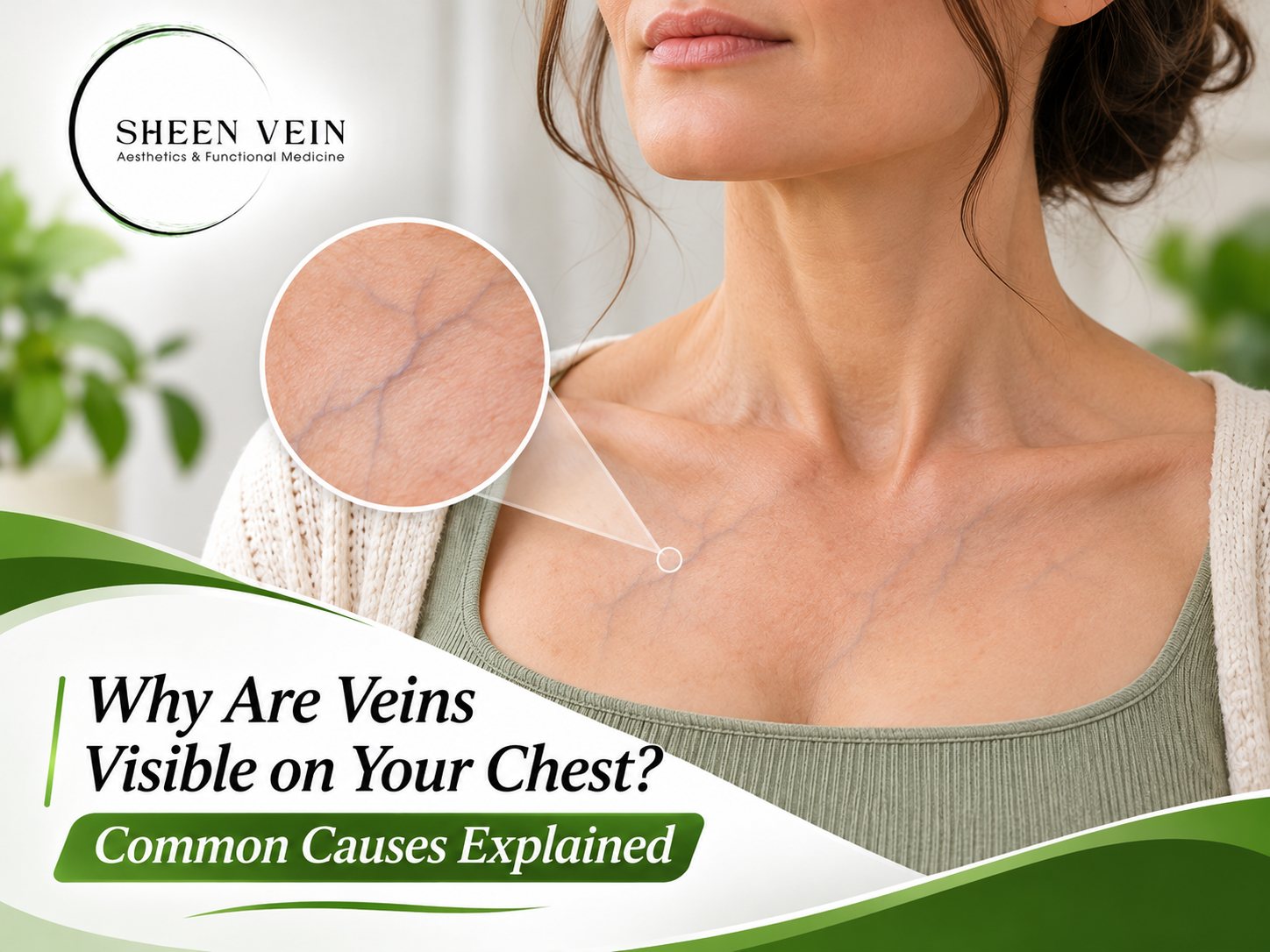
You catch your reflection and notice blue or green lines under the skin of your chest. Perhaps they appeared recently, or you may simply be noticing them for the first time. In most cases, visible veins on the chest reflect normal anatomy, thin skin, hormonal changes, or shifts in body composition. A sudden change is different. New or enlarged veins, especially with swelling, pain, or trouble breathing, should be evaluated by a medical professional. This guide explains the common causes, the warning signs, and what can realistically be done.
Is It Normal to Have Visible Veins on Your Chest?
Often, yes. Superficial veins sit close to the skin's surface, and the skin over the chest and breasts is relatively thin. In some people, those vessels show through as bluish or greenish lines. Visibility alone does not mean vein disease.
When the veins appeared and whether they are changing can be more important than their appearance alone. Veins that have looked the same for years are usually part of your normal anatomy. Veins that are newly prominent, noticeably enlarged, or changing quickly deserve more attention than veins you have always had.
It also helps to separate a few different things that can look alike.
- Normally visible superficial veins are part of ordinary anatomy.
- Spider veins (telangiectasias) are very small, thread-like vessels, often red, blue, or purple, and they differ from larger blue or green veins.
- Enlarged superficial veins are more distended than usual.
- Chest wall collateral veins are new pathways that blood can take when a larger vein is narrowed or blocked.
These do not share the same causes or the same significance.
Common Reasons Veins Become Visible on the Chest
Thin Skin and Natural Skin Characteristics
Skin thickness and pigmentation influence how easily you can see what lies beneath. Thinner or lighter skin tends to show veins more readily, while deeper skin tones can make vein color harder to see even when the veins are just as prominent. That said, skin tone alone does not predict who will have visible veins.
Low Body Fat or Recent Weight Loss
Fat beneath the skin acts as a cushion. When there is less of it, whether from leanness, athletic training, or weight loss, veins sit closer to the surface and become easier to see. Visible veins do not necessarily mean your body composition is unhealthy.
Aging and Changes in Skin Structure
As we age, skin generally becomes thinner and loses some of its supporting tissue. This can make underlying blood vessels more noticeable. Years of sun exposure may add to the effect. It is a gradual change, not a sudden one.
Exercise and Temporary Changes in Blood Flow
Exertion and warm temperatures increase blood flow to the skin, which can make veins temporarily more noticeable. This typically eases as your body cools and recovers. Routine exercise is not known to permanently enlarge chest veins.
Pregnancy and Hormonal Changes
During pregnancy, circulating blood volume increases and the breasts change, so veins already present often become more visible. Breastfeeding can have a similar effect. Hormonal shifts across the menstrual cycle may also change how prominent veins look. These changes are usually expected, but pain, redness, warmth, or a hard, cord-like vein is worth mentioning to a clinician rather than assuming it is pregnancy-related.
Genetics and Natural Vein Patterns
Vein layout varies from person to person, and these patterns tend to run in families. If a parent or sibling has noticeable chest veins, yours may simply be part of your inherited anatomy. The specific genetic mechanism is not well defined, so it is best understood as individual variation.
Can Visible Chest Veins Be a Sign of a Medical Problem?
Usually not on their own. Most visible superficial veins are not evidence of a serious condition. But some patterns do call for evaluation.
One example is Mondor disease, a form of superficial thrombophlebitis involving a vein just beneath the skin of the chest wall or breast. It can feel like a tender, rope-like cord. It is generally considered benign and often resolves on its own, but a clinician should confirm what it is.
A less common but more serious possibility involves the deeper veins that carry blood from the head, neck, arms, and upper body back to the heart. When a large central vein is narrowed or blocked, as in superior vena cava syndrome, blood may reroute through smaller veins in the chest wall, which can then appear enlarged. Medical references describe this as a rare condition. It is associated with causes such as tumors in the chest or clots related to catheters or implanted devices, and it typically brings other symptoms such as swelling of the face, neck, or arms and shortness of breath.
The key distinction is between superficial veins that look more visible and veins that signal a change in how blood is draining from the upper body. Appearance alone cannot tell these apart, which is why a professional assessment matters when the pattern is new or unusual.
When Should You Worry About Visible Veins on Your Chest?
Use these tiers as general guidance, not as a way to diagnose yourself.
Seek emergency care immediately if you experience difficulty breathing, significant chest pain, or rapidly developing swelling of the face or neck, whether or not visible chest veins are present. Call 911 or go to the nearest emergency department. Do not book a cosmetic appointment instead.
Arrange prompt medical assessment if you notice any of the following.
- Veins that appeared suddenly or are clearly enlarging
- New swelling in the face, neck, or arms
- Persistent or worsening swelling
- New prominent veins after a catheter, pacemaker, or similar device was placed
- A hard, painful, or red vein, or changes affecting one breast
- Visible veins along with other symptoms you cannot explain
Mention it at a routine visit if the veins have been there a long time, look the same as always, and cause no symptoms, but you would like reassurance or want to discuss appearance.
Can You Reduce the Appearance of Visible Chest Veins?
It depends on what you are looking at. Veins that are simply part of normal anatomy often need no treatment at all. Veins that become more noticeable during pregnancy may become less prominent after delivery or once breastfeeding ends, although some changes can persist.
Creams and supplements have limited support for making visible veins disappear, and no product reliably eliminates them. Makeup or self-tanner can reduce how noticeable veins look without changing them.
The first step is identifying the type of vein. A tiny spider vein, a larger blue vein, and an enlarged collateral vein are different findings, and only some are appropriate for cosmetic approaches. Enlarged veins that may reflect a change in venous drainage call for medical investigation first, not cosmetic treatment.
What Professional Treatments May Help Visible Veins?
When cosmetic treatment is appropriate, options generally fall into two groups. Sclerotherapy involves injecting a solution into a small vein so it closes and fades. Vascular lasers target small vessels near the skin. Which approach, if any, suits a given vein depends on its size, depth, and location, along with your medical history and a clinician's examination.
Treatments commonly discussed for leg spider veins are not automatically suitable for the chest. Risks such as bruising, skin discoloration, or incomplete results must be weighed, and results cannot be guaranteed. Sometimes the right step is further evaluation of the underlying veins rather than treatment of the visible ones.
When to Consult a Vein Specialist in St. Louis
A professional assessment can help you learn whether your veins are a normal variation, a cosmetic concern, or something that needs further workup. Consider scheduling one if the veins are new, bother you, or leave you unsure what you are seeing.
Sheen Vein Aesthetics and Functional Medicine is a physician-owned clinic in St. Louis, Missouri, and its website describes care for varicose and spider veins, including visual sclerotherapy. Because chest veins can have different causes than leg veins, ask the clinic directly whether they evaluate your specific concern. If you have any of the emergency symptoms above, go to urgent care or an emergency department first.
Frequently Asked Questions
Why can I suddenly see veins on my chest?
Heat, exercise, weight loss, hormonal changes, and pregnancy can all make veins more noticeable fairly quickly. If the change is sudden and persistent, especially with swelling or pain, have it checked.
Are blue veins on the chest normal?
Blue or greenish veins visible through the skin are very common and are usually normal. The color comes from how light passes through skin, not from a problem with the blood.
Can pregnancy make chest veins more visible?
Yes. Increased blood volume and breast changes often make existing veins more prominent, and this is typically expected. Pain, redness, or a hard cord-like vein should be evaluated.
Do visible chest veins go away on their own?
Temporary causes, such as heat, exercise, or pregnancy, often fade. Veins tied to your natural anatomy or skin thickness may stay visible long term.
When should I see a doctor about visible chest veins?
See a clinician if the veins are new, enlarging, painful, or accompanied by swelling of the face, neck, or arms. Seek emergency care for breathing difficulty, significant chest pain, or rapidly developing facial or neck swelling.
Visible Chest Veins: When to Seek Professional Care
Visible chest veins are often a normal finding influenced by skin characteristics, body composition, hormonal changes, and genetics. However, veins that appear suddenly, become more prominent, or are accompanied by other symptoms may require medical evaluation. Symptoms such as difficulty breathing, significant chest pain, or rapidly developing facial or neck swelling require immediate emergency care.
If you are concerned about visible veins on your chest, consider scheduling a consultation with Sheen Vein Aesthetics and Functional Medicine in St. Louis, Missouri, to discuss your concerns and determine whether an evaluation is appropriate. Understanding the underlying cause is an important first step before considering cosmetic or medical treatment options.